Can I Wear Silver Jewellery in the Shower? Care Guide
Table of Contents
- What Happens When Sterling Silver Gets Wet
- Does Sterling Silver Tarnish in Water? The Real Answer
- How Soap, Shampoo, and Chlorine Affect Your Silver Jewellery in the Shower
- Daily Wear vs. Occasional Wear: Knowing When to Remove Silver Jewellery
- How to Tell if Silver is Real Before Testing It in Water
- How to Clean Tarnished Silver Jewellery and Restore Its Shine
- Practical Silver Jewellery Care: Storage and Daily Habits
- The Bottom Line on Showering with Silver
- Frequently Asked Questions
Last Updated: September 7, 2026
What Happens When Sterling Silver Gets Wet
Yes, you can physically wear sterling silver in the shower, but the question is whether you should. Sterling silver is an alloy, typically 92.5% pure silver mixed with other metals like copper, meaning it reacts to its environment more than you might expect (britannica.com).
Water itself isn't the enemy, moisture, soap residue, and dissolved minerals are. When water dries on the metal, it leaves a film that accelerates tarnish.
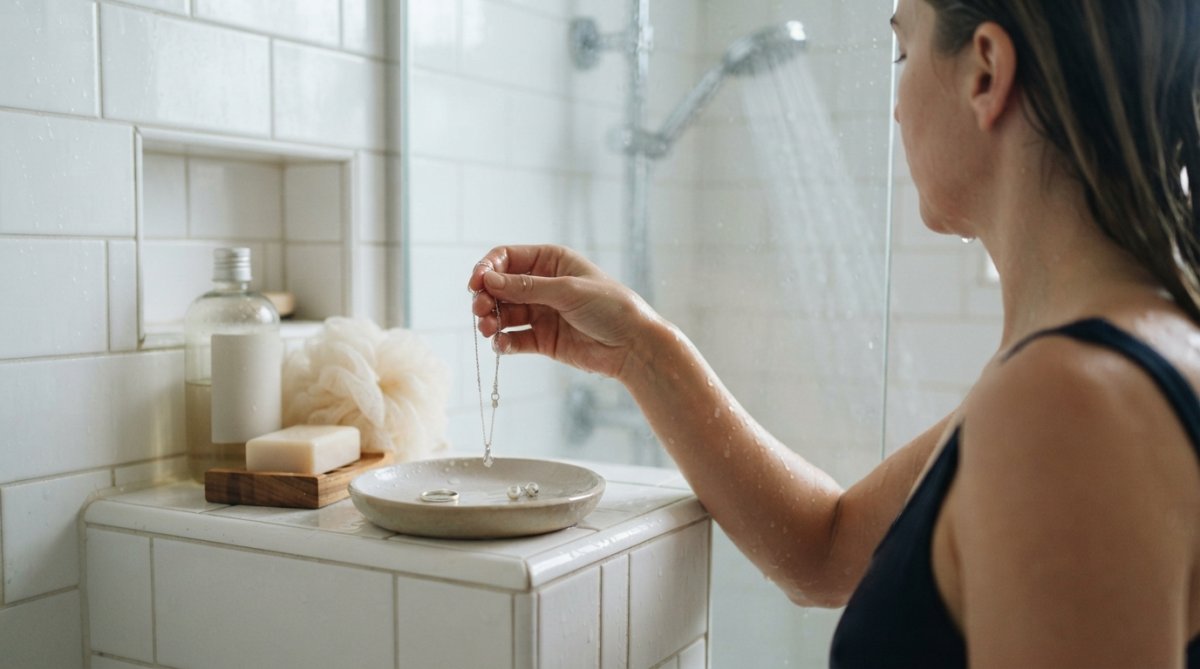
The difference between jewellery that lasts and jewellery that dulls quickly almost always comes down to one habit: a silver jewellery shower.
Does Sterling Silver Tarnish in Water? The Real Answer
Sterling silver tarnishes from sulfur compounds in the air, not water alone. Water speeds up the process by providing the moisture those sulfur reactions need.
The dull grey or brownish film is silver sulfide, a chemical reaction, not structural damage. Surface tarnish can be removed, but repeated exposure creates dullness that becomes harder to reverse.
In your shower, steam raises humidity while soap and shampoo residues dry onto your silver, a recipe for accelerated oxidation.
How Soap, Shampoo, and Chlorine Affect Your Silver Jewellery in the Shower
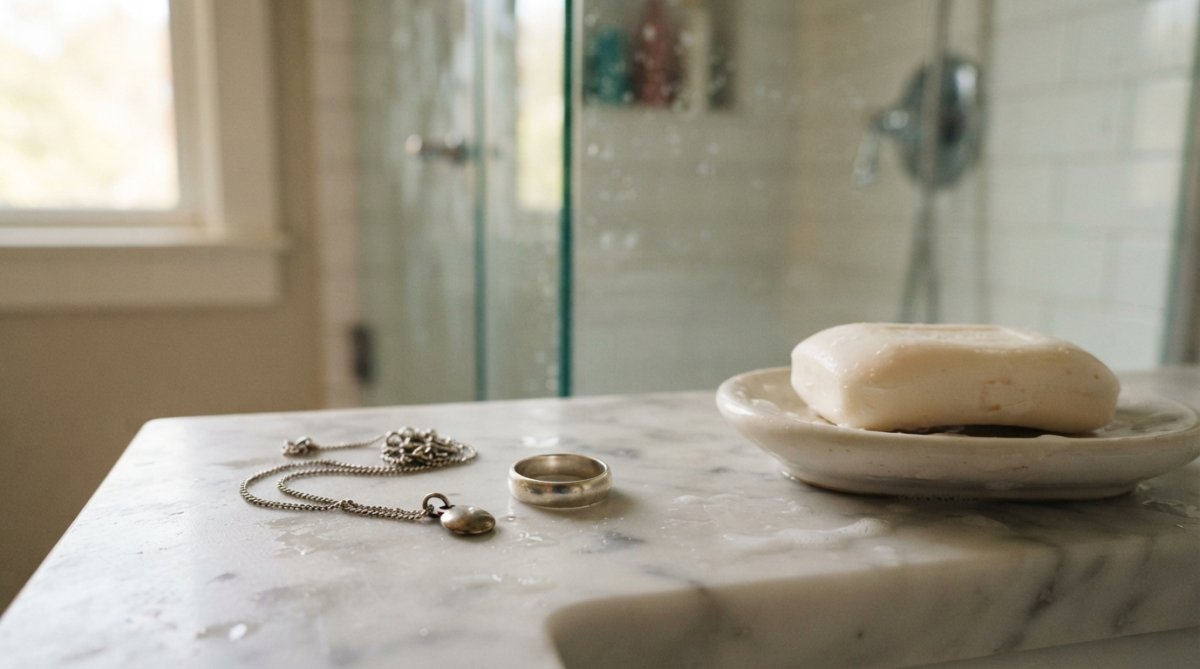
Soap residue is arguably worse than water itself. Most soaps and shampoos leave a film on metal, trapping moisture and dulling luster, but some ingredients are far more reactive than others.
The Ingredient Breakdown: What to Watch For
Sulfates (SLS/SLES), Sodium lauryl sulfate and sodium laureth sulfate are foaming agents in most shampoos and body washes. They strip oils from skin and hair, and from your jewellery's protective surface. Sulfates don't directly corrode silver, but they break down the natural shield, exposing the metal to tarnish-causing sulfur compounds.
Chlorine and Chloramine, Municipally treated water contains chlorine, which is harsh on silver (the CDC). Prolonged exposure can cause pitting and corrosion beyond cosmetic dullness, potentially weakening the metal. Many UK suppliers also use chloramine, which persists longer and is equally aggressive.
Sulfur-Based Compounds, Some dandruff shampoos contain selenium sulfide or zinc pyrithione, which introduce sulfur directly to the metal, triggering tarnish within minutes. Medicated shampoo is a direct threat to your silver.
Acidic and Alkaline Formulations, Most soaps are alkaline (pH 8-10), while some clarifying shampoos are acidic (pH 4-5) (PubMed). Neither extreme is catastrophic in one shower, but repeated exposure accelerates dullness.
Moisturisers and Heavy Creams, "Hydrating" body washes contain mineral oils, butters, and silicones that leave a thicker, more stubborn film, trapping moisture and creating a micro-environment where tarnish thrives.
The Hard Water vs. Soft Water Variable
Hard water, common across southern and eastern England, contains dissolved calcium and magnesium carbonates. When it dries on silver, it leaves a chalky deposit that traps moisture and accelerates sulfur reactions.
Soft water, more common in Scotland and northern England, leaves less residue, so silver tarnishes more slowly, though it can be slightly more acidic, posing a slow-dissolution risk over many years.
In hard water areas, silver dulls faster. The fix isn't different cleaning products, it's drying your jewellery thoroughly after any water exposure, since minerals only cause problems when water evaporates and leaves them behind.
The Chemical Reaction Timeline
A common pattern is that tarnish from shower exposure follows a predictable sequence:
- Immediate (0-24 hours): Soap residue dries onto the metal surface, leaving a barely visible film.
- Short-term (1-2 weeks of daily exposure): The film traps moisture against the metal. Sulfur compounds in the air and water begin reacting with the silver surface, forming silver sulfide.
- Medium-term (1-3 months): The tarnish layer thickens and becomes visible as a dull grey or brownish film. At this stage, it's still fully reversible with proper cleaning.
- Long-term (6+ months of daily exposure): Repeated cycles of wetting and drying, combined with chlorine exposure, can cause microscopic pitting. This is where surface tarnish begins to edge toward structural damage.
Your best defence is keeping soap and shampoo away from your silver. Understanding which ingredients are most reactive helps you decide when to risk it and when to take 10 seconds to remove your jewellery.
Daily Wear vs. Occasional Wear: Knowing When to Remove Silver Jewellery
Whether to remove your silver before showering depends on how often you wear it. Daily wearers who take a silver jewellery shower will notice dulling within weeks, not months.
Rings and bracelets face more exposure than necklaces because they sit closer to skin and collect more soap residue. If you wear a piece daily, it's worth 10 seconds to remove it before showering.
For occasional wear, a necklace worn once a week and removed for showers will hold its shine for years. The key variable is how consistently you expose it to moisture and products.
How to Tell if Silver is Real Before Testing It in Water
Before worrying about water damage, confirm what you're wearing, knowing how to tell if silver is real protects you from treating plated or filled metals as solid sterling.
Look for a hallmark stamp reading 925, which indicates 92.5% pure silver. This stamp is the industry standard for sterling silver. If you can't find one, check the piece's weight; genuine silver feels denser than most plated alternatives.
The magnet test offers another quick check. Silver is not magnetic, so if a strong magnet sticks to your jewellery, it contains a ferrous core and isn't solid silver. For a more reliable assessment, a professional jeweller can perform an acid test that definitively identifies the metal content.
How to Clean Tarnished Silver Jewellery and Restore Its Shine
If your silver has dulled, don't panic, most pieces respond well to simple cleaning methods. But not all damage is reversible, so understand what you're dealing with first.
Surface Tarnish vs. Structural Damage: Know the Difference
Most discolouration is surface tarnish, a cosmetic chemical reaction where silver reacts with sulfur to form silver sulfide. Removing it reveals pristine silver beneath, like cleaning a film off a window.
Structural damage occurs when the metal is physically compromised, through pitting from chlorine, scratching from abrasives, or bending from impact. It cannot be polished away; a deeply pitted ring or scratched pendant is permanently altered.
Surface tarnish appears as an even, dull film that darkens gradually. Structural damage shows as uneven marks, visible pits, or rough areas. If your silver has faced repeated chlorinated water exposure, inspect under bright light for tiny dark spots that don't respond to polishing, early signs of pitting.
Cleaning Methods by Tarnish Level
Light tarnish (dull film, no dark spots): Start with a dedicated silver polishing cloth, treated with micro-abrasives that lift tarnish without scratching. Rub in straight lines rather than circles to avoid embedding tarnish particles. A single pass usually restores shine.
Moderate tarnish (visible grey or brown film): Soak the piece for 3-5 minutes in warm water with mild dish soap, then gently brush with a soft-bristled toothbrush. Rinse and dry completely, leaving moisture invites new tarnish within hours.
Heavy tarnish (dark, almost black patches): For heavily tarnished pieces, a purpose-made silver dip or cream cleaner is more effective than home remedies. These contain thiourea or similar compounds that dissolve silver sulfide. Follow instructions precisely, most dips require only 30-60 seconds. Rinse and dry completely.
The Professional Route
For heirlooms, textured pieces, or gemstone settings, professional cleaning is worth the cost. Most UK jewellers offer ultrasonic cleaning, which uses high-frequency sound waves to reach crevices cloths can't. Prices range from £10-£25 per piece. It's safe for solid sterling but never for plated items or soft gemstones like opals or pearls.
When Cleaning Isn't Enough
If silver remains dull after thorough cleaning, or shows pitting, flaking, or rough patches, it may have structural damage that no home treatment can restore. A professional can assess whether re-polishing, re-plating, or replacement is warranted.
The Maintenance Schedule That Works
Consistent light cleaning often outperforms occasional deep cleaning. A simple routine:
- After each wear: Wipe with a polishing cloth to remove skin oils and moisture.
- Weekly: Quick inspection under bright light for early tarnish signs.
- Monthly: Deep clean with soap and water or a silver dip, depending on tarnish level.
- Annually: Professional check for pieces worn daily, especially rings and bracelets.
With the right approach, even heavily tarnished silver can be restored to near-original condition. The trick is catching tarnish early, using the right method for the severity, and knowing when to call in a professional.
Practical Silver Jewellery Care: Storage and Daily Habits
Prevention beats restoration. Proper storage keeps silver looking new and reduces cleaning frequency.
Store each piece in an airtight container or a zipped plastic bag to minimise exposure to air and humidity. Adding anti-tarnish strips to your storage area absorbs the sulfur compounds that cause dullness. Keep different pieces separated to prevent scratching.
| Care Habit | Frequency | Impact |
|---|---|---|
| Remove before showering | Every time | Prevents soap residue and chlorine damage |
| Wipe with polishing cloth | After each wear | Removes oils and delays tarnish |
| Deep clean with soap and water | Monthly | Restores luster and removes buildup |
| Store in airtight container | Always | Slows oxidation between wears |
Body chemistry also matters, some people's sweat is more acidic or higher in sulfur, causing faster tarnish regardless of water exposure. If your pieces dull quickly despite careful habits, this may be the variable.
The Bottom Line on Showering with Silver
Showering with sterling silver won't destroy it overnight, but it accelerates tarnish with every exposure. The metal is durable, yet moisture, soap residue, and chlorine work against its natural shine.
For treasured pieces, take them off before showering and dry them thoroughly if they get wet. This single practice extends your jewellery's life more than any cleaning product.
At SilverStory, every piece in our collection is handcrafted in sterling silver by skilled artisans in Rajasthan, designed to be worn and loved for years. Our sterling silver care guidance recommends the same approach we've shared here. If you're looking for a piece that will hold its beauty through daily wear, the Silver Lunar Necklace at £69.00 pairs timeless design with the durability of properly cared-for 925 silver.

Frequently Asked Questions
Is it okay to shower with 925 silver jewellery?
A quick rinse won't ruin 925 silver, but regular showering is not recommended. The real risk isn't the water itself; it's the soap, shampoo, and conditioner residue that stays on the metal. These products can dull the surface and speed up tarnishing. Hard water can also leave mineral deposits. For pieces you wear daily, like a SilverStory ring, make it a habit to remove them before showering to keep them looking their best.
Does water cause sterling silver to tarnish faster?
Water alone doesn't cause tarnishing, but it creates the conditions for it. Sterling silver tarnishes when it reacts with sulfur or moisture in the air. Prolonged exposure to dampness, especially when combined with soap residue, accelerates oxidation. The key is to dry your silver jewellery thoroughly after any contact with water. Never leave it wet, as trapped moisture in crevices can lead to dullness and corrosion over time.
What jewellery should you avoid wearing in the shower?
Avoid wearing plated jewellery, pieces with gemstones or pearls, and silver items with intricate details in the shower. Plated metals can wear off quickly with soap and hot water. Gemstones may loosen or become cloudy. For sterling silver, the main concern is residue buildup.
How do I clean my silver jewellery after it gets wet?
If your silver jewellery gets wet, dry it immediately with a soft, lint-free cloth. Gently buff the surface to remove any water spots. For a deeper clean after exposure to soap or shampoo, rinse the piece in lukewarm water, then dry and polish it. For existing tarnish, use a specialised silver polishing cloth. Avoid abrasive cleaners, as they can scratch the metal and remove the protective finish.
Caring for silver jewellery doesn't have to be complicated, but it does require consistency. The difference between pieces that stay bright and pieces that dull lies in a few daily habits: remove before showering, dry thoroughly, and store properly. SilverStory's ethically sourced, handcrafted sterling silver pieces are made to be treasured, and with the right care, they'll keep their shine for decades. Browse our collection of rings, necklaces, and bracelets to find your next everyday piece.