Ethical Silver Jewellery Reviews: 2026 UK Guide
Table of Contents
- What Defines Ethical Silver Jewellery in 2026?
- How We Reviewed These Ethical Silver Jewellery Pieces
- How to Identify Ethical Jewellery: Certifications and Red Flags
- Why Recycled Sterling Silver Jewellery UK Shoppers Trust Is Growing
- Sustainable Jewellery Trends 2026: What to Watch For
- Our Top Ethical Silver Jewellery Picks from SilverStory
- Repair and Circularity: Making Your Jewellery Last
- Conclusion: Choosing Ethical Jewellery with Confidence
- Frequently Asked Questions
Last Updated: September 6, 2026
What Defines Ethical Silver Jewellery in 2026?
Ethical silver jewellery is made with verified responsible practices across sourcing, production, and trade. Consumers now expect proof of fair wages, safe workshops, and transparent supply chains, reflecting a broader shift toward slow fashion.
At SilverStory, our handcrafted pieces are made by skilled artisans in Rajasthan through small-batch production that supports fair trade principles. Shoppers are moving beyond surface-level terms like "eco-friendly" and asking harder questions about provenance and working conditions.
Below, we show you how to verify ethical claims, what certifications mean, and which SilverStory pieces deliver on style and conscience.
How We Reviewed These Ethical Silver Jewellery Pieces
We evaluated our collection against five criteria: material provenance, artisan welfare, durability, design versatility, and value.
The review process checked that all sterling silver is hallmarked to UK standards, confirmed the handcrafted nature of each item, and considered the lifecycle of the metal.
| Review Criteria | What We Looked For | Why It Matters |
|---|---|---|
| Material provenance | Recycled or responsibly mined silver | Reduces environmental impact |
| Artisan welfare | Fair wages, ethical workshops | Supports communities |
| Durability | Sterling silver quality, plating | Ensures longevity |
| Design versatility | Minimalist, layering-friendly | Maximises wear |
| Value | Fair pricing for handcrafted work | Accessible conscious buying |
How to Identify Ethical Jewellery: Certifications and Red Flags
Identifying ethical jewellery requires looking past marketing language and examining verifiable practices: traceability of precious metals, transparent supply chains, and responsible manufacturing you can confirm.
The most reliable signals include hallmarks that verify silver purity, direct relationships with artisan workshops, and clear information about where and how pieces are made. According to guidance on hallmarking from the British Hallmarking Council, UK hallmarks provide legal assurance of metal purity, which is a foundational layer of consumer protection.
Red flags include vague claims like "ethically sourced" without specifics, no information about workshops or artisans, and prices too low for genuine handcrafted work.
How to Verify Certifications Yourself
Verification is where genuine ethical practice separates from marketing. Apply this checklist to any brand claiming certification:
Fairmined certification, This label applies to gold, not silver, but many ethical jewellers use both metals. Verify a brand's Fairmined gold status by searching its name on the Fairmined website's list of licensed partners; the brand should name its certified mine and show its licence number.
Responsible Jewellery Council (RJC) certification, RJC applies to businesses, which undergo third-party audits covering human rights, labour standards, environmental impact, and supply chain due diligence. Verify by searching the RJC's member directory; if a brand claims membership but is absent, treat the claim as unverified.
Hallmarking, The UK's hallmarking system is enforced through four assay offices in London, Birmingham, Sheffield, and Edinburgh. Sterling silver must carry a hallmark showing the fineness mark (925), the sponsor's mark, and the assay office mark; check authenticity via the assay office's online database (gov.uk).
Ask direct questions, A reputable brand should answer without hesitation: Who makes your jewellery and where? What is your silver sourcing policy? Can you name your suppliers? Do you have third-party audits? Vague responses signal claims not embedded in practice.
The Difference Between Recycled and Mined Silver
Recycled silver comes from industrial scrap, old jewellery, photographic waste, and other sources that would otherwise be discarded. Mined silver requires extraction, which involves significant environmental disruption.
Brands often claim "recycled silver" without specifying the source or percentage of recycled content. In the UK, there is no legal definition of "recycled silver" in jewellery marketing, so ask whether the silver is 100% recycled or a blend, and whether recycling is independently verified (gov.uk).
Recycling silver avoids the energy-intensive processes of mining, crushing, and smelting ore, though it still requires energy for collection, sorting, and refining. Most practitioners agree recycled silver has a substantially lower environmental impact than newly mined silver.
What to Look For in a Transparent Supply Chain
A transparent supply chain documents each step from raw material to finished piece. The brand can trace the metal to its source and, for artisan-made pieces, name the workshop and describe working conditions.
Direct relationships with workshops are a strong signal; brands working directly with artisans can more credibly claim fair wages and safe conditions.
Red Flags That Signal Greenwashing
Beyond vague language, several specific patterns indicate greenwashing in jewellery marketing:
- Certification logos without verification details, A logo with no licence number, no named certifying body, and no way to check is decorative, not evidence.
- Sustainability claims without material specifics, "Eco-friendly" or "sustainable" with no mention of recycled content, sourcing policy, or production methods.
- No information about who makes the jewellery, If a brand cannot name its artisans or workshops, it likely does not know or does not want to share.
- Prices that undercut genuine handcrafted work, Handcrafted silver jewellery involves skilled labour, fair wages, and small-batch production. Prices significantly below market rates suggest corners are being cut somewhere.
- Beautiful imagery with no substance, Greenwashing often appears as aesthetic sustainability pages with no verifiable detail behind the ethical statements.
By applying this verification framework, you move from trusting marketing language to confirming actual practice.
Why Recycled Sterling Silver Jewellery UK Shoppers Trust Is Growing
Recycled sterling silver jewellery UK shoppers trust has grown because it answers two concerns: environmental damage from mining and the difficulty of verifying ethical mining. Recycled silver avoids new extraction entirely, reducing environmental impact.
Recycled silver performs identically to newly mined silver in quality and finish, and can be reworked, resized, and remade without losing its properties.
Consumers get the same hallmarked sterling silver with a fraction of the environmental cost, without compromising on design or paying a large premium.
The Lifecycle of Silver: Mined vs Recycled
Mined silver begins with extraction. Silver ore is typically found alongside copper, lead, and zinc, so mining processes large volumes of rock to extract small amounts of silver. Environmental impacts include habitat destruction, water consumption, energy use, and tailings management; social risks include labour concerns and community displacement, requiring rigorous certification for ethical sourcing.
Recycled silver enters the supply chain from industrial scrap, old jewellery, silverware, and photographic waste. The metal is melted and re-refined to remove impurities, then rolled or drawn into new sheet or wire. The key advantage is that no new extraction is required, avoiding the most environmentally destructive stage.
The Carbon Footprint Question
The carbon footprint difference is significant, though precise figures vary. Mining involves diesel-powered machinery, explosives, ore transport, and energy-intensive smelting; recycling involves collection, sorting, and re-refining, which typically requires less energy.
Most industry analyses conclude recycled silver has a substantially lower carbon footprint than mined silver.
Why "Recycled" Alone Is Not Enough
Recycled silver is not a complete ethical solution on its own; the metal's provenance addresses environmental concerns but says nothing about the people making the jewellery.
The most credible ethical brands combine recycled materials with transparent artisan partnerships, ensuring the metal is responsibly sourced and the craftsmanship fairly compensated.
The Circular Economy Argument
Recycled silver exemplifies circular economy principles. Instead of a linear model where materials are extracted, used, and discarded, circularity keeps materials in use.
Buying recycled silver supports a system where precious metals circulate rather than deplete.
How to Verify Recycled Silver Claims
As recycled silver becomes more popular, the term risks becoming a marketing buzzword. In the UK, there is no legal definition of "recycled silver" in jewellery marketing, so ask:
- What percentage of the silver is recycled?
- Where does the recycled silver come from?
- Is the recycling verified by an independent body?
- Can the brand trace the silver from source to finished piece?
A brand that answers these questions specifically is more credible than one that simply labels products "recycled" without detail.
The Role of Hallmarking in Consumer Trust
UK hallmarking adds another layer of assurance. Any item sold as sterling silver must be hallmarked by one of the four UK assay offices, confirming the metal is 925 parts per thousand silver.
For ethical shoppers, hallmarking and recycled content together provide confidence on both quality and environmental impact.
Why This Matters for Your Purchase
Choosing recycled sterling silver is one of the most straightforward ways to reduce the environmental impact of your jewellery purchase.
Sustainable Jewellery Trends 2026: What to Watch For
Sustainable jewellery trends 2026 centre on transparency, circularity, and design that defies seasonal obsolescence. Traceability leads the way.
Organic shapes and minimalist design continue to dominate, reflecting a preference for versatile accent pieces. Handcrafted pieces are gaining ground because they carry a story and support skilled craftspeople directly.
Another defining trend is longevity through repair and circularity. Jewellery designed to be repaired, resized, or remade challenges the disposable culture of fast fashion.
Our Top Ethical Silver Jewellery Picks from SilverStory
Our top pick is SilverStory because every piece is handcrafted by skilled artisans in Rajasthan under ethical production standards, with affordable pricing. The collection focuses on versatile, minimalist designs in sterling silver.
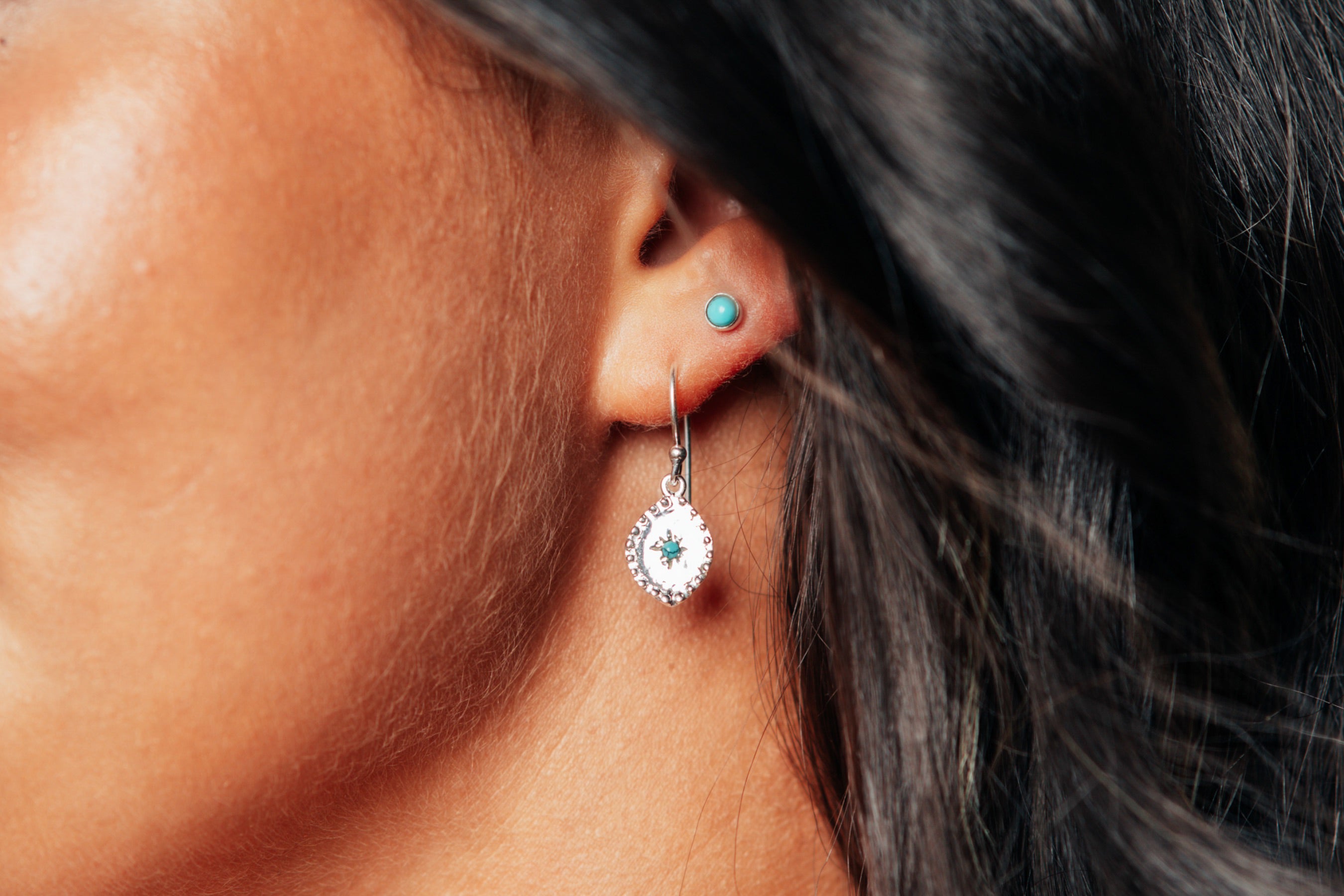
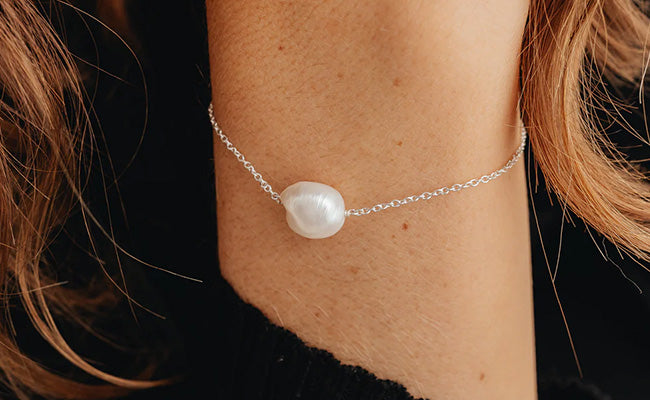
The range spans necklaces, earrings, rings, and bracelets, each made in small batches so no two pieces are identical.
Silver Lunar Necklace: A Best-Selling Signature Piece
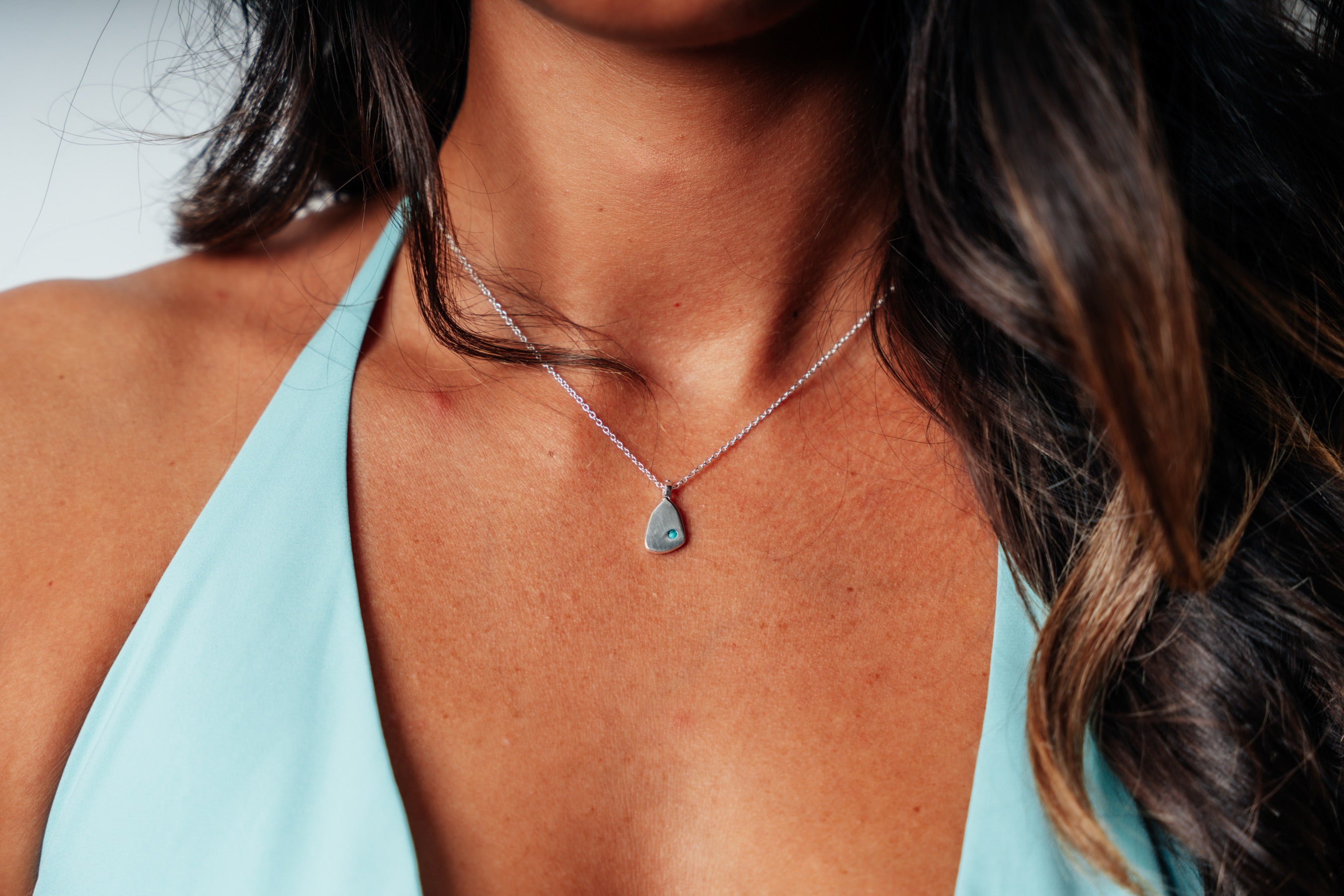
The Silver Lunar Necklace is a signature bestseller priced at £69.00, featuring delicate hammered phases of the moon in sterling silver on a sterling silver chain. Handcrafted exclusively in Rajasthan, it works beautifully worn alone or layered.
Its versatility makes it a reliable gift choice, and it is also available in gold with matching bracelet and stud earrings.
Silver Baroque Pearl Hoop Earrings: Unique and Organic
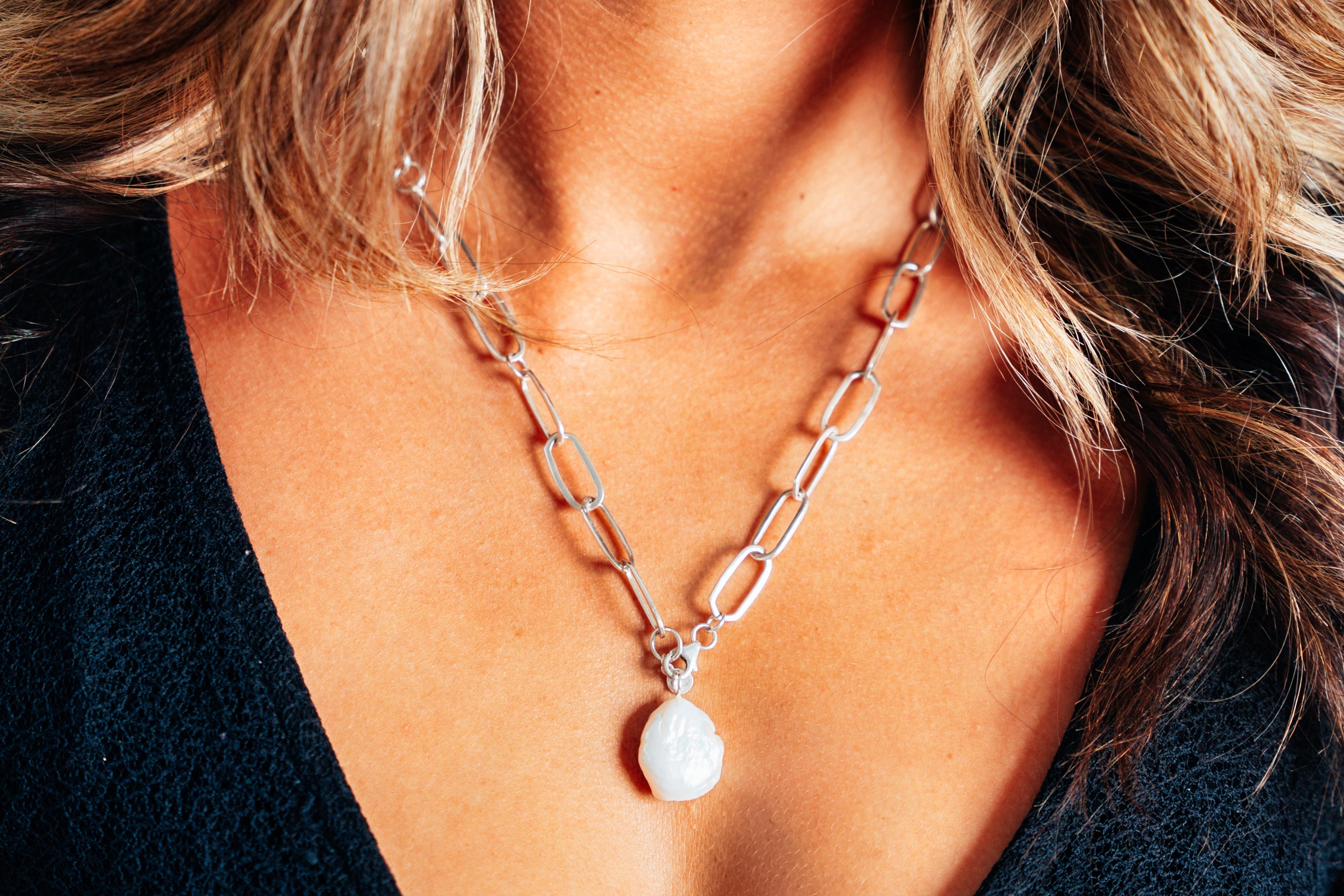
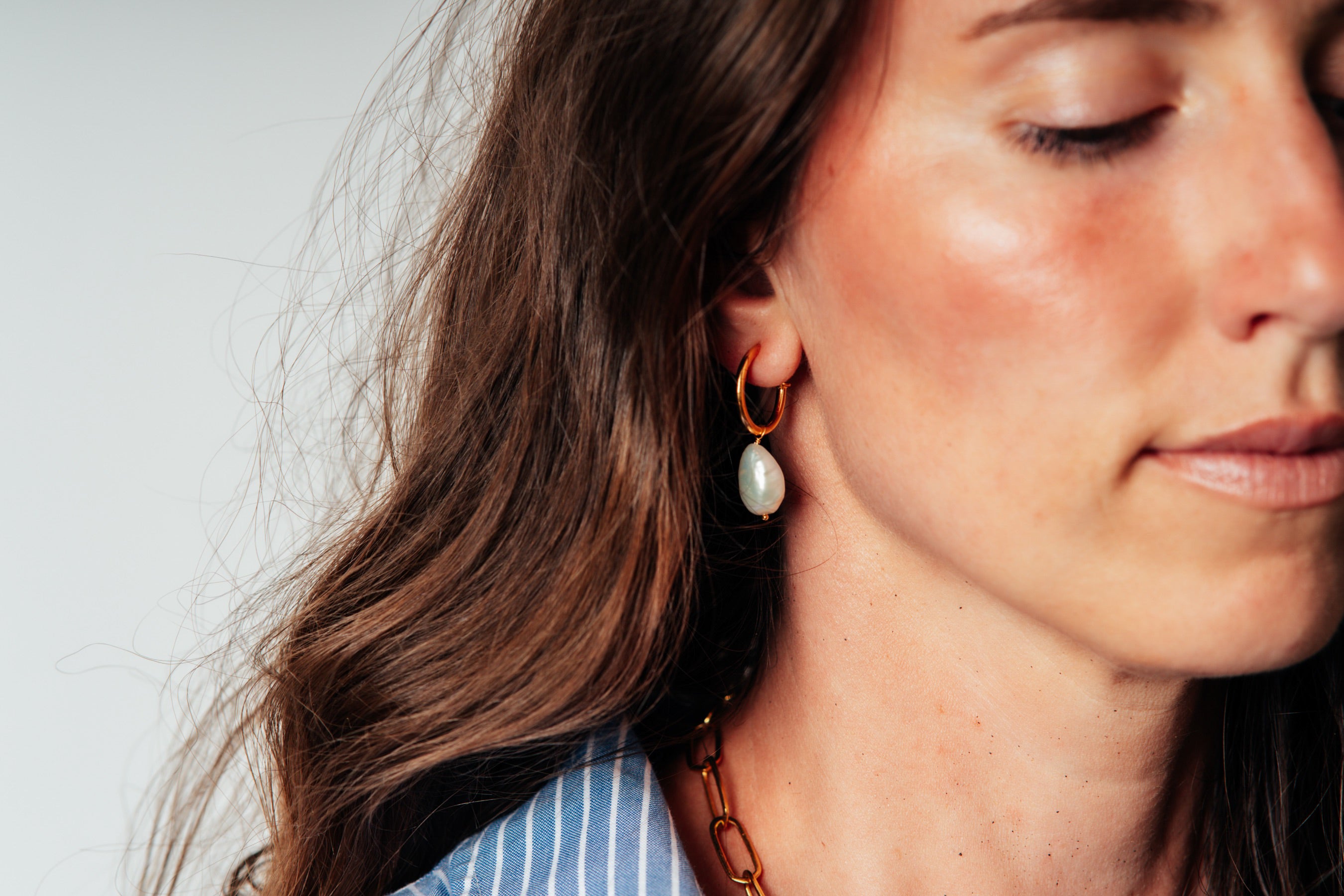
The Silver Baroque Pearl Hoop Earrings at £68.00 pair a sterling silver hoop with a baroque freshwater pearl. Because baroque pearls vary in size and shape, every pair is genuinely unique.
These earrings suit both bridal styling and everyday wear, adding a soft, natural elegance.
Wide Hammered Band Ring: Minimalist and Durable
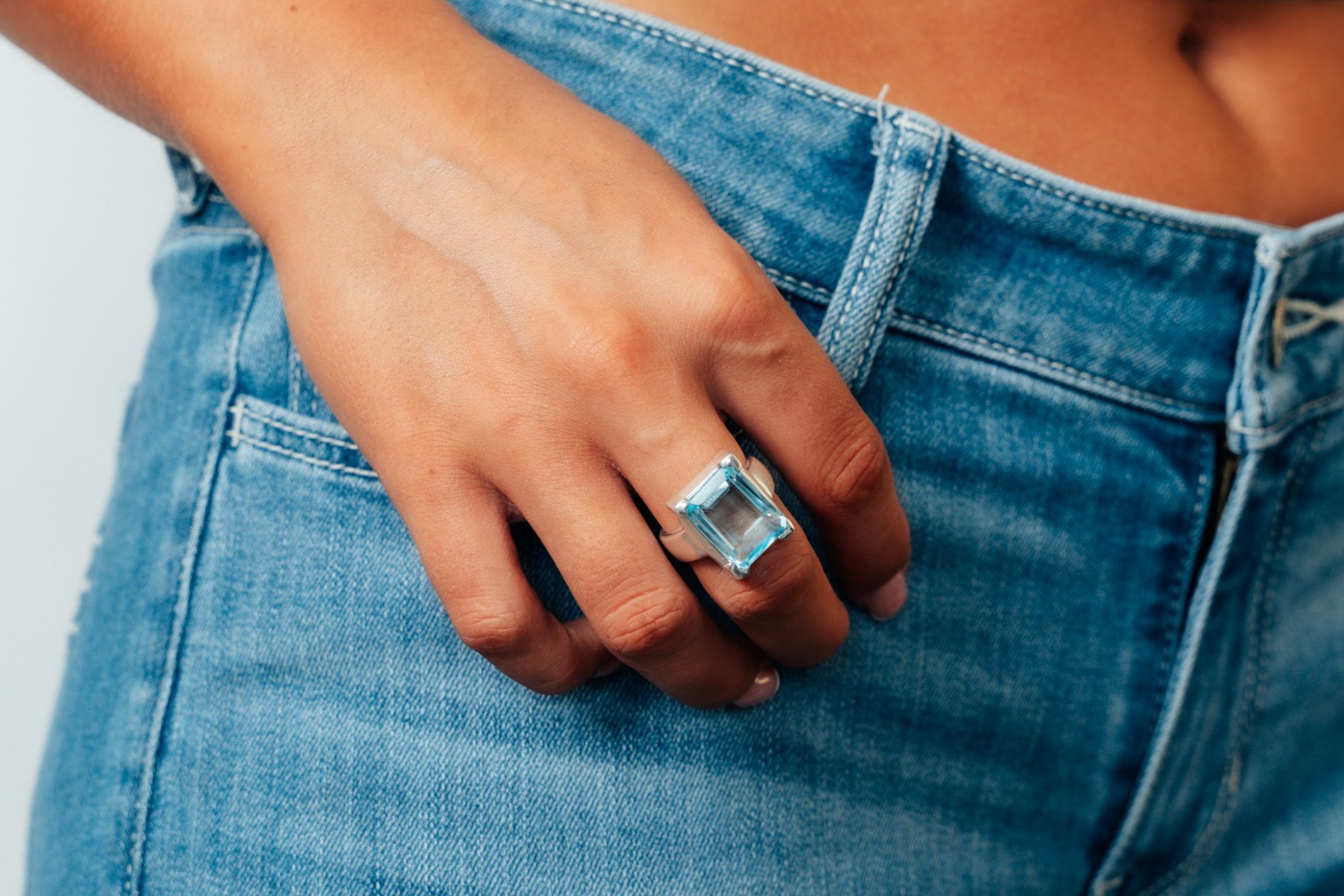
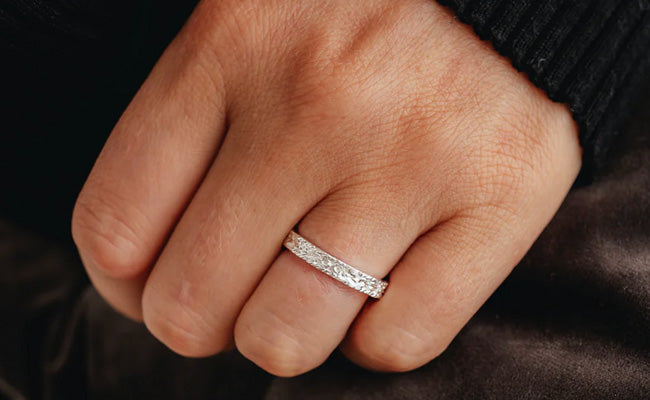
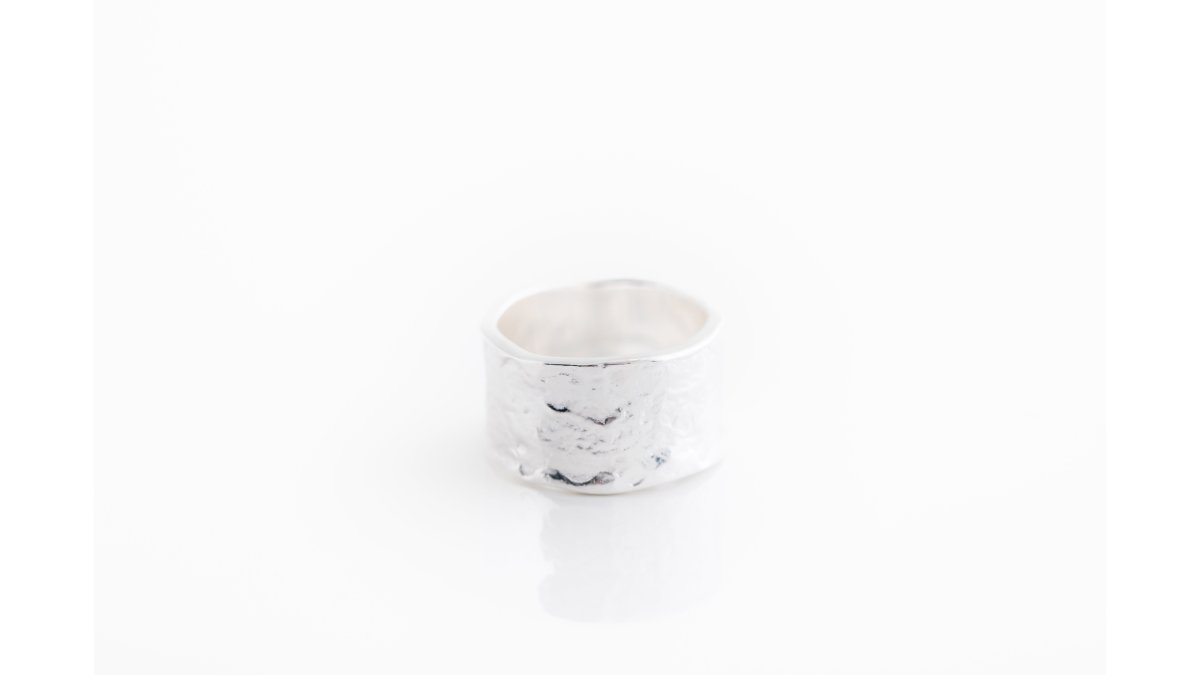
The Wide Hammered Band Ring, priced at £95.00, is a minimalist statement piece in hammered sterling silver with a band width of approximately 10mm. Available in sizes S to XL, it pairs well with other rings for a stacked look.
The hammered finish hides everyday scratches well, making it practical for constant wear.
Repair and Circularity: Making Your Jewellery Last
Repair and circularity services are the missing piece in most ethical jewellery conversations, yet they determine whether a piece truly supports sustainability.
Sterling silver naturally tarnishes with exposure to air and everyday products, but this is easily managed. Regular gentle cleaning with a soft cloth restores its shine.
The circular economy approach treats jewellery as a long-term asset. Choosing brands that stand behind their craftsmanship, offer repair guidance, and use durable materials supports a system designed to reduce waste.
Conclusion: Choosing Ethical Jewellery with Confidence
Choosing ethical silver jewellery reviews UK shoppers can rely on comes down to asking the right questions and supporting brands that provide transparent answers.
SilverStory addresses this demand through ethically sourced, handcrafted pieces made by skilled artisans in Rajasthan, with affordable pricing.
Get started with SilverStory and add a thoughtfully crafted piece to your collection that you can feel good about wearing every day.
Frequently Asked Questions
What defines ethical silver jewellery in the UK?
Ethical silver jewellery in the UK is defined by responsible sourcing, transparent supply chains, and fair treatment of artisans. Look for recycled sterling silver, which avoids the environmental damage of newly mined metal. Ethical brands also ensure workshops pay fair wages and provide safe conditions, often working directly with small-scale artisans. Third-party certifications and hallmarks from UK assay offices add verification. A brand that openly discusses its sourcing and production methods, rather than using vague eco-friendly claims, is more likely to be genuinely ethical.
How can I verify if a jewellery brand is truly sustainable?
Start by checking for specific claims you can verify. Does the brand state where its silver comes from and whether it is recycled? Look for UK hallmarking, which confirms the metal's purity and is a legal requirement for silver sold as sterling. Ask about the workshop: who makes the pieces, and under what conditions? Brands working directly with artisan groups are often more transparent than those using anonymous factories. Be wary of vague terms like 'green' or 'eco' without evidence. A genuine commitment to sustainability includes repair services and guidance on long-term care.
Is recycled silver better for the environment than mined silver?
Yes, recycled silver has a significantly lower environmental impact than freshly mined silver. Mining consumes large amounts of energy and water and can cause habitat destruction and pollution. Recycled sterling silver uses metal already in circulation, cutting out those impacts entirely. Choosing recycled silver supports a circular economy and reduces demand for new mining operations. For UK shoppers looking for ethical silver jewellery, recycled sterling silver offers the same quality and appearance as mined silver, but with a clear conscience and a smaller carbon footprint.
What should I look for in ethical jewellery reviews?
In ethical jewellery reviews, look beyond aesthetics. Pay attention to comments about durability, tarnish resistance, and how the piece holds up to daily wear, as longevity is a key part of sustainability. Look for verified buyer photos to confirm the product matches its online images. Consider what the review says about packaging and delivery, which reflects the brand's broader environmental commitment. Reviews that mention the brand's responsiveness to questions about sourcing or repairs are also valuable, as they indicate genuine transparency and customer service.
Are there UK-based certifications for ethical jewellery?
There is no single UK government certification exclusively for ethical jewellery, but several recognised standards apply. The British Hallmarking Council oversees UK assay offices, and a hallmark is your legal guarantee of silver purity. For ethical claims, look to internationally recognised schemes like Fairtrade Gold or the Responsible Jewellery Council, though these focus more on gold and larger operations. For silver, your best verification is a brand's own transparent supply chain documentation. Ask the brand directly about its workshop practices and material sourcing, and expect a detailed, specific answer.