Ring Size Between Sizes: What to Do
Table of Contents
- Understanding Ring Size Between Sizes
- How to Measure Ring Size at Home
- Should You Size Up or Size Down?
- Does Ring Width Affect How Size Feels?
- How to Make a Ring Smaller Without Resizing
- Permanent Solutions: Ring Resizing by a Jeweller
- Frequently Asked Questions
Last Updated: October 1, 2026
Understanding Ring Size Between Sizes
Finding the perfect ring fit can be tricky when your finger falls between standard sizes. The answer depends on several factors unique to your hand and lifestyle.
A ring size between sizes occurs when your finger measurement falls between two standard ring sizes. You have several practical solutions to avoid an uncomfortable ring that either slips off or cuts into your skin.
You can measure accurately at home, use temporary solutions, or work with a professional jeweller for a permanent fix.
How to Measure Ring Size at Home
Measuring your ring size at home takes just a few minutes and requires minimal tools.
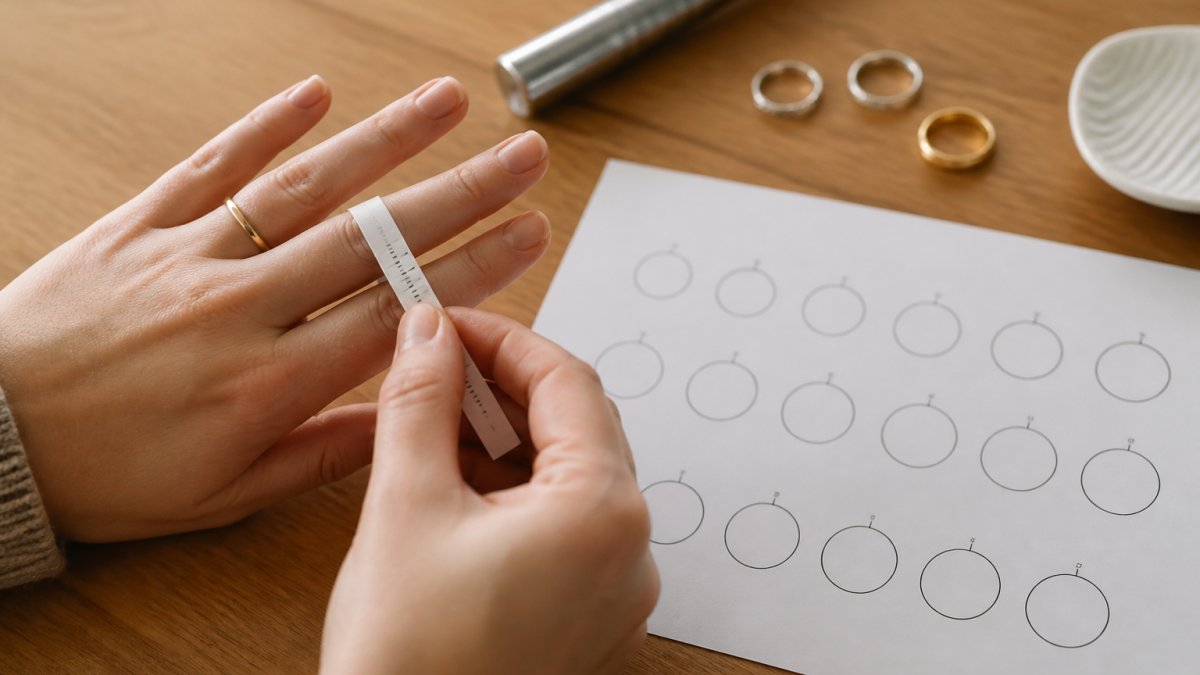
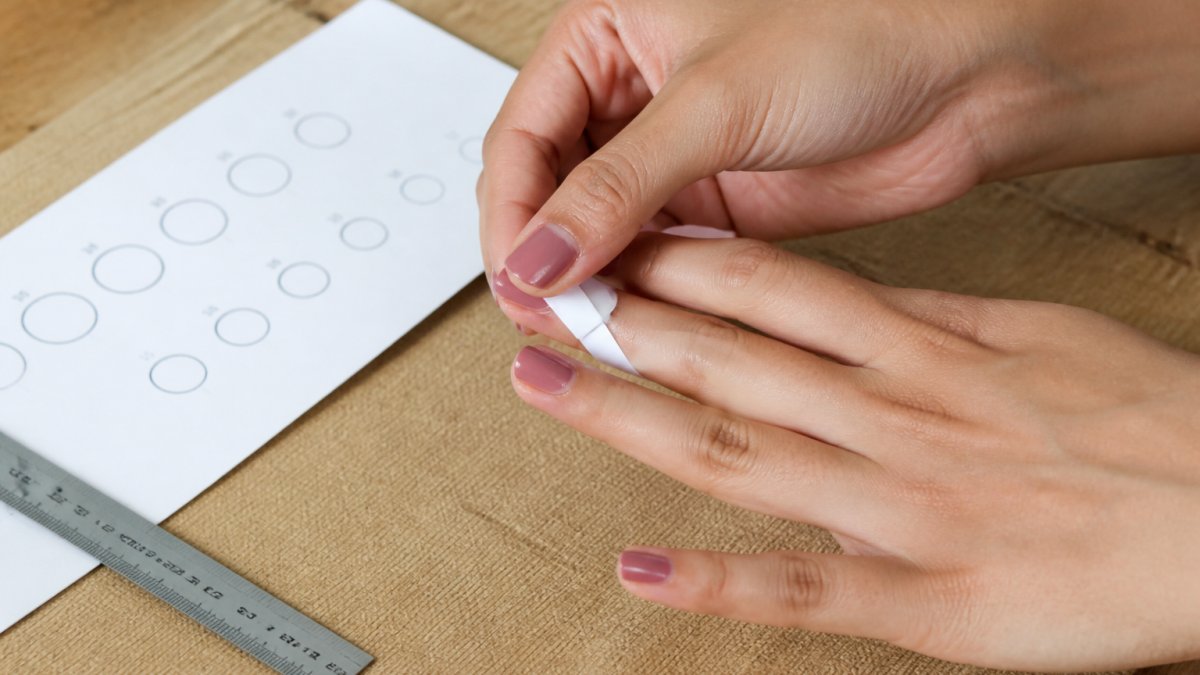
Wrap paper or string around the base of your finger, just below the knuckle. Mark where it overlaps, then measure that length in millimetres using a ruler to convert to your size.
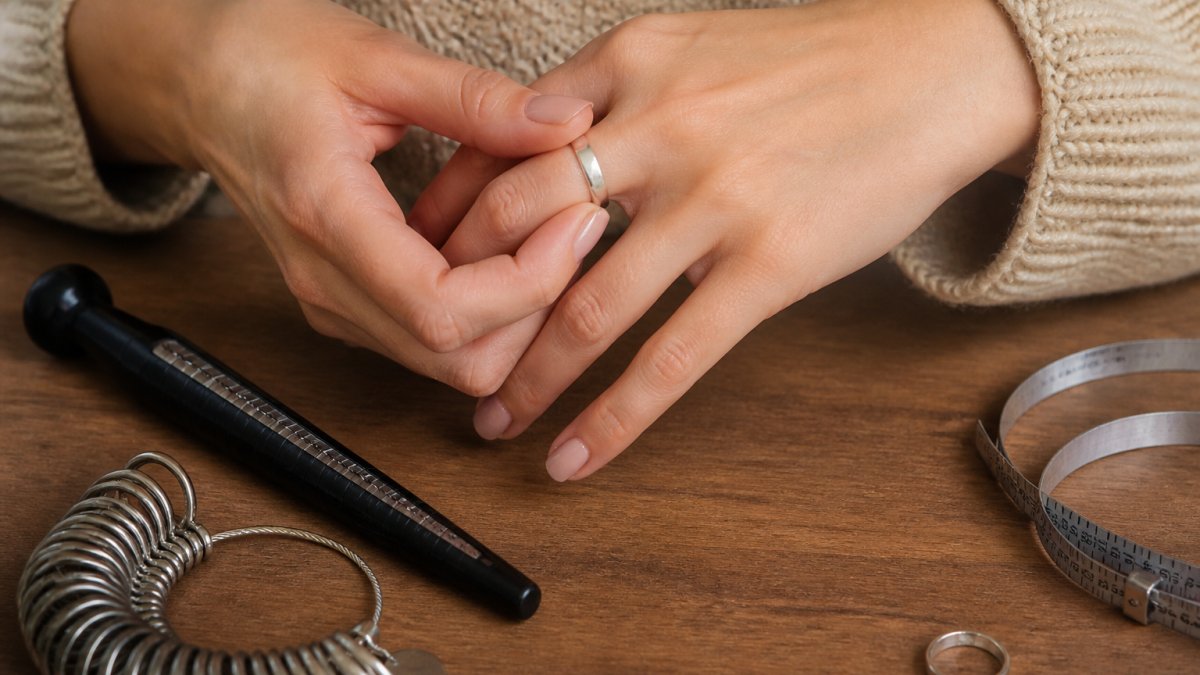
Better yet, use a ring mandrel, a tapered cone marked with ring sizes. Slide an existing well-fitting ring onto it until snug and note where it stops. This eliminates guesswork.
Measure at different times of day. Your fingers swell in the afternoon and evening, especially after exercise or salt intake. Morning measurements show your smallest size; evening shows your largest.
Pro tip: Measure multiple times over several days to reveal seasonal or activity-related fluctuations, which matter when deciding whether to size up or down.
Should You Size Up or Size Down?
The choice depends on your knuckle size, daily activity level, and the ring's band width.
The Knuckle Test vs. Base of Finger Fit
Your knuckle is typically larger than your finger base. A ring that slides comfortably over your knuckle might spin loosely at the base; one snug at the base might feel too tight when putting it on.
The knuckle test: slide the ring over your knuckle. It should require gentle pressure but not feel painful. Struggle means too small; easy sliding means too large.
A slightly loose fit is preferable to genuine tightness, and you can use a ring guard to prevent spinning.
If your knuckle is significantly larger than your base, size up. A slightly loose fit at the base beats struggling to remove a stuck ring.
Factors That Affect Your Finger Size
Temperature affects size noticeably. Cold weather contracts fingers; warm weather swells them. In climates with distinct seasons, ring size can shift by half a size between winter and summer.
Hydration and salt intake affect swelling. After salty meals or intense exercise, fingers swell temporarily; they return to normal after hydration and rest.
Daily activity matters. Hand work or regular exercise causes slight swelling from increased blood flow; sedentary days produce less.
Time of day creates consistent variation. Fingers are smallest in the morning and largest by evening.
If you notice significant swelling, sizing up by half a size provides flexibility across varying swelling days.
Does Ring Width Affect How Size Feels?
Yes. Band width significantly affects how a ring fits and feels.
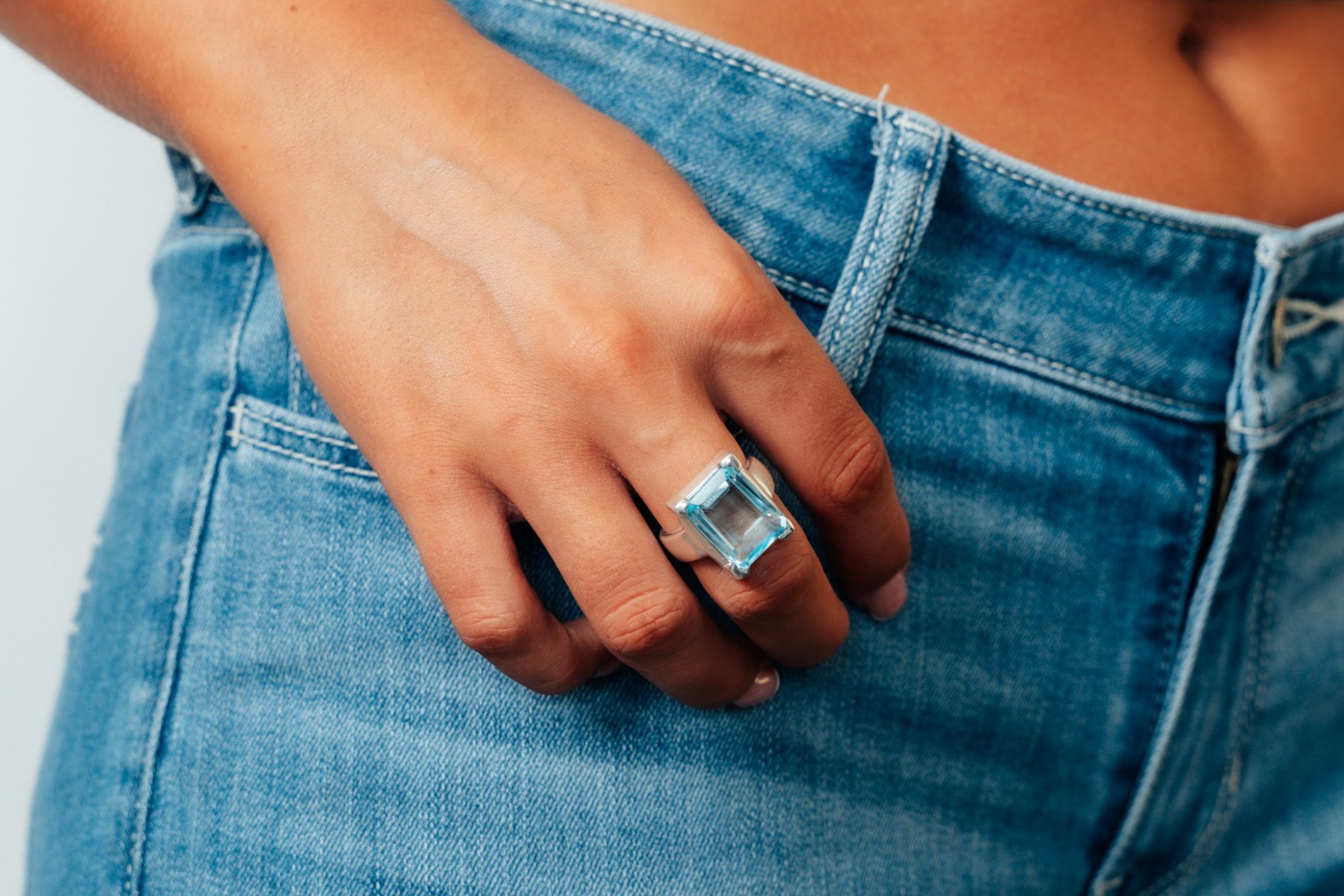
A narrow band (under 4mm) feels tighter than a wide band at the same size because it concentrates pressure on a smaller area. A wide band (8mm or wider) distributes pressure across more surface, feeling more comfortable.
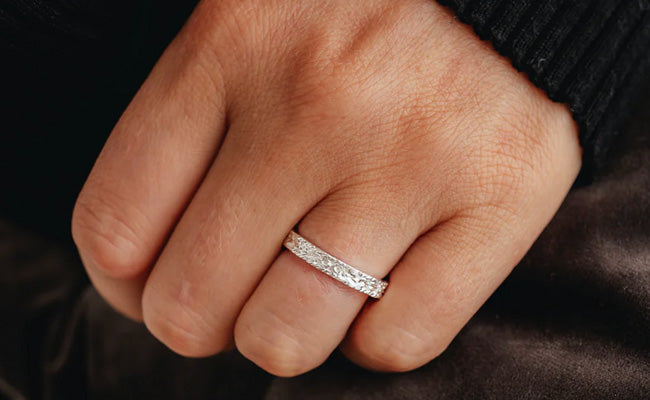
SilverStory offers rings in various widths. Our Silver Intricate Narrow Band Ring features a delicate 3mm band; if you're between sizes, sizing up is wise. Our Wide Hammered Band Ring offers a generous 10mm width that can feel comfortable at your smaller size if you're between sizes.


How to Make a Ring Smaller Without Resizing
If you've purchased a ring that's too large, you have temporary and permanent solutions. Choose based on how much too large it is and whether you need a lasting fix or short-term workaround.
Temporary Solutions vs. Professional Resizing
When to use temporary solutions: If your ring is only slightly too large (a quarter to half size), a temporary fix can work well. These solutions are also ideal if you're testing whether a size works before committing to permanent resizing, or if you're between sizes and want flexibility as your finger size fluctuates seasonally.
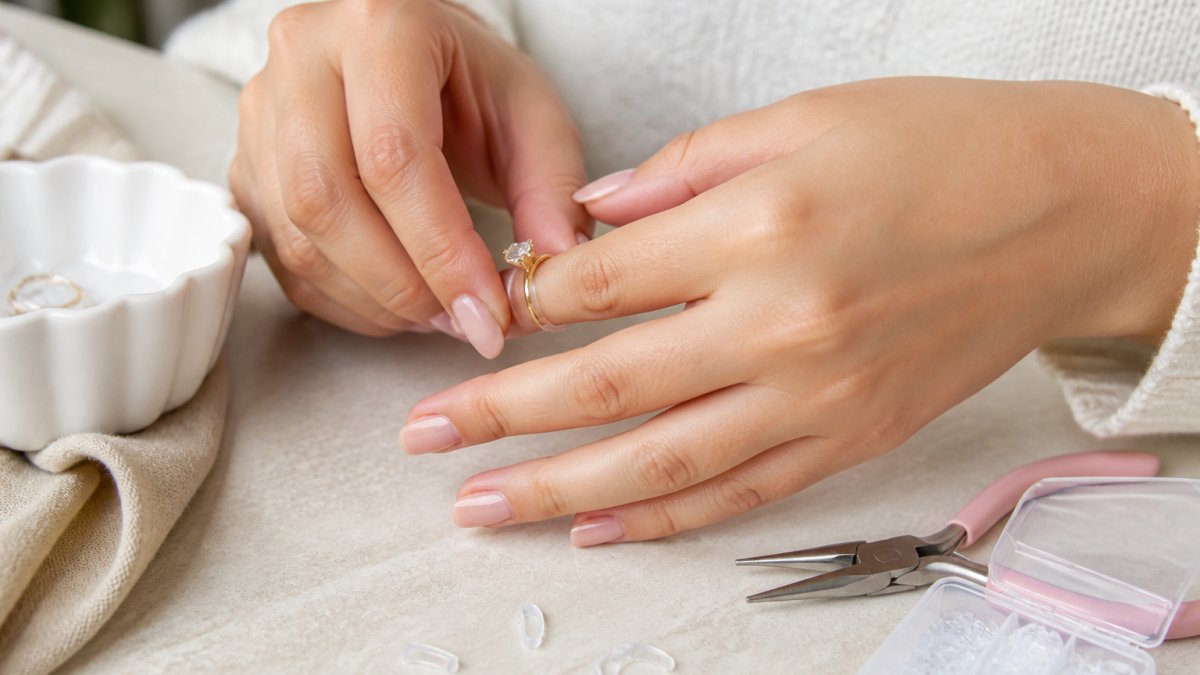
Ring guards are the simplest temporary fix. These plastic or silicone bands wrap around the inner band of your ring, effectively reducing its inner diameter by a quarter to half size. They cost £3-£8, work immediately, and require no professional help. The downside: they're visible inside the ring, can shift slightly with wear, and may need replacing every 6-12 months depending on material quality and daily wear. Ring guards work best for rings you don't remove frequently. If you take your ring off and put it on multiple times daily, the guard may slip.
Ring adjusters (also called ring sizers) are small metal or plastic inserts that sit inside the band, typically at the base of your finger. They're more discreet than guards and stay in place better because they're fixed to the band. Quality adjusters cost £5-£15 and can be removed or replaced easily if your finger size changes. Metal adjusters (usually sterling silver or gold-plated) are more durable than plastic. A professional jeweller can fit an adjuster in 1-2 days, or you can purchase self-fitting adjusters online for immediate use.
Sizing beads are tiny metal or plastic spheres that a jeweller solders inside the band at strategic points. They're more permanent than tape or guards but less invasive than full resizing. A jeweller can typically add sizing beads for £20-£40 depending on the ring's metal and how many beads are needed. Sizing beads work well if your ring is a quarter to half size too large. They're invisible from the outside and don't shift. However, they cannot be easily removed if your finger size changes, so this is a semi-permanent solution.
Tape wrapping is a temporary emergency fix only. Wrap thin athletic tape or medical tape around the inner band until the fit feels snug. This works for a few days but isn't durable for daily wear and can leave residue inside the ring.
When temporary solutions fail: If your ring is more than half a size too large, a temporary fix will likely still feel loose. In that case, professional resizing is your only option.
Professional Resizing: What You Need to Know
How the process works: A qualified jeweller marks the amount of metal to remove based on your desired size. They carefully cut the band, remove the excess metal, and solder the ends back together. The band is then polished and finished to match the original.
Cost by metal type:
- Sterling silver: £30-£50
- Gold (9ct, 14ct, 18ct): £50-£80
- Platinum: £80-£120
- Mixed metals or complex settings: £60-£150
These are approximate ranges; costs vary by jeweller, location, and ring complexity. Always ask for a quote before committing.
Quality considerations: Choose a reputable jeweller with specific experience resizing the metal your ring is made from. Sterling silver and gold are straightforward to resize. Platinum requires specialised equipment and expertise. Mixed-metal rings (e.g., white gold band with yellow gold detail) or those with complex settings need a jeweller experienced with those specific challenges. Ask whether they guarantee their work; reputable jewellers typically offer a guarantee that the resizing will hold and the finish will match the original.
Critical limitation: Not all rings can be resized. Before purchasing or attempting to resize any ring, verify whether it's resizable:
- Eternity bands and three-quarter eternity bands cannot be sized down because stones extend around the entire band (or most of it). Removing metal would damage the setting and compromise the structural integrity. Some jewellers can resize these upward by adding metal, but downsizing is not possible.
- Tension-set rings (where the stone appears to float without a traditional setting) are extremely difficult to resize because the stone's security depends on precise band tension. Resizing changes that tension and risks losing the stone.
- Rings with intricate carved or filigree designs may lose detail or symmetry if resized. A jeweller can resize them, but the design may not look identical after the work.
- Rings with mixed materials (e.g., wood inlay, resin, or enamel) may not be resizable if the non-metal components cannot withstand the heating and soldering process.
Before you buy: If you're between sizes and considering a ring with any of these features, ask the seller explicitly whether it's resizable.
Permanent Solutions: Ring Resizing by a Jeweller
If you need a lasting solution, professional resizing is your best option. A jeweller has the tools and expertise to adjust your ring precisely.
Frequently Asked Questions
What should I do if I'm in between ring sizes?
When your ring size is between sizes, you have three main options: size up if the ring will be worn daily or loosely, size down if you prefer a snug fit, or use a temporary ring guard or adjuster. Consider your knuckle size, if your knuckle is significantly larger than your finger base, sizing up prevents the ring from getting stuck. For handcrafted pieces like those from SilverStory, test how the band width affects comfort; wider bands may feel tighter even at the same size.
How does ring width affect the fit?
Wider bands create a snugger feel than narrow ones at the same size because they cover more of your finger. If you prefer a comfortable fit with minimal pressure, a narrower band allows you to size up slightly without excess movement. SilverStory's Wide Hammered Band Ring and Silver Intricate Narrow Band Ring demonstrate this difference, choose the width that matches your comfort preference before deciding whether to size up or down.
Can I use ring guards or adjusters as a permanent solution?
Ring guards and adjusters work well as temporary or interim solutions, but they're not permanent. Plastic or rubber adjusters can slip over time, and metal adjusters may leave marks on the band. They're ideal for bridging a half-size gap while you decide on resizing, or for managing finger swelling that changes seasonally or with daily activity. For handcrafted pieces you plan to wear for years, professional resizing by a jeweller is the more reliable long-term option.
Is it better to size up or down if I'm between sizes?
Size down if your knuckle and finger base are similar widths and you prefer a snug fit. Size up if your knuckle is noticeably larger than your finger base, if you have temperature-related swelling, or if you want a comfortable fit for daily wear without adjustment. Test your choice with an adjustable sizer first. Finger swelling varies throughout the day and with hydration, so a half-size larger often provides better long-term comfort than one that's too tight.