Does Finger Size Change with Temperature?
Table of Contents
- Why Fingers Swell in Heat
- Why Fingers Shrink in Cold
- How to Measure Ring Size at Home
- Best Time of Day to Measure Ring Size
- Blood Circulation and Finger Fluctuation
- Choosing a Ring Size That Works Year-Round
- Conclusion
- Frequently Asked Questions
Last Updated: September 27, 2026
Why Fingers Swell in Heat
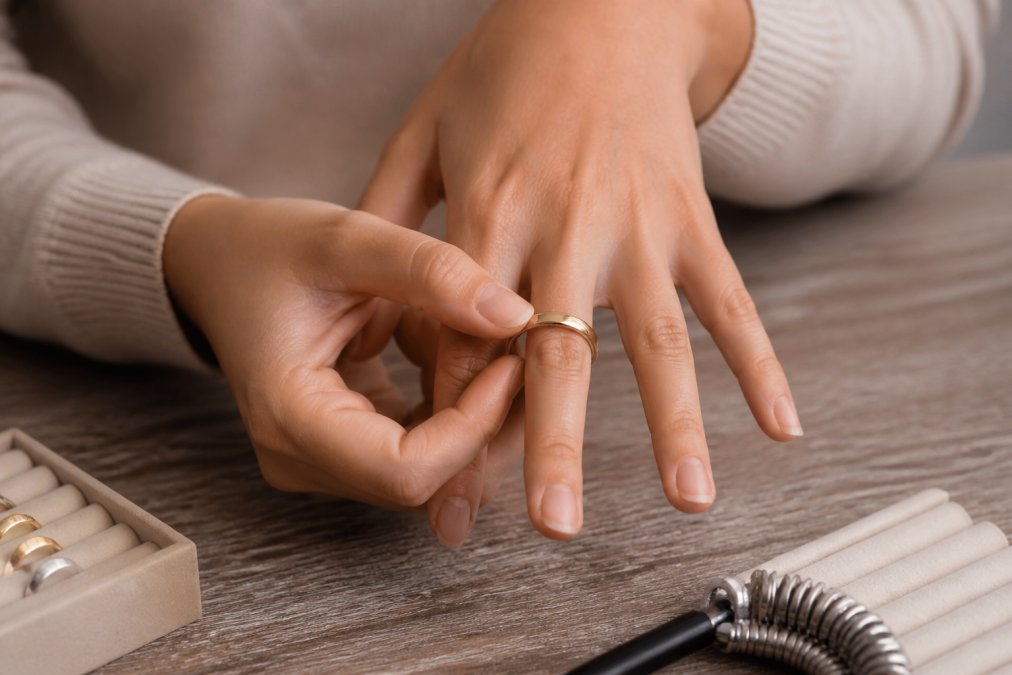
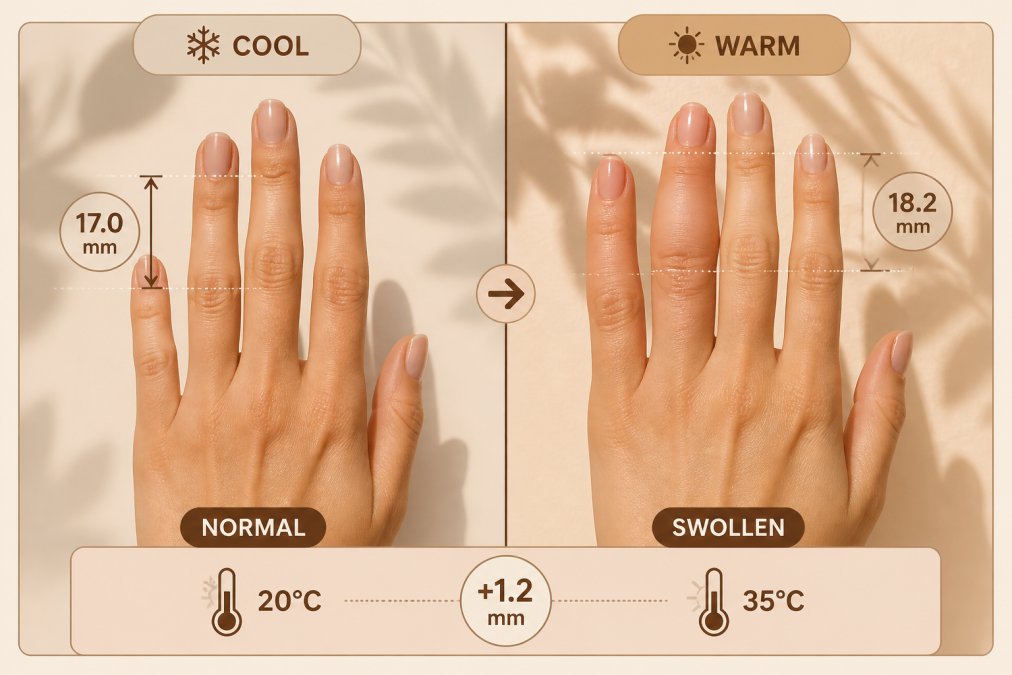
When temperatures rise, your fingers swell because heat causes blood vessels to dilate, increasing blood flow to your skin to cool your body, which is why does finger size change with temperature is such an important consideration for ring sizing. This temporary swelling is why rings feel tighter on hot days.
Humidity intensifies swelling because your body retains more water, which combines with blood vessel expansion for noticeably puffier fingers.
Physical activity intensifies swelling by raising core temperature and increasing blood flow, which is why athletes often remove rings before training.
At SilverStory, we understand that finger size fluctuates throughout the year. This knowledge helps you choose a ring that fits comfortably in all seasons.
Why Fingers Shrink in Cold
Cold causes blood vessels to constrict, pulling blood away from your skin to preserve core warmth. Fingers can shrink by half a size or more in winter, which is why a ring that fits perfectly in summer might slide off.
Cold-induced constriction happens quickly, even a mild chill triggers the response.
Water retention decreases in cold weather as your body conserves water, which combined with blood vessel constriction creates significant size variation.
How to Measure Ring Size at Home
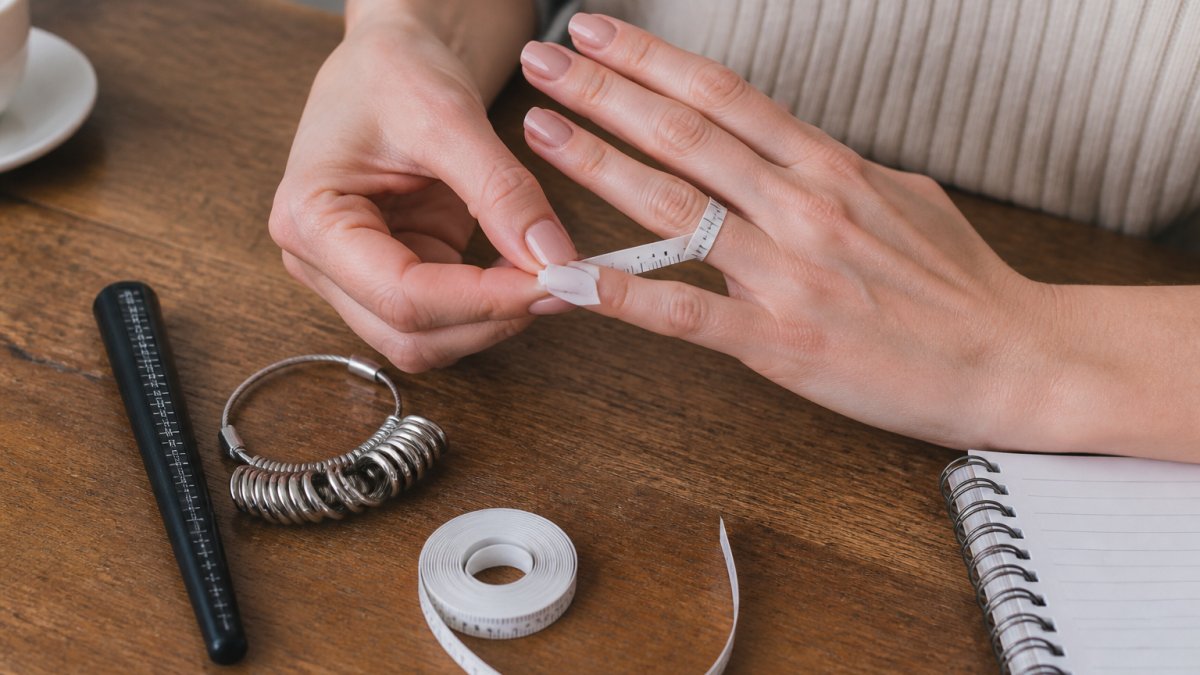
To measure your ring size accurately, you'll need a flexible measuring tool and the correct technique.
What you'll need:
- A piece of string or flexible measuring tape
- A ruler or measuring tape marked in millimetres
- A ring that fits you comfortably
- A pen to mark the string
Step-by-step measurement:
- Wrap string around your finger at the knuckle and mark where it overlaps.
- Measure the string in millimetres on a ruler to find your finger circumference.
- Use a ring size conversion chart to translate to your UK ring size (A-Z).
- If between sizes, choose the larger size, a slightly loose ring is safer than one that constricts blood flow.
Alternative: measure the inside diameter of a ring that fits perfectly. The most common mistake is measuring too tightly, leave enough room for your finger to expand slightly during the day.
| Method | Accuracy | Time Required | Best For |
|---|---|---|---|
| String and ruler | High | 5 minutes | Home measurement |
| Existing ring | Very high | 2 minutes | Comparing to known fit |
| Ring sizer tool | Very high | 3 minutes | Professional fitting |
| Jeweller fitting | Highest | 10 minutes | Precise sizing |
Best Time of Day to Measure Ring Size
Measure in the afternoon when your fingers are naturally largest due to activity, body temperature, and water retention. Morning measurements are unreliable because your fingers are at their smallest after lying down.
Avoid measuring after exercise or on hot days, as temporary swelling isn't representative of normal finger size.
Measure twice yearly, once in summer and once in winter, to understand your natural fluctuation and choose a size that accommodates both seasons.
Blood Circulation and Finger Fluctuation
Blood circulation drives normal temperature-related finger size changes, but not all swelling is thermal. Understanding the difference between thermal and medical swelling is essential for proper sizing.
When warm, blood vessels dilate to release excess heat through your skin, causing finger swelling. Cold triggers the opposite: blood vessels constrict to preserve core body heat, redirecting blood from your extremities and making fingers thinner.
Caffeine and salt intake also affect circulation: caffeine constricts blood vessels slightly, while salt increases water retention. Hydration status influences finger size too, dehydration causes mild swelling, while good hydration releases excess water.
Normal thermal swelling is symmetrical, temporary, and painless. If your swelling doesn't match this pattern, it may indicate an underlying health condition.
Arthritis causes persistent swelling that doesn't resolve with temperature changes. Rheumatoid arthritis affects multiple joints symmetrically with morning stiffness; osteoarthritis affects specific joints. Both persist regardless of season. Consult your GP if you suspect arthritis.
Oedema (fluid retention) causes asymmetrical swelling often with pitting (indents that remain after pressing). Common causes include kidney, liver, or heart disease, or certain medications. It requires medical evaluation.
Thyroid dysfunction (particularly hypothyroidism) causes generalised swelling often with fatigue, weight gain, and cold intolerance. Lymphatic obstruction or venous insufficiency causes asymmetrical swelling with skin changes. Both require medical assessment.
Hormonal changes during the menstrual cycle can cause finger swelling in the luteal phase, typically less than half-a-size. Some medications (blood pressure drugs, steroids, anti-inflammatories) can also cause swelling, discuss with your GP if it coincides with new medication.
Consult your GP if swelling is asymmetrical, persists despite temperature changes, is accompanied by pain/redness/stiffness, develops suddenly, or causes numbness or tingling. Early diagnosis can significantly improve outcomes.
If you have persistent medical swelling, size based on your swollen state and work with a jeweller on comfort-fit designs, sizing beads, or larger sizes. If swelling is purely temperature-related, size for autumn or spring.
Choosing a Ring Size That Works Year-Round
Selecting a ring size that accommodates seasonal changes requires understanding both your finger's natural fluctuation range and the specific design features that affect how a ring feels during that fluctuation.
Determine your true size range:
Before choosing a final size, measure your fingers at least twice: once during warm weather (late spring or summer) and once during cold weather (winter). Record both measurements. Most people experience a half-size to full-size difference between seasons. For example, if you measure a UK size M in summer and a UK size L in winter, your true range is M-L.
Once you know your range, the traditional advice is to size for the midpoint, typically autumn or spring. However, this approach works only if the difference between your seasons is small (less than half a size). If your fluctuation is larger, you'll need a different strategy.
Account for ring design and material:
Not all rings feel the same at the same size. Band width significantly affects perceived tightness: a 6 mm wide band will feel noticeably tighter than a 2 mm band at identical sizes, because the wider band covers more surface area and creates more contact pressure.
Permanent solutions for significant fluctuation:
-
Professional resizing: A jeweller can resize your ring to fit your winter fingers, then resize it again for summer. Most jewellers charge between £30 and £80 per resize, depending on metal and complexity. This approach works well if you wear the same ring daily and want perfect fit in both seasons. Plan for two to three weeks per resize.
-
Sizing beads: These are small metal beads soldered inside the ring band to reduce its internal diameter. Unlike removable adjusters, sizing beads are permanent and invisible. They're ideal if you need to reduce size by a quarter to half-size. Cost ranges from £20 to £50, and they're particularly effective for rings that are slightly too loose in winter.
-
Comfort-fit conversion: Some jewellers can modify a standard flat-band ring to add an interior curve, creating a comfort-fit design. This makes the ring feel looser without changing its actual size, giving you more flexibility across seasons. This is a specialist service and typically costs £40 to £100.
Temporary solutions for minor fit issues:
-
Silicone ring guards: These sit inside your ring and add thickness to reduce internal diameter. They cost £5 to £15, are reusable, and can be applied or removed at home in seconds. They work well for rings that are up to half-a-size too loose. Silicone guards are less durable than metal sizing beads and may need replacing every 6-12 months with daily wear.
-
Ring adjusters with springs: Metal adjusters with small springs grip the inside of your ring and can be adjusted for tightness. These cost £10 to £20 and are more durable than silicone but slightly more visible if your ring has a thin band.
The two-ring approach:
Choosing your strategy:
Conclusion
The answer to whether does finger size change with temperature is a definitive yes. Heat causes blood vessels to dilate and increases water retention, making your fingers swell. Cold triggers the opposite response, causing them to shrink. This fluctuation is normal, inevitable, and affects how rings fit throughout the year.
Frequently Asked Questions
Do your fingers get bigger when they're hot or cold?
Yes. Fingers swell noticeably in warm conditions because heat causes blood vessels to dilate, increasing blood flow to the skin's surface. In cold environments, blood vessels constrict and fingers shrink as circulation reduces. These changes can shift your ring size by up to half a size, which is why a ring that fits perfectly in winter may feel tight in summer.
What time of day are fingers less swollen?
Early morning, shortly after waking, is when fingers are typically least swollen. During sleep, your body maintains a lower core temperature and reduces sodium and fluid retention. Fingers gradually swell throughout the day due to activity, food intake, and ambient temperature.
How can I accurately measure my ring size at home?
Measure your finger circumference using a flexible measuring tape or a strip of paper wrapped around the base of your ring finger, just below the knuckle. Mark where the paper overlaps and measure that length in millimetres. Compare your measurement to a ring sizing chart. For the most reliable result, measure the specific finger where you'll wear the ring, since finger sizes vary.
Does humidity affect finger swelling?
Humidity can contribute to finger swelling indirectly through its effect on body temperature and hydration. High humidity makes it harder for your body to cool itself through perspiration, which can increase overall fluid retention and cause mild swelling. Combined with warm temperatures, this effect is more noticeable. Staying hydrated and keeping your environment cool helps minimise humidity-related swelling.