How to Style Silver Jewellery in 2026: A Step-by-Step Guide
Table of Contents
- Start With Your Skin Tone and Metal Compatibility
- How to Layer Silver Necklaces Without Tangling
- The Mixing Metals Jewellery Trend 2026: How to Get It Right
- How to Measure Ring Size at Home Before You Buy
- How to Clean Sterling Silver Jewellery and Keep It Tarnish-Free
- Build a Capsule Silver Collection: Budget vs Investment Pieces
- Styling Silver for Everyday, Work, and Evening
- Frequently Asked Questions
Last Updated: September 14, 2026
Start With Your Skin Tone and Metal Compatibility
The right style silver jewellery flatters everyone, but the shade of silver you choose should complement your skin's undertone. This is the step most styling guides skip, and it's the one that makes everything else easier.
Cool undertones, visible in veins that read blue or purple, look especially striking in high-polish sterling silver and oxidised finishes. Warm undertones, where veins appear green, tend to suit silver with a brushed or matte texture, because the softer surface picks up warmer light. Neutral undertones can wear either without thinking about it.
Here's how to check in under a minute:
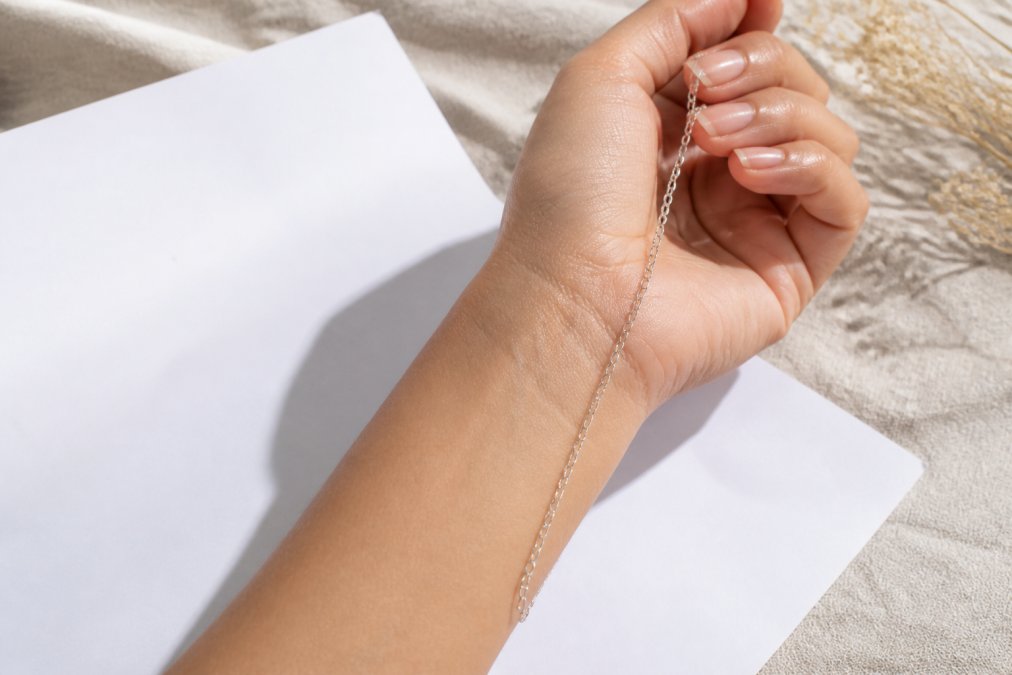
- Look at the veins on your inner wrist in natural daylight.
- Hold a piece of white paper next to your bare face.
- If your skin reads pink or rosy against the paper, you lean cool. If it reads golden, you lean warm.
Get the metal tone right and every layer you add afterward sits better.
How to Layer Silver Necklaces Without Tangling
The best way to layer silver necklaces is to vary chain length deliberately and keep the total count low. Three well-spaced necklaces read as one considered look; five crowded ones read as a knot waiting to happen.
The 2:1:1 Rule for Balanced Layering
Use two fine chains, one medium chain, and one pendant. That ratio keeps the eye moving without clutter. A 40cm choker, a 45cm chain at the collarbone, and a 50-55cm pendant layer gives you clean separation at every level, so nothing catches on anything else.
Mixing Chain Widths and Textures
Texture contrast does the heavy lifting here. Pair a smooth snake chain with a twisted rope or a fine beaded strand. The differing surfaces stop chains from sitting flat against each other and sliding into tangles. Keep the heaviest piece closest to your neck so the lighter chains have something to rest against.
The Mixing Metals Jewellery Trend 2026: How to Get It Right
Mixing metals is now a styling default rather than a risk. The approach is to pick one dominant metal and let the second appear in smaller doses, usually in a single ring or a watch.
A practical split is roughly 70/30. Wear silver as your base, then add one warm-toned piece, such as a gold band on the opposite hand or a two-tone watch. Geometric design pieces work especially well for this because their clean lines make the metal switch look intentional rather than accidental.
The mistake people make is alternating metals piece by piece down the body. That creates visual noise. Anchor, then accent.
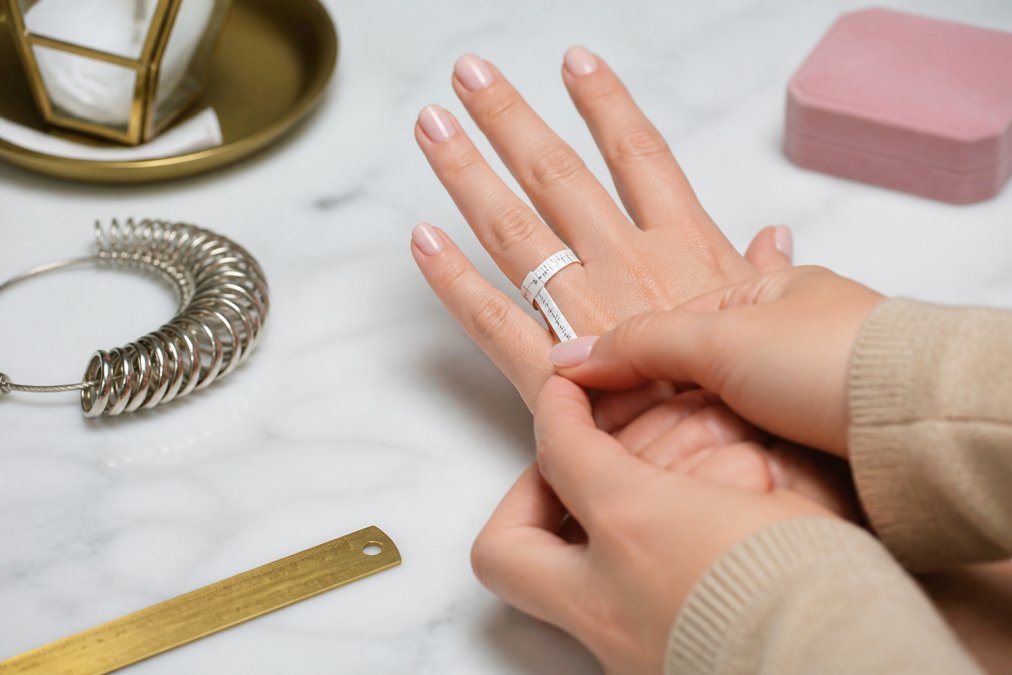
How to Measure Ring Size at Home Before You Buy
Measuring ring size at home takes about two minutes and one strip of paper. Wrap it snugly around the base of your finger, mark where the ends meet, and measure that length in millimetres against a ring size chart. Do it at the end of the day, when fingers are at their largest, and measure the specific finger you're buying for, since sizing varies across hands.
Two things trip people up. First, a ring that fits in winter may feel tight in summer, so size up if you're between measurements. Second, wide bands fit tighter than narrow ones, so add a half size for anything over roughly 6mm wide (Drawing the line on boundaries).
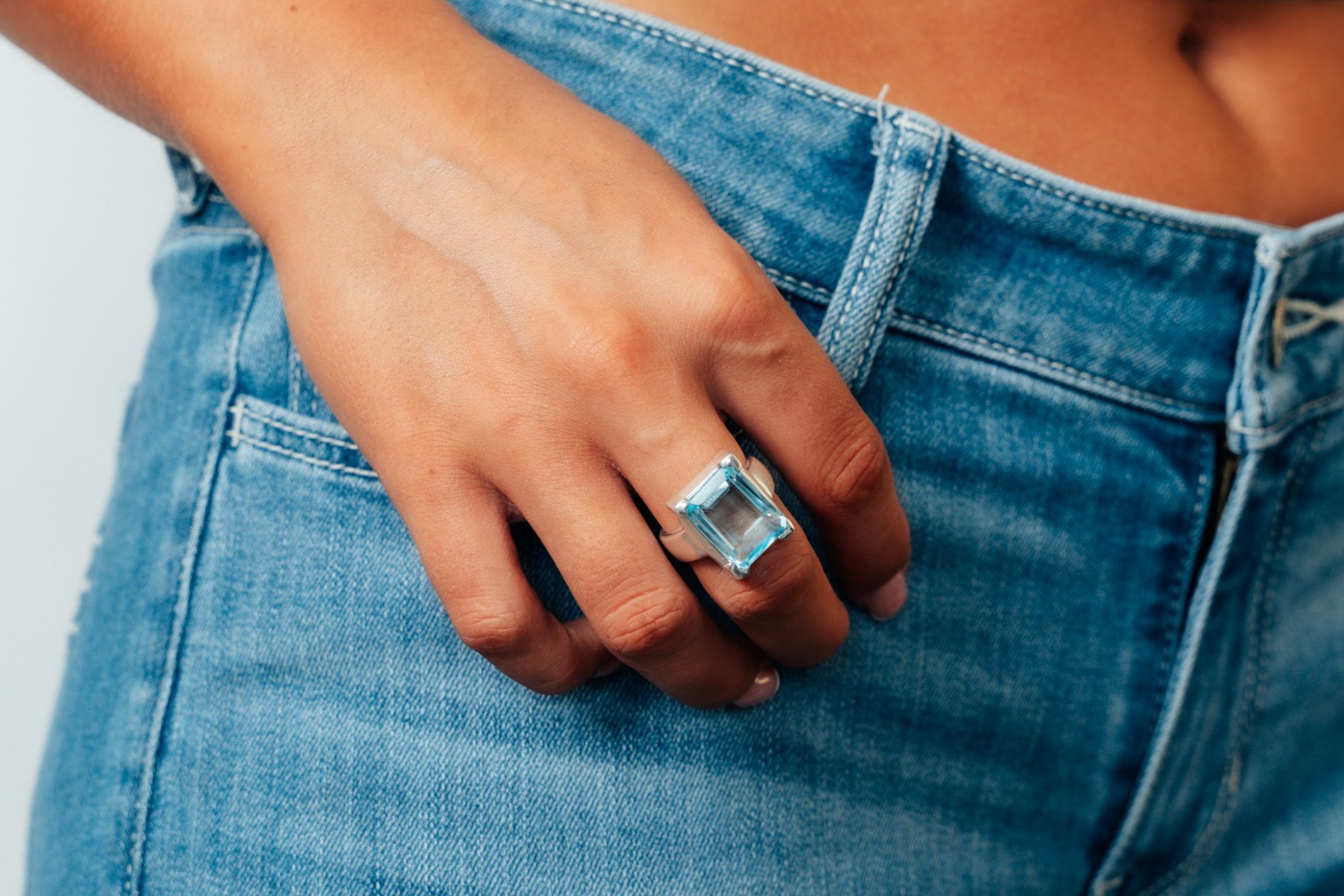
SilverStory's Silver Sun Signet Ring is available in Small through XXL, and the Silver Open Circle Ring offers a minimalist option if you'd rather not commit to a wide band.


How to Clean Sterling Silver Jewellery and Keep It Tarnish-Free
Sterling silver is an alloy of 92.5% silver and 7.5% other metals, usually copper. That copper content is why silver tarnishes, and why the fix is gentler than most people expect.
For everyday cleaning, use warm water, a drop of mild washing-up liquid, and a soft cloth. Rub along the grain rather than in circles, rinse, then dry completely before storing. A silver polishing cloth handles light tarnish without any water at all.
For heavier tarnish, a bicarbonate of soda paste works well: mix three parts bicarbonate to one part water, apply with a soft cloth, rinse thoroughly, and dry. Skip this on oxidised pieces, since it will strip the intentional darkening.
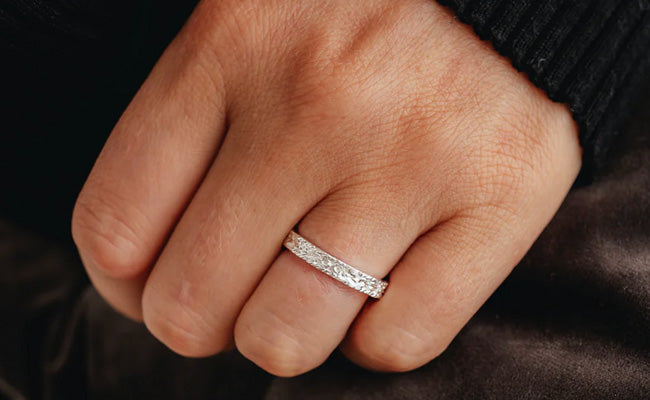
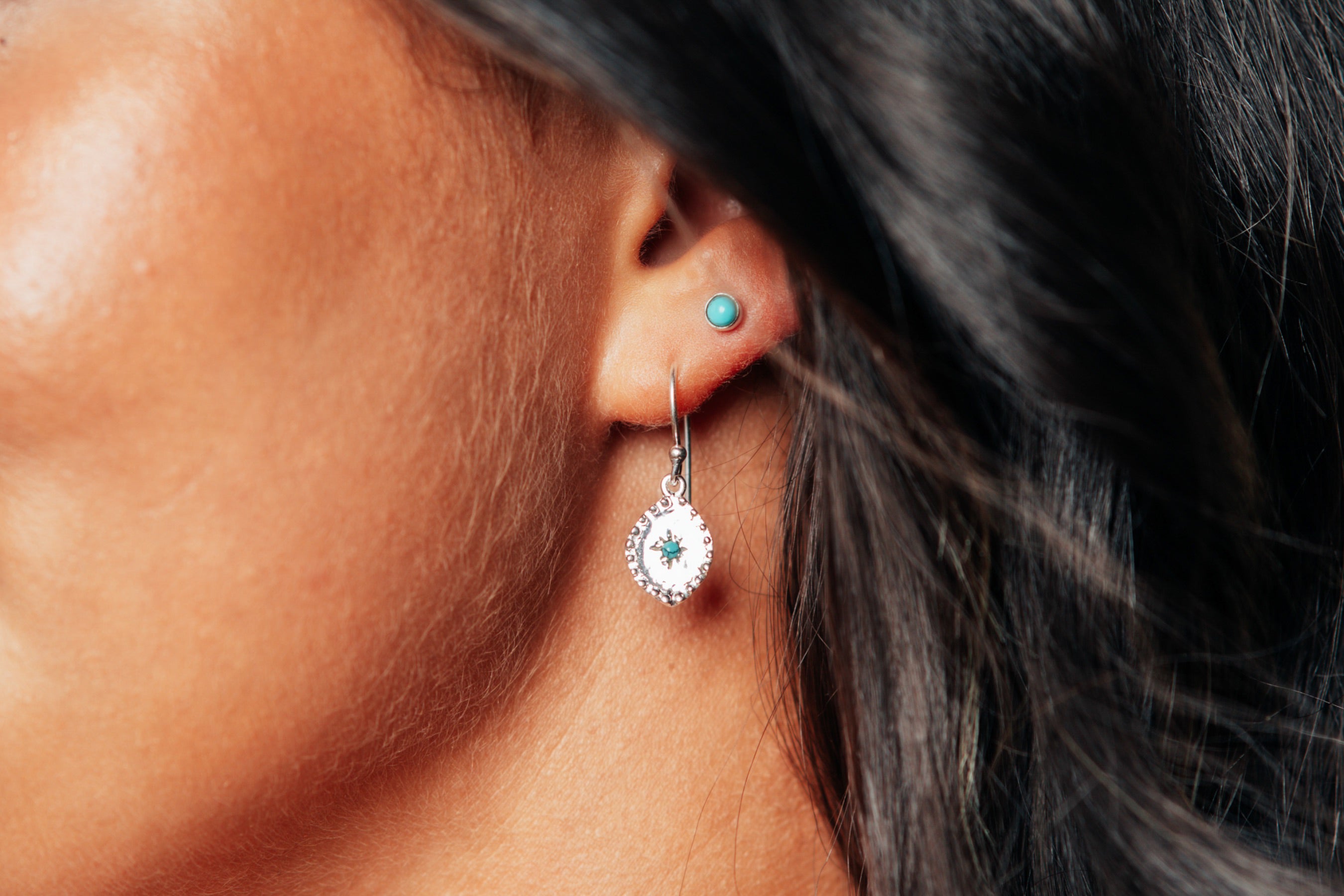
Storage matters as much as cleaning. Keep pieces in an airtight bag or a lined box, away from humidity and rubber bands, which accelerate tarnishing. The Silver Intricate Narrow Band Ring and Twisted Silver Hoops both hold their finish well with this routine.

Build a Capsule Silver Collection: Budget vs Investment Pieces
A capsule silver collection is a small set of pieces that work together across most of your wardrobe. The goal is coverage, not volume, and the single most useful skill you can build is telling genuine sterling silver from plated metal before you spend.
How to Tell Sterling Silver From Plated Metal
Sterling silver is an alloy of 92.5% silver and 7.5% other metals, usually copper. That 92.5% figure is the legal minimum for the word "sterling", and it is enforced through the Hallmarking Act 1973, which requires most silver items over 7.78 grams to carry an assay office hallmark (Hallmarking: practical guidance - summary). A hallmark is your strongest guarantee: it shows a maker's mark, an assay office mark, and a fineness mark (the lion passant for sterling).
Plated pieces behave differently. Silver plating is a thin layer of silver over a base metal such as brass or copper, and it wears through at contact points, the inside of a ring band, the clasp of a chain, the back of an earring. A few practical checks:
- Look for the hallmark. Genuine sterling over the weight threshold will be stamped. If there is no mark at all on a substantial piece, treat the claim with caution.
- Check the wear points. Rubbing or a different colour showing through at high-friction areas is a sign of plating, not solid silver.
- Weigh it in your hand. Sterling has a noticeable heft for its size; plated base metal often feels lighter and warmer to the touch.
- Ask directly. A reputable seller can tell you the fineness and whether a piece is solid or plated. Vague answers are a signal.
What to Spend On and What to Save On
Spend on the pieces you will wear daily and that take the most wear: a signet or band ring, a pair of hoops, and one substantial chain. These are the items where solid sterling pays for itself, because plating on a daily-wear ring will typically fail long before the metal does. Save on trend-driven items like charm-heavy pieces and seasonal shapes, which you will likely rotate out within a year or two, a plated statement piece can be a sensible short-term buy if you accept its lifespan.
| Piece | Budget Approach | Investment Approach | Why |
|---|---|---|---|
| Ring | Simple open band | Engraved signet | Daily wear, high visibility |
| Earrings | Small studs | Twisted hoops | Holds shape over years |
| Necklace | Fine chain | Layering set | Base for every outfit |
| Statement | Charm bracelet | Sculptural cuff | Trend cycle risk |
Sustainable Sourcing: What to Ask
Sustainable silver sourcing is worth asking about directly. Look for brands that can name where their metal comes from and who made the piece, rather than offering a vague ethical claim. Recycled sterling silver is increasingly common and performs identically to newly mined metal, the difference is in the supply chain, not the wear (Key resources | WRAP). A useful question is simply whether the silver is recycled or traceable, and whether the brand can answer without hedging.
Styling Silver for Everyday, Work, and Evening
One style silver jewellery set can carry you from a casual morning to an evening out with two small swaps. The trick is adjusting scale, not starting over, and matching the metal to the neckline in front of you.
Everyday
Keep it light: one fine chain, small studs or hoops, and a single stacking ring. A 40-45cm chain sits neatly inside an open collar or a crew neck, and the metal reads cleanly against denim, knits, and pastel tones. If you are wearing a high neck or a roll-neck, skip the short chain and let a longer 50-55cm pendant layer do the work instead, so the silver is not buried under fabric.
Work
Add a medium chain and one structured piece, such as a geometric pendant or a cuff. This reads polished without competing with your outfit. For a shirt or blouse, a collarbone-length chain sits well in an open button placket; for a blazer, a single sculptural cuff on the wrist you gesture with draws the eye without clutter. Keep earrings to one focal pair, a hoop or a small ear cuff, rather than stacking both.
Evening
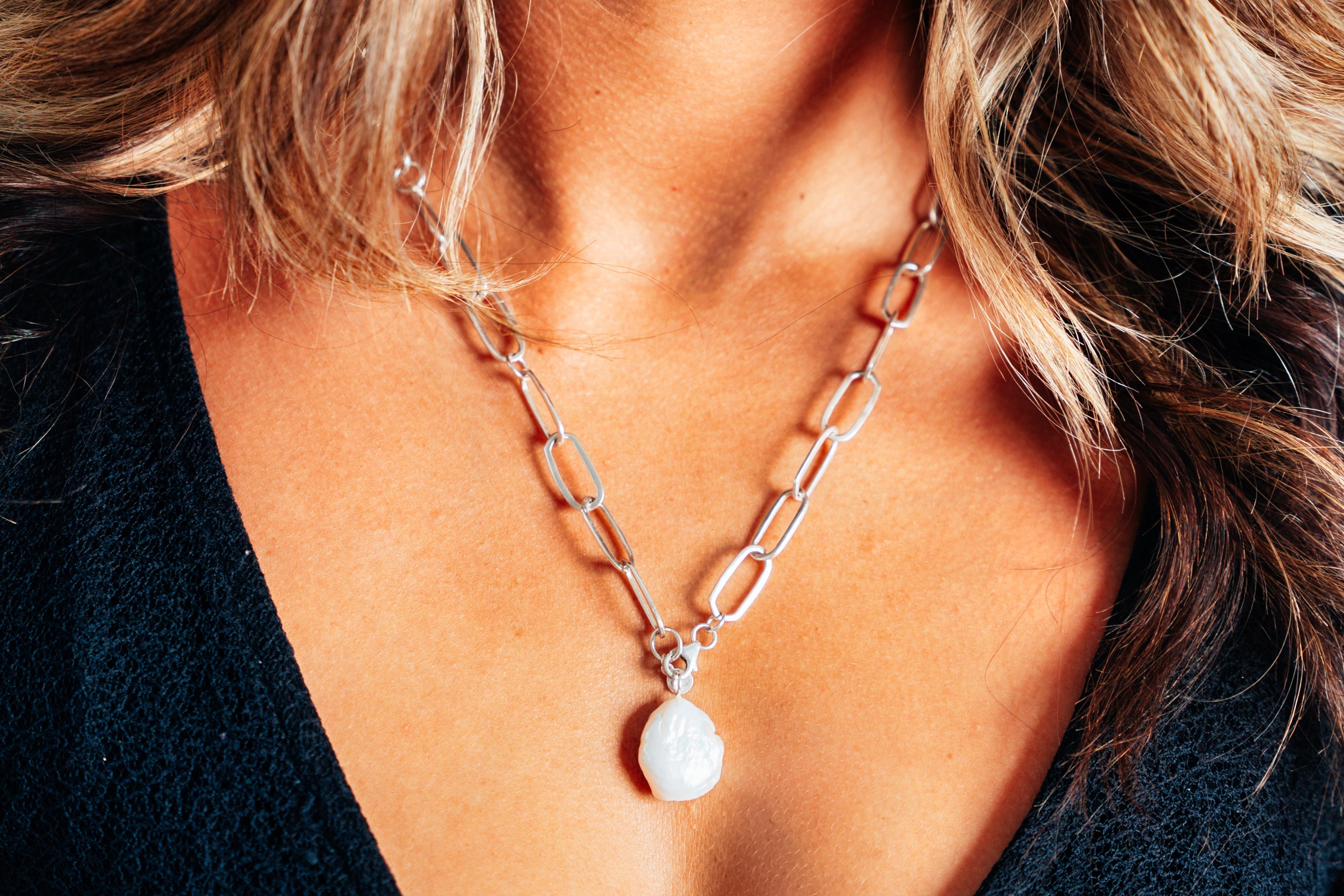
Go bigger. A chunky chain, statement ear cuffs, or a layered stack of three reads intentional under low light. The day-to-night transition is mostly about scale, so keep the base pieces on and add one bold layer. A chunky chain works especially well over a plain slip dress or a square neckline, where the metal has a clean field to sit against.
Matching Silver to Necklines
- Crew and high necks: a longer pendant layer, or a chunky chain worn over the fabric.
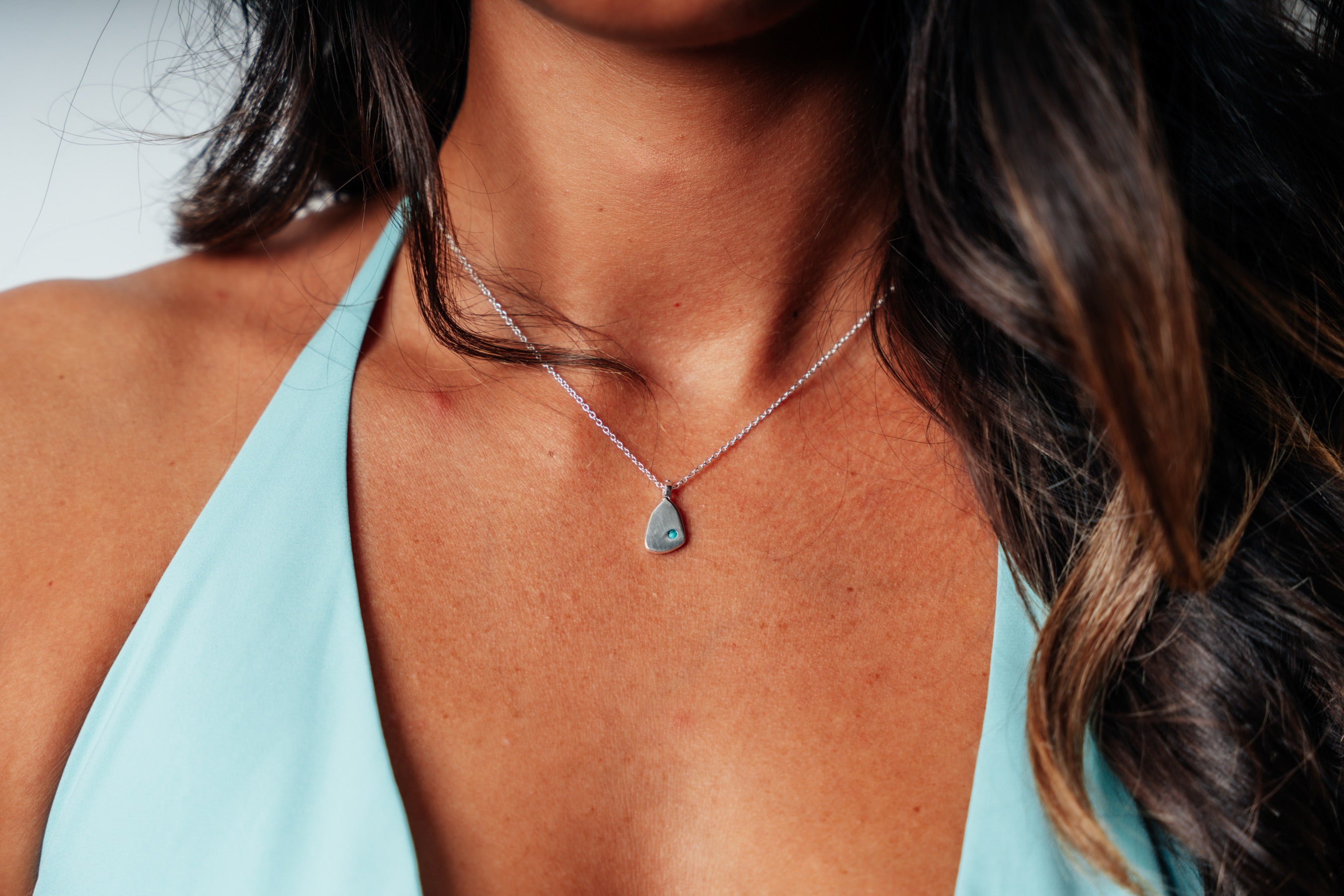
- V-necks and scoop necks: a fine chain or a small pendant that follows the line of the neckline.
- Square and off-shoulder: a choker or collarbone chain, which sits flat against the skin.
- Open shirts: a medium chain in the placket, with a single ring or cuff to balance it.
Charms and the Y2K Trend
For Y2K charm trends, keep charms to a single bracelet rather than spreading them across necklaces. It keeps the nostalgic reference sharp instead of scattered. If you want the look on a necklace, choose one charm as a pendant rather than a cluster, and let the chain stay fine so the charm remains the focal point.
Frequently Asked Questions
Is silver still in style in 2026?
Yes, silver is having a strong moment. Chunky chains, geometric designs, and layered delicate chains are popular. The mixing metals trend means you no longer have to choose between silver and gold. Silver works for minimalist stacking rings and bold statement pieces alike, making it one of the most versatile metals you can own.
How do I mix and match silver jewellery without looking cluttered?
Pick one focal point per outfit. If you are wearing a chunky chain necklace, keep earrings small, such as simple hoops or studs. If statement ear cuffs are your focus, skip the necklace entirely. The 2:1:1 rule helps: two delicate pieces, one medium, and one statement item. Vary textures too, pairing high-polish sterling silver with oxidized or hammered finishes so each piece reads as intentional rather than accidental.
Can I shower or exercise with sterling silver jewellery on?
You can, but it will speed up tarnishing. Soap, shampoo, sweat, and chlorine all dull the surface of sterling silver over time. For pieces you wear daily, remove them before showering or swimming and wipe them with a soft cloth afterwards. If you forget occasionally, a quick clean with a silver polishing cloth will bring the shine back. Tarnish-resistant finishes help, but no sterling silver piece is completely immune to moisture.
What is the 2:1:1 rule for styling jewellery?
The 2:1:1 rule is a simple layering guideline: wear two delicate pieces, one medium-weight piece, and one statement piece. For example, two fine chain necklaces, a medium pendant, and one chunky chain. This ratio creates visual balance without overwhelming your outfit. It works for rings and bracelets too. Two thin stacking rings, one hammered band, and one signet ring gives your hand a curated look rather than a cluttered one.