How to Resize a Silver Ring at Home
Table of Contents
- Can You Resize a Sterling Silver Ring at Home?
- Temporary Methods: How to Make a Ring Smaller Without Resizing
- DIY Permanent Resizing: Step-by-Step Instructions
- Professional Resizing: Cost and What to Expect
- Measuring Your Ring Size at Home
- Common Mistakes to Avoid
- Frequently Asked Questions
Last Updated: October 5, 2026
Can You Resize a Sterling Silver Ring at Home?
Yes, you can learn how to resize a silver ring at home using temporary or permanent methods. The key is understanding which approach suits your ring's construction and your comfort level with DIY work.
Temporary adjustments are reversible and safe for most rings. They use ring adjusters, tape, or guards to change the fit without altering the metal itself. Permanent resizing involves bending, stretching, or cutting the band, methods that physically change the ring's shape and cannot be undone without professional help.
Temporary Methods: How to Make a Ring Smaller Without Resizing
Temporary adjustments work best for small size changes (half to one full size) and are ideal if your ring size fluctuates or you're unsure about permanent changes.
Using a Silver Ring Size Adjuster
A ring size adjuster is a curved metal or silicone insert that sits inside your ring band, gripping your finger to prevent slipping. Silicone versions are gentler on delicate rings; metal adjusters are more durable. The main limitation is comfort, some find them bulky for all-day wear, and they work best on smooth inner surfaces.
Tape and Ring Guards
Painter's tape wrapped inside your ring band creates friction that prevents slipping. Wrap one layer around the inner band, test the fit, and add more layers as needed. Tape is cheap and reversible but wears out within weeks and leaves residue if left on too long.
Ring guards are rubber or silicone sleeves that slide over the band's outer edge. They're visible, so use them only if you don't mind showing the adjustment.
DIY Permanent Resizing: Step-by-Step Instructions
Before attempting permanent resizing and learning how to resize a silver ring at home, determine whether your ring is safe for DIY work.
Is Your Ring Safe to Resize at Home? A Suitability Checklist
Answer these questions about your ring before you proceed:
Band construction: Is the band solid (not hollow)? Hollow bands collapse under plier pressure. Is it at least 2mm thick? Thinner bands crack easily. Is it smooth or textured? Textured bands are harder to work with, pliers can flatten the pattern.
Design and settings:
- Does the ring have gemstones, crystals, or other inlays? Stones require special care during resizing. Heat from soldering can damage some stones (particularly opals, pearls, and soft crystals). Bending can loosen stone settings. If your ring has stones, professional resizing is safer.
- Is the ring engraved or does it have personalised detail on the inside or outside? Engraving can be damaged by plier marks or filing. If the engraving is sentimental or valuable, have a jeweller resize it.
- Does the ring have intricate detailing, filigree, or raised design elements? Complex designs are harder to protect during resizing and are more likely to show marks or damage. Professional resizing is recommended.
Size change needed: Can you reduce by one size or less? Larger reductions weaken the band. Can you enlarge by one size or less?
Your confidence level: Have you worked with metal before? Do you have the right tools and a safe workspace with good lighting?
If you answered "no" to any question, professional resizing is safer. If "yes" to all, your ring is a good candidate for DIY resizing.
Tools and Materials You'll Need
Work on a stable, well-lit surface with a cloth to catch filings, a container for the ring, and a damp cloth nearby. Allow 30 minutes of uninterrupted time.
Wrap painter's tape tightly around both jaws of each plier pair, covering the metal completely. Trim excess tape and test the grip, taped pliers should still hold the ring securely.
Making Your Ring Smaller
Method 1: Cutting and Soldering (Most Permanent)
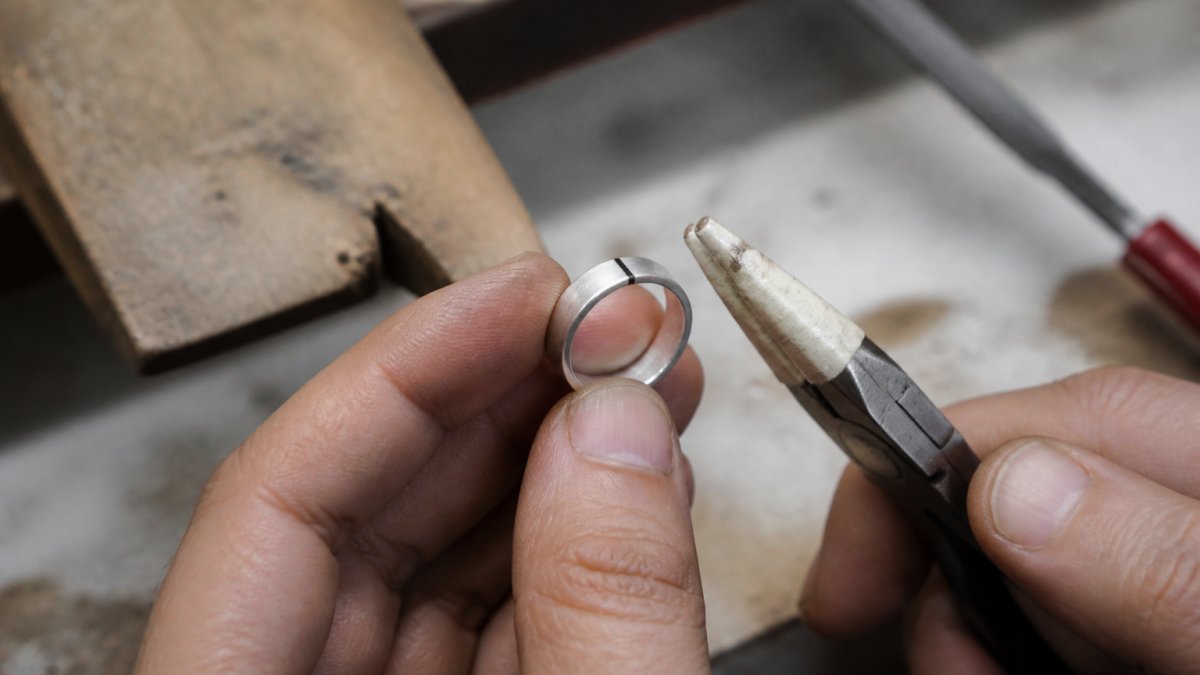
Calculate metal to remove: each 1mm reduces size by ~0.25 sizes (remove 2mm for half-size, 4mm for full-size). Mark the cut point, wrap the rest with tape, and saw slowly. File edges smooth, bend ends together flush, then solder (or have a jeweller solder). File the seam, sand with 220-grit then 400-grit, and polish.
Method 2: Bending Inward (Easier, Reversible if Done Carefully)
Wrap the lower band with tape, then gently bend the sides inward with taped pliers. Work slowly, testing fit after each small bend. Err on the side of too loose rather than too tight. Sand with 220-grit then 400-grit, and polish.
Important: Repeated bending weakens sterling silver over time. The metal becomes brittle and may crack if bent back and forth multiple times. If you need to adjust the fit again later, use a temporary method (tape or adjuster) instead of bending again.
Making Your Ring Larger
Method 1: Stretching the Band (One Size Maximum)
This method works for enlargements up to one full size. Beyond that, the band becomes too thin and loses durability.
- Wrap painter's tape around the lower half of the ring for protection
- Hold the ring steady with one hand
- Use taped pliers to gently pull the sides of the band outward
- Work slowly and test the fit as you go
- Stretching weakens the metal, so avoid pulling too hard or too fast
- Once fitted, smooth any visible stretches with 220-grit sandpaper, then 400-grit
- Polish to restore shine
Important: As you stretch, the band becomes thinner and weaker. A stretched ring is more prone to cracking or breaking with normal wear. If you need to enlarge by more than one full size, do not stretch, add metal instead (see Method 2 below).
Method 2: Adding a Metal Insert (Requires Soldering)
Calculate metal to add: each 1mm increases size by ~0.25 sizes. Cut a sterling silver insert to length, remove a matching section from the ring, insert the new metal, and solder all joints. File, sand, and polish. Best left to professionals unless you have soldering experience.
After Resizing: Finishing Steps
File rough edges, sand with 220-grit then 400-grit, wipe dust, and polish. Try on and check fit. For minor adjustments, bend slightly or add tape, avoid re-cutting or re-stretching, which weakens the metal.
Professional Resizing: Cost and What to Expect
Professional jewellers use specialized equipment to cut, solder, polish, and test rings with precision. Cost depends on complexity; 1-2 weeks turnaround. Choose professional resizing if your ring has gemstones, intricate detailing, needs enlargement beyond one size, or is valuable or sentimental.
Measuring Your Ring Size at Home
Accurate measurement is essential for successful resizing. Finger size varies with time of day, temperature, and activity. Measure multiple times under different conditions before resizing.
Why Measurement Matters for Resizing
Incorrect measurement leads to rings that don't fit or slip. Accurate measurement saves frustration and the cost of professional correction.
Method 1: Using an Existing Ring That Fits
Find a ring that fits comfortably, measure the inner diameter with a ruler, and use an online ring size converter. Repeat on three separate days at different times. If measurements vary by half a size, choose the larger size.
Method 2: Measuring Your Finger Directly
Wrap string around your finger base, mark the overlap, measure in millimetres, divide by 3.14 to get diameter, and use an online ring size converter. Repeat on different days and times.
Critical Factors That Affect Ring Size
Method 3: Using a Ring Mandrel
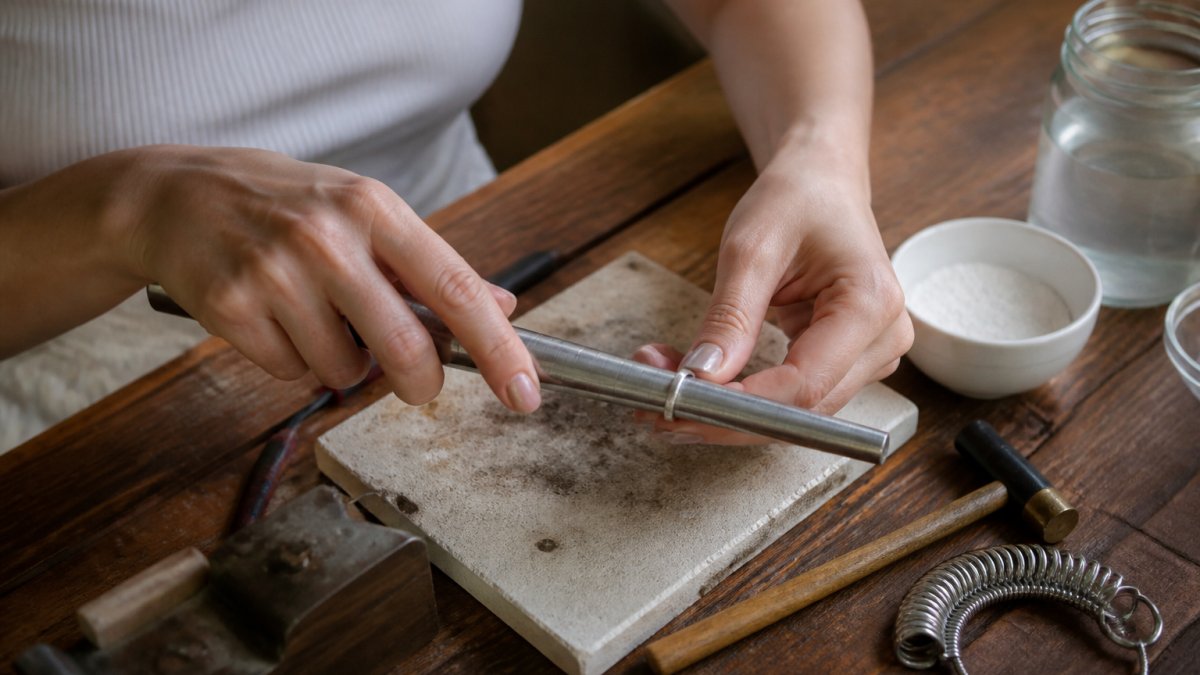
A ring mandrel is a tapered metal cone marked with sizes. Slide your well-fitting ring onto it, the size where it stops is your ring size. Mandrels cost £5-£15 and offer the highest accuracy.
Confirming Your Target Size Before You Resize
Once you've measured, take one more step before you make any permanent changes:
- Visit a jeweller or high street jewellery retailer and try on rings in your measured size
- Wear the sample ring for at least 10 minutes to test comfort
- Check that it passes over your knuckle without excessive force
- Confirm it sits snugly at the base of your finger without rotating
- If the fit feels uncertain, try the size above and below your measurement
This step takes 15 minutes and prevents costly mistakes. Many jewellers offer this service free of charge.
UK Ring Sizes and Common Ranges
Ring sizes in the UK are denoted by letters, from J (smallest) to Z+3 (largest). Most adults wear sizes M through S.
Common Mistakes to Avoid
Learning what not to do prevents costly errors and damaged rings.
Mistake 1: Resizing Without Marking
Cutting or bending a ring without marking your target point leads to uneven adjustments. Always mark where you'll cut or bend using a permanent marker. Measure twice, cut once.
Mistake 2: Using Unprotected Pliers
Bare metal pliers leave deep scratches and dents on sterling silver. Always wrap the jaws with painter's tape before handling the ring.
Mistake 3: Rushing the Adjustment
Bending or stretching too quickly causes the metal to crack or break. Work slowly. Test the fit after each small adjustment. Sterling silver is forgiving if you're patient, but unforgiving if you rush.
Mistake 4: Ignoring Stone Settings
Rings with gemstones require special care. Heat from soldering can damage stones, and bending can loosen settings. Professional resizing is the safer choice for rings with stones.
Mistake 5: Over-Stretching
Stretching a ring thins the band and weakens it. A ring that's too thin breaks easily.
Mistake 6: Skipping the Finishing Steps
After resizing, file and sand the band smooth. Rough edges catch on skin and clothing. Polish the ring to restore its shine and remove work marks.
Resizing a silver ring at home is possible, but it requires patience, the right tools, and realistic expectations about the results.
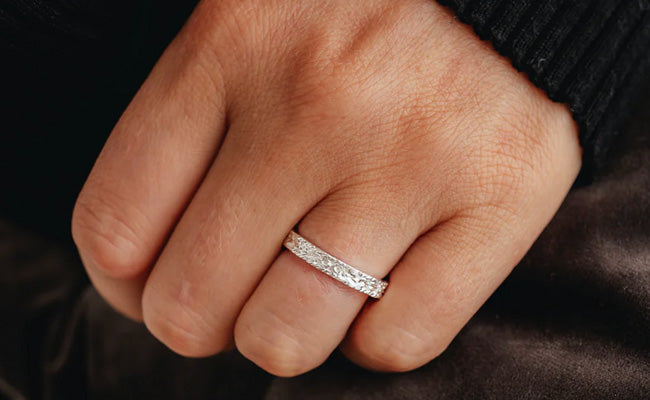
At SilverStory, we recommend professional resizing for rings with intricate designs or stone settings. Our handcrafted sterling silver pieces like the Matt Hammered Ring and Silver Open Circle Ring are designed to last a lifetime.


Frequently Asked Questions
Can you resize a 925 sterling silver ring at home safely?
Yes, you can resize a sterling silver ring at home using temporary methods like ring adjusters or tape, which are completely reversible and safe. For permanent resizing through bending or cutting, the process is possible but carries risks of metal fatigue, scratches, or damage to stone settings. Sterling silver (925) is softer than some metals, making it more prone to damage. If your ring has intricate detailing or gemstones, a professional jeweller offers a safer permanent solution. Temporary adjustments work well for minor fit issues and preserve the ring's integrity.
What is the safest way to make a ring smaller without resizing it?
The safest temporary methods are a silver ring size adjuster or painter's tape wrapped inside the band. A sizing insert sits inside the ring and reduces the inner diameter without any alteration to the metal itself, completely reversible and suitable for delicate or valuable pieces. Painter's tape (also called masking tape) wrapped around the inner band adds bulk to improve fit. Both methods work best for rings that are only slightly loose. Test the fit before wearing, and remove tape if it causes discomfort or irritation to your skin.
How much does it cost to resize a silver ring?
Professional ring resizing costs vary by location and complexity. Resizing a sterling silver ring is generally less expensive than resizing precious metals like gold or platinum. If your ring has gemstones or intricate detailing, costs may be higher due to extra care required. Always request a quote before committing.
How do I measure my ring size accurately at home?
Measure the inner diameter of a ring that fits you properly using a ruler or measuring tape, or wrap a piece of string around your finger snugly and measure the length. Compare your measurement to a ring-size chart to find your size. Alternatively, use a printable ring-size gauge from a jeweller's website. Measure at the end of the day when your fingers are slightly swollen, and remember that ring size can vary slightly depending on the band width, wider bands may feel tighter. If resizing a ring for someone else, aim for a snug fit that allows slight movement.