Finger Swelling and Ring Fit: Complete Guide 2026
Table of Contents
- How Temperature and Time of Day Affect Finger Swelling
- The Best Time of Day to Measure Ring Size
- Hydration, Salt Intake, and Fluid Retention
- How Physical Activity and Exercise Influence Finger Circumference
- Hormonal Changes, Pregnancy, and Aging Effects on Ring Fit
- Signs a Ring Is Too Tight and When to Act
- How to Remove a Stuck Ring Safely
- Ring Material, Band Width, and Comfort Fit
- Frequently Asked Questions
Last Updated: October 3, 2026
How Temperature and Time of Day Affect Finger Swelling
Your fingers are not a fixed size. They expand and contract throughout the day in response to heat, time, and activity. Understanding this natural variation is essential when you're shopping for rings or struggling with finger swelling ring fit that changes depending on when you wear it.
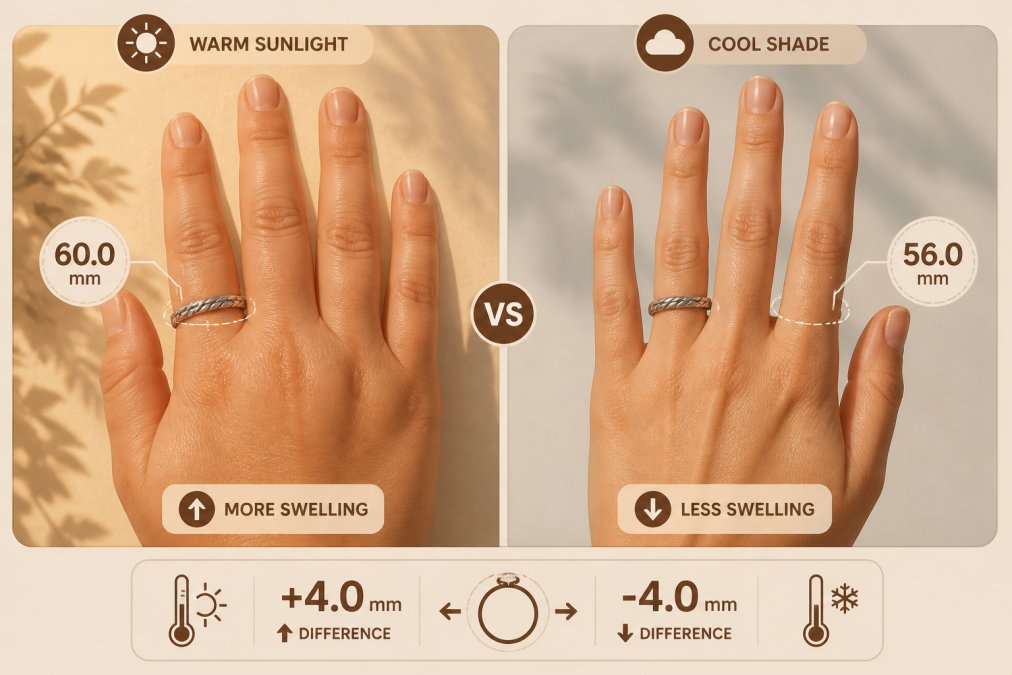
Temperature has a direct effect on finger circumference. Warmth causes blood vessels to dilate, increasing blood flow to your extremities and making fingers swell (pubmed.ncbi.nlm.nih.gov). Cold triggers the opposite response, vasoconstriction, which narrows blood vessels and reduces swelling.
Why fingers swell in heat
Heat accelerates your metabolic rate and increases blood volume circulating through your body. Your fingers, being extremities with a large surface area relative to their mass, respond quickly to temperature changes. When ambient temperature rises, your circulatory system works to dissipate heat by routing more blood to the skin's surface. This increased flow causes the soft tissues in your fingers to retain fluid, making them visibly thicker.
The effect is more pronounced if you're also exercising or spending time outdoors. Physical exertion combined with heat creates a compounding effect on finger swelling. A ring that feels comfortable at rest in a cool environment may become uncomfortably tight within minutes of activity in warm conditions.
Daily fluctuations and morning versus evening
Your fingers are smallest in the morning, immediately after waking. During sleep, your body's metabolic rate drops, blood flow decreases, and fluid redistributes away from your extremities. This is why rings often slip off easily first thing in the morning, a phenomenon many people experience but few understand.
By evening, the opposite occurs. You've been upright for hours, gravity has pulled fluid downward into your lower extremities and hands, and accumulated activity has increased blood volume. Your fingers are typically 5-10% larger in the evening than in the morning. If you measure your ring size in the evening and purchase a band fitted to that measurement, you may find it uncomfortably tight by the following morning.
The Best Time of Day to Measure Ring Size
The optimal time to measure your ring size is mid-afternoon, ideally between 2 and 4 PM. At this point in the day, your fingers have reached a stable, average size, neither at their morning minimum nor their evening maximum. Your body temperature has normalised after morning activities, and you haven't yet accumulated the full day's fluid retention that builds toward evening.
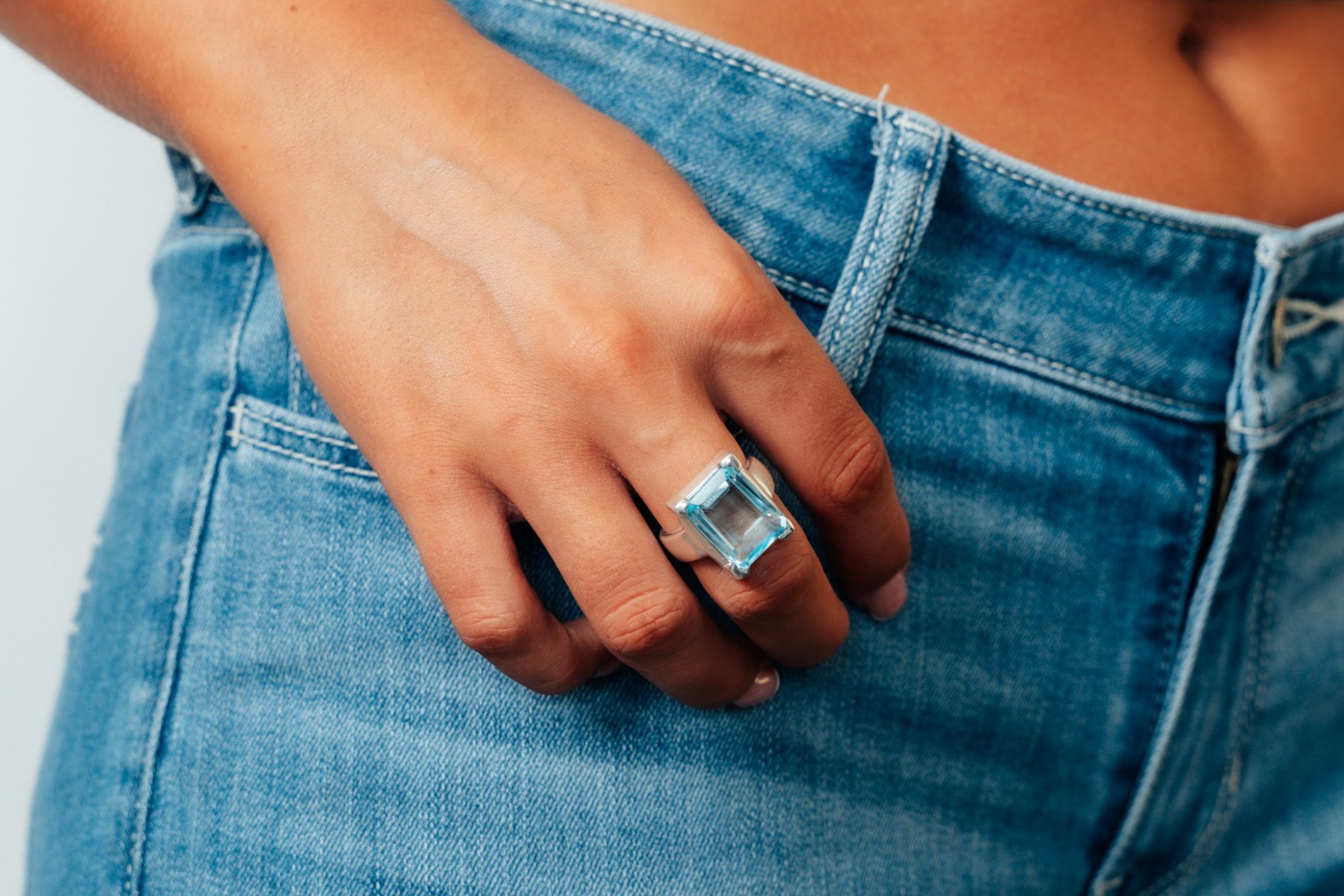
Measure in a room at comfortable, consistent temperature. When you order from SilverStory, our handcrafted rings come in many sizes, from our delicate Tiny Heart Ring available from size XXS onwards, so you can find the perfect fit for your unique finger circumference.

Never measure when your hands are cold. Cold-induced vasoconstriction makes fingers artificially smaller, and a ring sized to cold fingers will feel loose once your hands warm up during normal daily wear.
Hydration, Salt Intake, and Fluid Retention
Your body's fluid balance directly affects finger swelling and ring fit. When you're dehydrated, your body retains sodium to maintain osmotic balance, which paradoxically causes your tissues to hold onto water. Fingers swell as a result of this compensatory fluid retention.
High sodium intake has a similar effect. Salt causes your body to retain water to maintain electrolyte balance. A meal high in processed foods, cured meats, or added salt will increase finger swelling within hours.
Alcohol consumption also affects hydration and fluid retention. Alcohol is a diuretic, meaning it increases urine output and dehydrates your body. Dehydration triggers compensatory fluid retention, which manifests as swelling in your fingers and other soft tissues.
To minimise fluid-related swelling, drink adequate water throughout the day, roughly 2-3 litres depending on your activity level and climate. Reduce processed food intake where possible.
How Physical Activity and Exercise Influence Finger Circumference
Exercise increases blood flow throughout your body, and your fingers respond quickly. During and immediately after physical activity, blood is routed to working muscles and the skin's surface to dissipate heat. This increased circulation causes finger swelling that can last 30 minutes to several hours depending on exercise intensity and duration.
High-intensity workouts produce more pronounced swelling than low-intensity activity. A vigorous gym session or competitive sport will cause noticeably more finger swelling than a gentle walk.
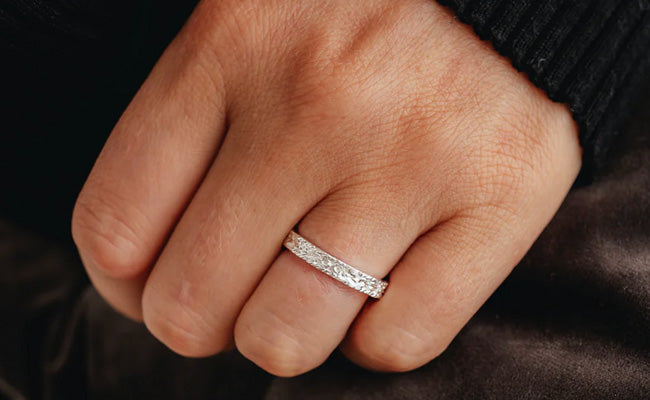
Many people remove their rings before workouts for this reason. If you prefer to keep rings on during activity, choose bands with a comfortable fit at rest, allowing room for the temporary swelling that exercise produces. SilverStory's Wide Hammered Band Ring, with its 10mm band width, offers a sturdy, comfortable fit that accommodates minor swelling without feeling restrictive.

Hormonal Changes, Pregnancy, and Aging Effects on Ring Fit
Hormonal fluctuations throughout your menstrual cycle cause predictable changes in finger swelling. In the days leading up to menstruation, oestrogen and progesterone levels shift, triggering increased fluid retention. Many women report that their rings feel noticeably tighter during this phase of their cycle. After menstruation, as hormone levels stabilise, swelling decreases and rings feel looser again.
Hormonal fluctuations and pregnancy
Pregnancy produces sustained hormonal changes and increased blood volume, up to 50% more blood circulates through your body by the third trimester. This increase in blood volume, combined with hormonal effects on fluid retention and the physical compression of a growing abdomen affecting circulation, causes significant and persistent finger swelling. Many pregnant women find their pre-pregnancy rings no longer fit and must remove them entirely.
Pregnancy-related swelling typically peaks in the third trimester and gradually resolves after delivery, though the timeline varies. Some women's fingers return to pre-pregnancy size within weeks; others take several months. If you're pregnant and concerned about ring fit, consider removing rings to avoid circulation restriction, and wait until after pregnancy and any postpartum fluid normalisation before purchasing new rings.
Aging and arthritis-related knuckle changes
As you age, your knuckles, the joints at the base of your fingers, gradually enlarge due to natural cartilage changes and, in some cases, osteoarthritis. This permanent increase in knuckle size means that a ring that fit comfortably at age 25 may become impossible to remove by age 55, even if your overall finger circumference hasn't changed.
Arthritis accelerates this process. Osteoarthritis causes joint inflammation and bone spur formation around the knuckles, making them visibly larger and altering the geometry of your finger. The swelling from arthritis is often permanent, unlike the temporary swelling caused by heat or exercise. If you have arthritis or notice your knuckles enlarging with age, you may need to size rings larger to accommodate the knuckle, even if your finger shaft remains the same circumference.
Signs a Ring Is Too Tight and When to Act
A ring that is too tight restricts blood flow, causes discomfort, and can damage the delicate tissues of your finger. Learn to recognise the warning signs before a stuck ring becomes a medical concern.
Visible signs include:
- Redness or blanching (whitening) of the skin above and below the ring
- Swelling that visibly bulges above and below the band
- Difficulty moving the ring side to side or rotating it
- Discomfort that doesn't resolve when you remove the ring for a few minutes
Functional signs include:
- Numbness or tingling in the fingertip
- Pain that increases rather than decreases after removing the ring
- Coldness in the fingertip compared to other fingers
- The ring leaving a deep groove or indentation that takes hours to fade
If you notice any of these signs, remove the ring immediately. A ring that is too tight during normal wear will only become more problematic as finger swelling progresses throughout the day. If swelling is temporary (from heat or exercise), wait until swelling subsides before wearing the ring again. If swelling is persistent, the ring no longer fits your finger and should be resized or replaced.
How to Remove a Stuck Ring Safely
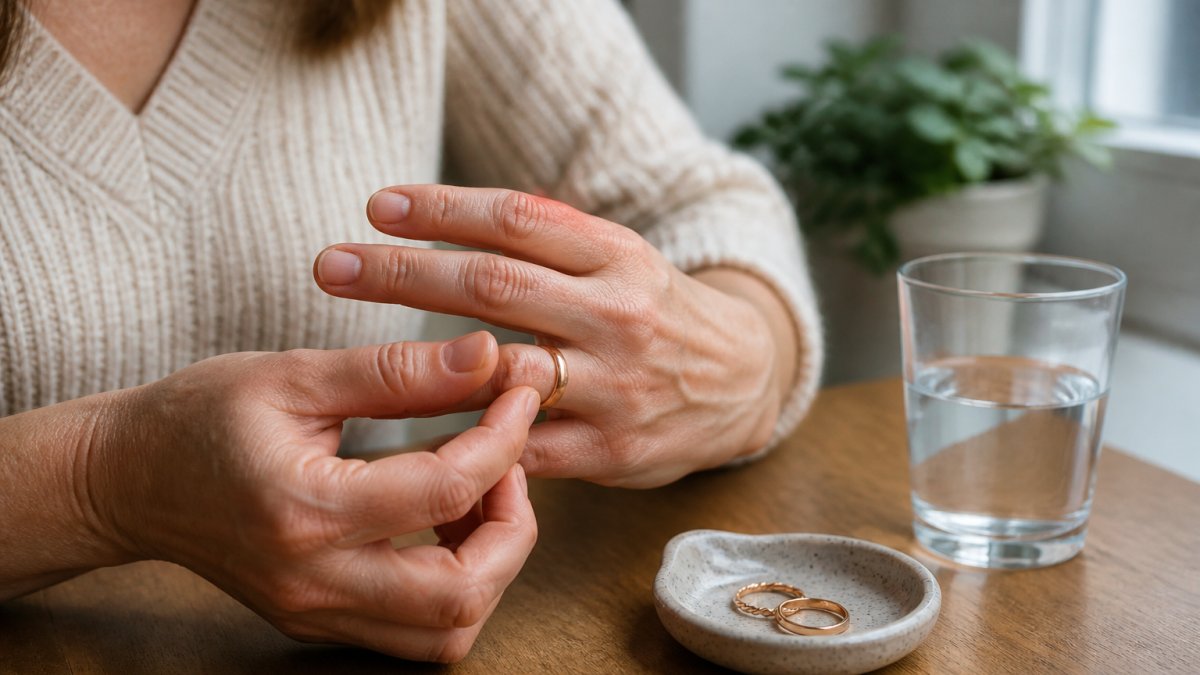
If a ring becomes stuck and won't slide off, remain calm. Panic increases heart rate and blood pressure, which worsens swelling. Remove the ring as quickly as possible, but use safe methods to avoid tissue damage.
Immediate steps:
-
Elevate your hand above heart level for 5-10 minutes. Gravity helps reduce swelling by allowing fluid to drain away from your hand.
-
Apply ice or cold water to the swollen area for 5-10 minutes. Cold causes vasoconstriction, reducing swelling and making the ring easier to remove.
-
Lubricate the ring. Use soap, cooking oil, hand lotion, or a commercial ring-removal lubricant. Work the lubricant around the ring's inner edge and under the swollen tissue. Twist and gently rock the ring side to side while pulling slowly outward. Do not force it, forcing can cause tissue damage.
-
Reduce swelling with compression. Wrap a soft cloth or elastic bandage snugly (but not painfully) around your finger below the ring, working from the fingertip toward the hand. This compresses swollen tissue and may allow the ring to slide off. Unwrap immediately once the ring is removed.
If the ring remains stuck after 15-20 minutes of these methods, seek help from a jeweller or medical professional. Jewellers have specialised ring-removal tools and experience with stuck rings. A medical professional can assess whether the ring is restricting circulation dangerously. In rare cases where a ring cannot be removed and is restricting blood flow critically, emergency ring cutting may be necessary, a last resort that prevents permanent tissue damage.
Ring Material, Band Width, and Comfort Fit
The material and design of your ring influence how it accommodates natural finger swelling. Sterling silver, the material used in all SilverStory rings, is durable and maintains its shape well, but it does not stretch.
Band width affects comfort during swelling. SilverStory's Wide Hammered Band Ring, at 10mm width, provides excellent comfort for everyday wear and accommodates minor fluctuations in finger size better than narrow bands.
Comfort-fit ring designs feature a slightly curved inner edge that distributes pressure more evenly than traditional flat inner surfaces.
When sizing a ring, account for how finger swelling ring fit changes at your finger's largest point, typically mid-to-late afternoon or after activity.
Understanding how your fingers change throughout the day and across seasons transforms how you approach ring shopping and wear. Temperature, time of day, hydration, activity, hormones, and age all influence finger swelling and ring fit.
Frequently Asked Questions
What are the main causes of finger swelling that affect ring fit?
Finger swelling stems from multiple factors: heat causes vasodilation (blood vessel expansion), increasing blood volume in your fingers; sodium intake and hydration levels influence fluid retention; physical exertion triggers temporary edema; hormonal fluctuations during menstrual cycles or pregnancy cause significant swelling; and medical conditions like arthritis create permanent joint inflammation. Time of day matters too, fingers are typically smaller in the morning and swell as the day progresses due to circulatory changes and accumulated fluid.
When is the best time of day to measure ring size for accuracy?
Measure your ring size in a room at comfortable, consistent temperature. Avoid measuring immediately after exercise, after spending time in heat, or after consuming high-sodium foods, all of which increase temporary swelling. Many jewellers recommend measuring when your hands are at room temperature and you haven't eaten high-sodium foods recently.
What are the warning signs that a ring is too tight?
A ring that is too tight will leave a deep groove or indentation on your finger that persists after removal, cause numbness or tingling, restrict blood circulation (your finger may appear pale or discoloured), or cause pain that doesn't ease when you move your hand. You may also notice difficulty removing the ring, especially after activity or heat exposure. If the ring feels snug when your finger is at normal size, it will become dangerous during swelling. Rings should slide off with gentle twisting and slight resistance, not require soap or force.
How do I safely remove a ring that's stuck on my swollen finger?
Start by reducing swelling: elevate your hand above heart level for 10-15 minutes, apply ice wrapped in cloth for 5-minute intervals, and avoid heat. Lubricate generously with soap, cooking oil, or hand cream, then gently twist and work the ring toward your knuckle using slow, steady pressure. Never force it suddenly. If basic methods fail, visit a jeweller who can safely cut the ring using professional tools, making professional removal far better than damaging your finger through force.