Is Sterling Silver Good for Everyday Wear?
Table of Contents
- Is Sterling Silver Good for Everyday Wear? The Short Answer
- What Sterling Silver Is and What 925 Means
- 925 Silver Durability: How It Holds Up
- Sterling Silver Tarnish: Why It Happens and How to Stop It
- Wearing Sterling Silver in the Shower and Beyond
- Sterling Silver Care: Your Daily Routine
- Practical Wear Guidance by Jewelry Type and Activity
- Conclusion
- Frequently Asked Questions
Last Updated: October 6, 2026
Is Sterling Silver Good for Everyday Wear? The Short Answer
At SilverStory, we craft jewellery designed to be worn daily, and the answer is straightforward: is sterling silver good for everyday wear? Yes, when you understand its limits and care for it properly.
Sterling silver is 92.5% pure silver mixed with other metals, usually copper, making it durable enough for rings, necklaces, bracelets, and earrings worn most days. The trade-off: it tarnishes and needs regular maintenance.
Wear it daily, but remove it during showers, swimming, and exercise. Polish monthly and store it properly, and your sterling silver jewellery will last years.
What Sterling Silver Is and What 925 Means
Sterling silver is an alloy made from 92.5% pure silver and 7.5% other metals, typically copper. The "925" stamp marks this exact ratio: 925 parts per 1,000 are pure silver.
Pure silver alone is too soft for jewellery, bending and scratching easily. Copper adds strength without losing beauty or lustre, prevents denting, holds stone settings securely, and keeps the piece bright, which is why every quality silver piece carries the 925 hallmark.
When you buy sterling silver from SilverStory, that 925 stamp guarantees solid, handcrafted silver built to last, no plating over base metal.
925 Silver Durability: How It Holds Up
Sterling silver is reasonably durable for everyday jewellery. It won't shatter or crack and resists denting better than pure silver, but it's softer than gold or platinum, so scratches and scuffs happen with regular wear. A ring worn daily will show light scratches over months and years, that isn't a flaw, it's the nature of wearing a softer metal every day.
925 silver durability depends on design and construction: thick, solid bands hold up better than thin ones; hammered or textured finishes hide scratches better than polished surfaces; rings take more impact than necklaces or earrings; and stone settings face more stress.
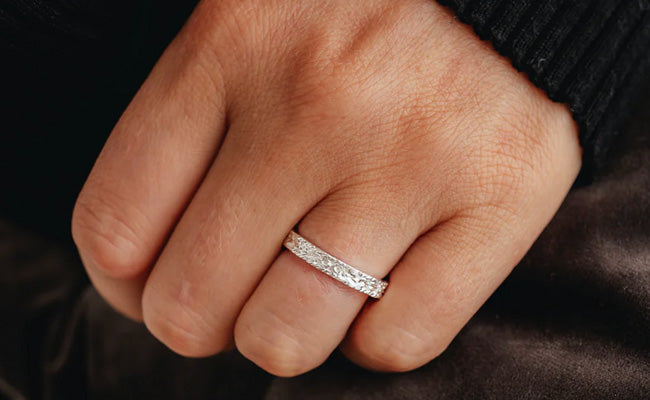
Our Wide Hammered Band Ring (£95.00) demonstrates this: the 10mm hammered band resists denting, and the textured finish conceals minor scratches that would show on a polished surface.

The real limit isn't durability, it's maintenance. Without regular polishing, even a well-made piece looks dull within months.
Sterling Silver Tarnish: Why It Happens and How to Stop It
Tarnish is a chemical reaction between silver and sulphur compounds in the air. When silver oxidises, it develops a dark grey or black surface layer, not rust or decay, but a natural protective layer. It's triggered by hydrogen sulphide (pollution, natural gas, decomposing matter), moisture and humidity, and certain foods and substances on your skin. Tarnish is cosmetic, not structural, it doesn't damage the silver underneath, but it makes jewellery look dull.
How to prevent tarnish:
Store jewellery in a dry place, a jewellery box, drawer, or sealed bag, since air exposure accelerates tarnishing.
Wear your jewellery regularly: skin oils create a protective barrier, so pieces worn daily tarnish more slowly than untouched ones.
Avoid humid environments like bathrooms and kitchens, and keep pieces away from perfumes, lotions, cleaning products, and hairspray, put jewellery on after applying them.
Use anti-tarnish strips or bags: activated charcoal or silica gel absorbs moisture and sulphur compounds.
Cleaning tarnished silver:
A soft silver cloth removes light tarnish; for heavier tarnish, use a jewellery silver cleaner. Avoid harsh abrasives that scratch.
Wearing Sterling Silver in the Shower and Beyond
You should remove sterling silver jewellery before showering. Water itself doesn't damage silver, but soap, shampoo, and steam accelerate tarnishing: hot water increases skin oils, soap residue builds up, bathroom steam speeds oxidation, and chlorine in some water supplies can damage silver. Removing jewellery takes five seconds and is worth the habit.
Activities that require removal:
Swimming in chlorinated pools or salt water: chlorine is highly corrosive and salt water causes rapid oxidation. Wear your jewellery after swimming, not during.
Exercising and sweating: sweat salts tarnish silver quickly, so remove rings, bracelets, and necklaces before workouts.
Applying lotions, perfumes, or makeup: these coat the silver and trap moisture. Put jewellery on last, after grooming.
Sleeping: skin oils and sweat accelerate tarnishing, so store jewellery on your nightstand, not on your wrist or neck.
Gardening or yard work. Soil, plants, and moisture create tarnishing conditions. Keep jewellery indoors.
When it's fine to wear sterling silver:
Casual daily wear, desk work, errands, and meeting friends are all fine, normal activities don't damage the metal.
Social events and dinners. Sterling silver looks elegant for any occasion.
Work environments that aren't humid or chemical-heavy. Office settings are fine.
Sterling Silver Care: Your Daily Routine
Caring for sterling silver is simple, but consistency matters.
Monthly polishing:
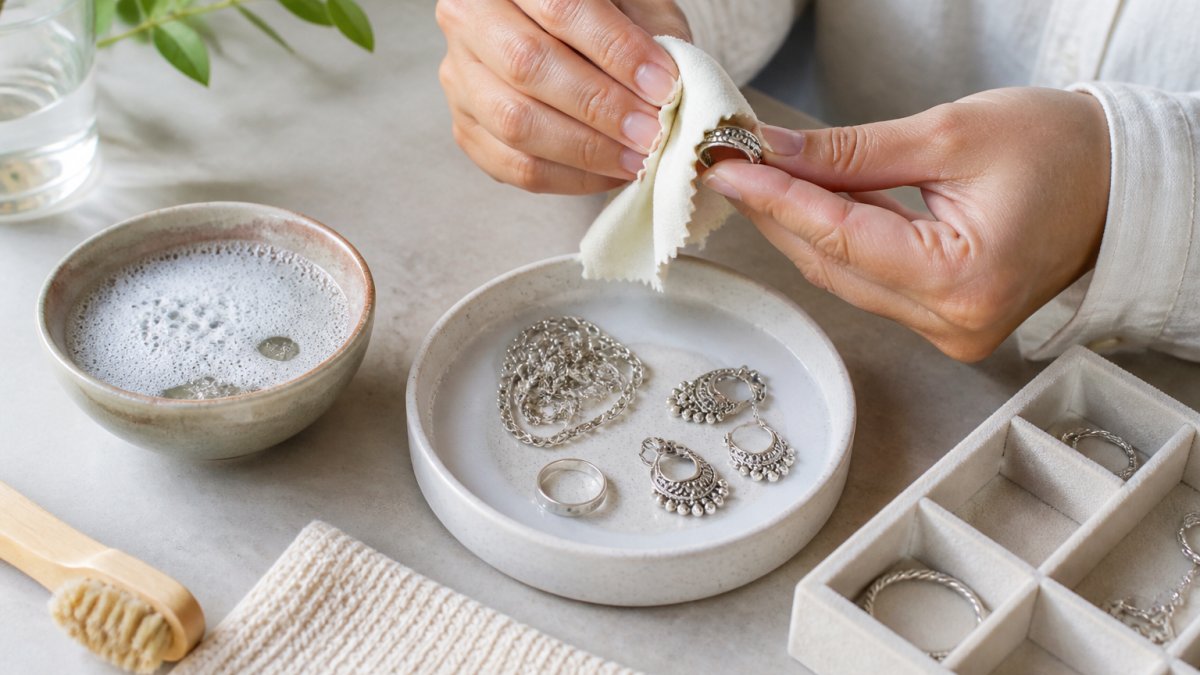
Use a soft microfiber silver cloth, rubbing gently in one direction rather than circles, to remove light tarnish without stripping the surface.
For heavier tarnish, use a silver cleaner or dip, following the instructions exactly, usually a few minutes' soak, then rinsing and drying thoroughly. A few cautions:
- Silver dips are fast but aggressive. Repeated use can dull the surface and leave a slightly matte finish over time, so reserve them for occasional deep cleans rather than weekly use.
- Never use silver dip on pieces with pearls, opals, or porous gemstones. The chemicals can damage the stone even if the silver survives.
- Avoid toothpaste, baking soda, and abrasive DIY pastes. These scratch the surface and create microscopic grooves where tarnish forms faster next time.
- Skip the foil-and-baking-soda method for anything with glued settings or stones. The heat and chemistry can loosen adhesive and cloud certain gems.
After any wet cleaning, dry the piece completely before storing, trapped moisture is one of the fastest routes to fresh tarnish.
Storage:
Keep sterling silver in a cool, dry place, such as a jewellery box with a tarnish-resistant lining. Avoid ordinary plastic bags, which trap moisture and release sulphur compounds; use anti-tarnish pouches instead.
Store pieces separately where possible, tangled necklaces scratch each other and loose chains knot. Use dividers or small pouches.
Keep jewellery away from direct sunlight, radiators, and windowsills: heat and humidity speed oxidation.
Handling:
Hold jewellery by the band or chain, not the stone or setting. Finger oils protect silver, but unnecessary handling can loosen settings over time.
Inspect monthly, ideally after polishing, for loose stones, worn prongs, and damaged clasps, catching problems early avoids expensive repairs.
When to professional clean:
Long-term maintenance and repair costs:
Everyday wear has a long-term cost worth planning for. Sterling silver doesn't need replating like gold-plated jewellery because the metal is solid throughout, but it needs occasional attention:
- Re-polishing to remove accumulated fine scratches: often £10-£30 depending on the piece and the jeweller.
- Re-tipping or tightening stone settings: usually £15-£40 per stone.
- Clasp or chain repair: commonly £10-£25 for a simple replacement.
- Ring resizing: typically £20-£50, and not always possible on heavily textured or stone-set bands.
- Full restoration of a badly tarnished or scratched piece: £30-£60 or more.
These are the natural upkeep of a soft metal worn daily, budgeting a small amount each year is far cheaper than replacing a piece you love.
A realistic weekly routine:
- Daily: wipe with a soft cloth after removing, before storing.
- Weekly: check clasps, settings, and chain links for wear.
- Monthly: polish with a silver cloth.
- Every 6-12 months: professional clean or polish if the piece is worn daily.
- As needed: address tarnish, loose stones, or damage before it worsens.
That's the whole system, less time than most people assume, and the biggest factor in how your sterling silver looks after five years of daily wear.
Practical Wear Guidance by Jewelry Type and Activity
Most guides say to remove sterling silver for showers, swimming, and exercise, then stop.
Rings for everyday wear:
Rings take the most impact, bumping surfaces, getting wet, and constant friction. Thicker bands and textured finishes hold up better than delicate, polished designs.
Our Matt Hammered Ring (£45.00) is a good daily-wear design: the irregular hammered surface hides scratches and the solid band resists denting.
Simple designs without stones are more practical than rings with large settings, which need regular inspection and catch on clothing.
Necklaces and chains:
Necklaces experience less direct impact than rings, making them ideal for daily wear. Sterling silver chains are durable and look beautiful worn continuously.
The main concern is skin oils, sweat, and lotions, so remove your necklace before showering and before applying perfume or lotion.
Chain style matters more than most people realise: cable and curb chains are the most durable for daily wear, with solid links that resist stretching and kinking; box chains look refined but kink and break at the joins; snake and herringbone chains bend permanently and can't be repaired easily; and fine chains under 1mm are decorative, snapping under modest force.
Bracelets and bangles:
Bracelets sit on your wrist, experiencing friction and moisture, so they're practical for everyday wear but require removal during showers and exercise.
A bracelet on your dominant hand will pick up more scratches and knocks. That's normal, not a defect.
Earrings:
Earrings are the most practical sterling silver jewellery for daily wear, contacting water, sweat, and chemicals less directly.
Activity-specific guidance:
A clearer breakdown by activity:
| Activity | Rings | Necklaces | Bracelets | Earrings |
|---|---|---|---|---|
| Desk work / commuting | Wear | Wear | Wear | Wear |
| Casual outings | Wear | Wear | Wear | Wear |
| Showering | Remove | Remove | Remove | Remove |
| Swimming (pool or sea) | Remove | Remove | Remove | Remove |
| Gym / running | Remove | Remove | Remove | Remove |
| Sleeping | Remove | Remove | Remove | Remove |
| Applying lotion or perfume | Remove | Remove | Remove | Remove |
| Gardening / DIY | Remove | Remove | Remove | Remove |
A more nuanced view on exercise:
A more nuanced view on showering:
Plain water alone won't damage sterling silver, the problem is soap residue, shampoo chemicals, and lingering bathroom humidity.
Durability by design and construction:
The 925 stamp tells you purity, not durability.
A quick comparison with alternative metals:
Conclusion
Is sterling silver good for everyday wear? Yes, with realistic expectations and basic care. Sterling silver is durable, beautiful, and affordable, perfect for pieces you'll treasure for years.
The secret isn't complicated: understand what damages it (water, sweat, chemicals), remove it during those activities, and polish monthly. Do that, and your sterling silver jewellery stays bright.
At SilverStory, every piece is handcrafted by skilled artisans in Rajasthan using solid 925 sterling silver, built for daily wear, from the Matt Hammered Ring (£45.00) to the Silver Open Circle Ring (£35.00). Start your collection today and discover how sterling silver becomes more beautiful with time.

Frequently Asked Questions
Can I wear sterling silver every day?
Yes, sterling silver is suitable for everyday wear. The 925 composition, 92.5% pure silver mixed with copper and other metals, makes it durable enough to withstand daily activities. However, it does tarnish over time with exposure to air, moisture, and sweat. Regular care and storage between wears will keep your pieces looking their best and extend their lifespan significantly.
Does sterling silver tarnish if you wear it every day?
Sterling silver will tarnish with regular wear, especially if exposed to moisture, sweat, or household chemicals. The tarnish is a natural darkening or discoloration caused by oxidation. Wearing your jewellery daily may speed up tarnishing, but this doesn't damage the metal, it's purely cosmetic. You can remove tarnish easily with a silver cloth or gentle jewellery cleaner, keeping your pieces bright.
Can you shower or sleep in sterling silver jewellery?
Showering occasionally with sterling silver jewellery is generally safe, but frequent exposure to soap, shampoo, and hot water can accelerate tarnishing and loosen settings. Sleeping in sterling silver is fine for rings and simple pieces, though removing jewellery before bed reduces wear and tarnishing. Avoid chlorine pools and salt water, which corrode the metal faster. For daily activities, remove jewellery before swimming or intense exercise.
How do I care for sterling silver jewellery to keep it looking new?
Store your sterling silver in a cool, dry place away from air and moisture, a jewellery box or airtight bag works well. Clean it regularly with a soft silver cloth or mild jewellery cleaner to remove tarnish and dirt. After wearing, gently wipe the piece dry. Remove jewellery before showering, swimming, or applying lotions and perfumes. With consistent care, your sterling silver pieces will maintain their shine and beauty for years.