
7 Things to Check Before Buying a Silver Turquoise Ring
Last Updated: November 21, 2026
Quick Summary
To choose a silver turquoise ring, check the stone first: natural turquoise shows variation in colour and matrix, while a flawless, uniform stone at a low price is usually reconstituted or imitation. Then confirm a 925 hallmark, inspect the setting and solder joins, and get the fit right before buying.
- Ask the seller whether the turquoise is natural, stabilized, reconstituted or imitation, and be wary of anyone who dodges the question.
- Look inside the band for a 925 hallmark stamp alongside the maker's mark and an assay office symbol.
- A bezel setting is the safest choice for turquoise because a soft stone needs protection from knocks.
- Measure your finger at the end of the day and size up slightly for wide bands.
- Keep turquoise away from perfume, hairspray, chlorine and harsh cleaners, and avoid silver dips.
Table of Contents
- Start With the Stone: How to Tell If Turquoise Is Real
- Turquoise Stone Quality and Grading: What Actually Matters
- Check the Silver: 925 Hallmarks and Construction
- Ring Settings and Stone Security
- Turquoise Ring Sizing and Getting the Fit Right
- How to Care for Turquoise Jewellery Set in Silver
- Choosing Your Silver Turquoise Ring at SilverStory
- Frequently Asked Questions
Start With the Stone: How to Tell If Turquoise Is Real
Learning how to choose a silver turquoise ring starts with the stone, not the band. Real turquoise is a hydrated copper aluminium phosphate mineral, and a genuine stone will usually show natural variation in colour and matrix rather than a uniform, printed-looking pattern. At SilverStory, we always tell buyers to look at the stone before they fall for the setting.
Here is the quick test. Turn the ring over and examine the back of the stone where it meets the silver. A solid, even colour with no matrix on the underside often signals a treated or reconstituted stone. Natural turquoise varies.
For a deeper walkthrough of spotting genuine stones, our beginner's guide to buying handmade turquoise jewellery expands on the checks below.
Natural, Stabilized, Reconstituted and Imitation Turquoise Compared
Knowing which type you are looking at changes both the price and how you care for the ring.
| Type | What It Is | Durability | Value |
|---|---|---|---|
| Natural | Untreated turquoise, cut and polished | Soft, porous, chips easily | Highest |
| Stabilized | Natural stone infused with resin to harden it | Good for everyday wear | Mid to high |
| Reconstituted | Ground turquoise dust pressed and bonded | Moderate, can look flat | Low to mid |
| Imitation | Dyed howlite, plastic or glass | Varies, often scratches | Lowest |
What matters is that the seller tells you which type you are buying. Ask directly, and be wary of anyone who dodges the question.
Turquoise Stone Quality and Grading: What Actually Matters
Turquoise stone quality and grading come down to three things: colour consistency, matrix character, and the absence of cracks or chalky patches. A good stone holds an even, saturated colour across its face, with a matrix pattern that looks organic rather than stamped on.
Colour is the first check. Personal taste matters more than any chart. Matrix, the dark veining running through the stone, should look natural and web-like. A heavy black spiderweb matrix can be beautiful, but it also signals a softer stone that needs a protective setting.
Watch out: a stone that looks flawless and uniform for a very low price is usually reconstituted or imitation. Real turquoise almost always has some character in the surface.
Check the Silver: 925 Hallmarks and Construction
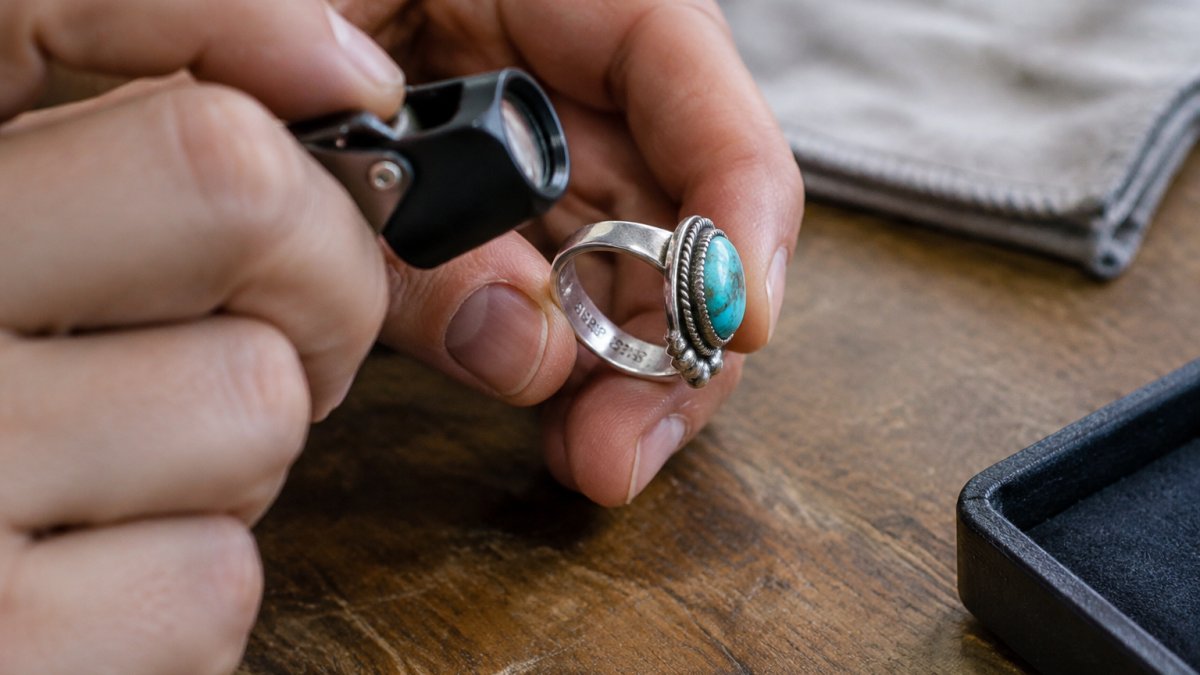
Sterling silver is an alloy of 92.5% pure silver with other metals, usually copper, added for strength. Silver items above the legal weight threshold must be hallmarked before they can be described and sold as silver (Hallmarking: practical guidance - summary). Look inside the band for a 925 hallmark stamp alongside the maker's mark and an assay office symbol.
What a hallmark verifies, and what it does not. A full UK hallmark tells you the metal has been assayed and meets the sterling standard, who made or sponsored the item, and which assay office tested it. What it does not tell you is how well the ring is made. A hallmark can sit inside a beautifully finished band or a thin, poorly soldered one. It says nothing about the weight of the silver, the quality of the setting, or whether the stone is secure. Treat the hallmark as the entry ticket, not the whole story.
Read the marks in order. A conventional UK hallmark carries several elements, including the sponsor's or maker's mark and the fineness mark. If a seller claims sterling silver but there is no hallmark and no convincing explanation, ask why. A missing mark is not automatically a red flag on a very light ring, but it is on a substantial statement piece.
Assess the construction. Construction matters just as much as the stamp, and it is where a cheap ring reveals itself. Run your thumb along the solder joins where the setting meets the band. They should feel smooth, not rough or lumpy, and the colour should match the surrounding metal, a visible seam or a patch of different-coloured solder suggests a rushed repair or a low-grade join. Check the inside of the band for a consistent curve and even thickness; a band that thins sharply at the back will wear through faster and is more likely to bend out of shape. A sound join and even band are only part of the check; Consignmentcrush also connects the ring’s construction to the question of whether its turquoise is real.
Weigh the silver. Silver weight tells you something too. A heavier band resists bending and holds a large stone more securely than a thin, hollow shank. Hold the ring and compare it with others of a similar size: a ring that feels unusually light for its bulk may be hollow or thinly cast. For a statement ring with a large turquoise, a solid, substantial shank is not a luxury, it is what keeps the stone sitting straight on the finger.
Inspect the setting work. Look closely at how the stone is held. On a bezel, the rim should be continuous and snug, with no gaps where the stone meets the metal. On a prong setting, the claw tips should be even, rounded and pressed firmly onto the stone, not sharp or splayed. Gently press the stone: it should not rock or shift. Loose stones are the most common fault in handmade jewellery, and a wobbly setting will only get looser with wear.
Watch out: a bright, mirror-polished finish can hide thin metal and rough joins, so examine the ring in raking light and look at the inside of the band as carefully as the face.
Ring Settings and Stone Security
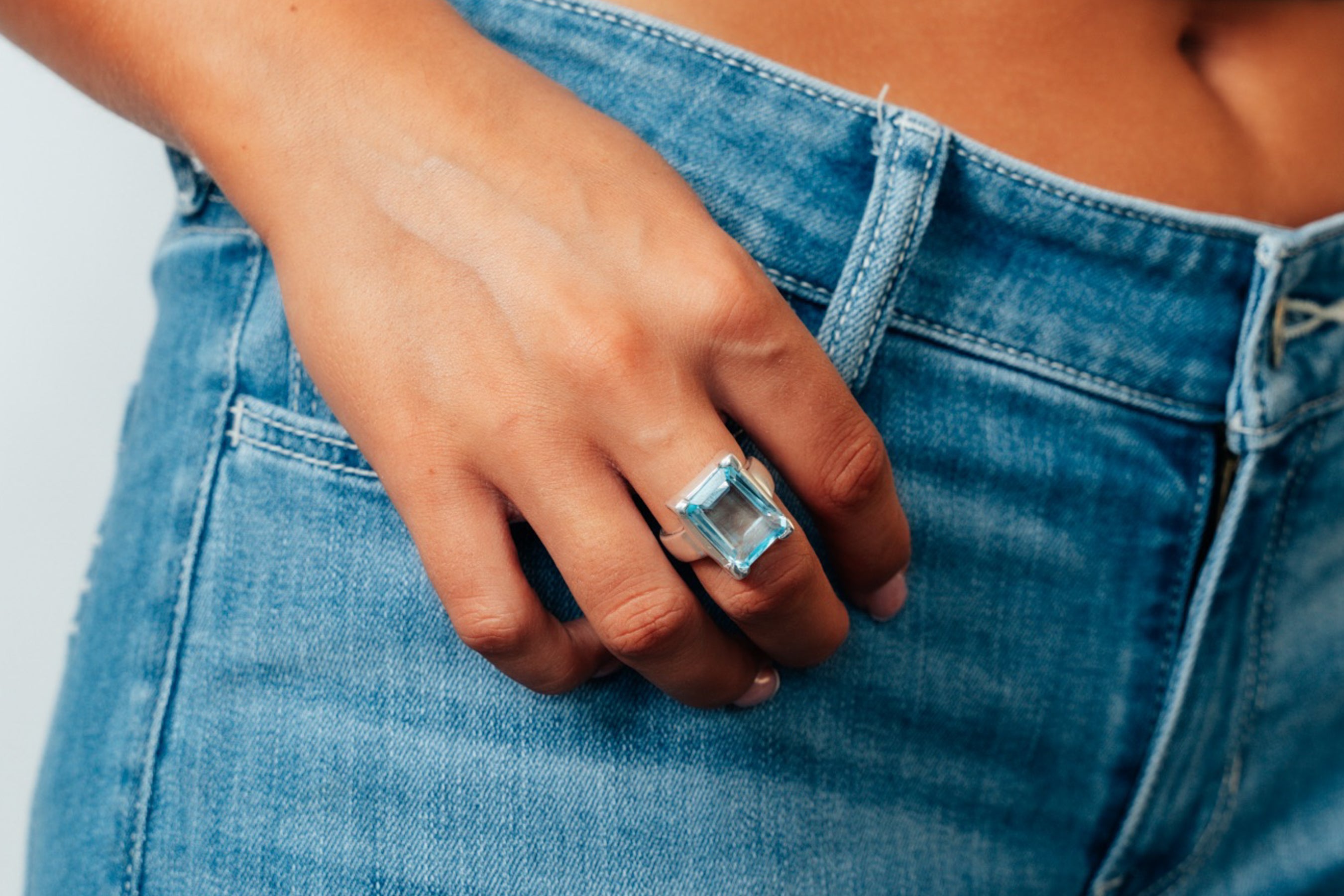
A bezel setting wraps a rim of metal around the stone's edge and is the safest choice for turquoise, because a soft stone needs protection from knocks and scratches. A prong setting shows more of the stone but leaves its edges exposed to everyday wear.
For a statement ring with a large stone, bezel wins almost every time. Prongs suit smaller stones and designs where you want maximum sparkle and visible surface.
Check the setting by gently pressing the stone. It should not rock or shift. Look for even claw tips on prong settings and a continuous, snug rim on bezels. Loose stones are the most common fault in handmade jewellery, and a wobbly setting will only get looser.
Turquoise Ring Sizing and Getting the Fit Right
Ring size and fit decide whether a statement ring feels comfortable or annoying. Measure your finger at the end of the day when it is at its largest, and size up slightly for wide bands, which sit tighter than slim ones. A wide silver band covers more of the finger and needs a little extra room.
Finger placement matters for a large stone. The index and middle fingers carry a bold ring well and keep it away from the knocks a ring finger takes. If you are unsure whether a ring is too big, our guide on how to tell if a ring is too big walks through simple at-home checks, from shaking your hand to checking the gap at the knuckle.
Watch out: resizing a ring with a set stone can disturb the setting. Choose the right size first where you can.
How to Care for Turquoise Jewellery Set in Silver
Care and cleaning for turquoise set in silver is simple but specific. Turquoise is porous, so keep it away from perfume, hairspray, chlorine and harsh cleaners. These can dull the stone colour and dry out the surface over time.
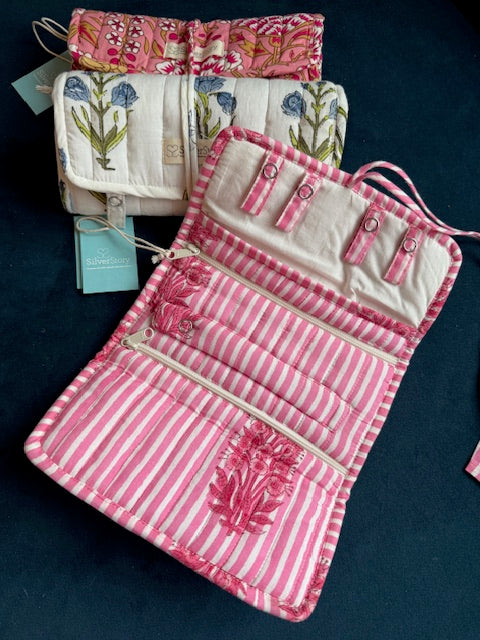
Clean with a soft, damp cloth and dry immediately. Polish the silver with a jewellery cloth, but avoid silver dips, which can damage the stone. Store the ring separately so it does not rub against harder pieces, and a jewellery roll keeps it protected and untangled.
Take the ring off before showering, swimming or workouts. That single habit does more for durability than any product.
Choosing Your Silver Turquoise Ring at SilverStory
Choosing the right ring is really a matter of matching stone, setting and fit to how you will wear it. Our collection is handcrafted from 925 sterling silver at an ethical workshop in Rajasthan. If you want to explore the symbolism behind the stone, our guide to turquoise jewellery meanings and styling ideas is a good next read.
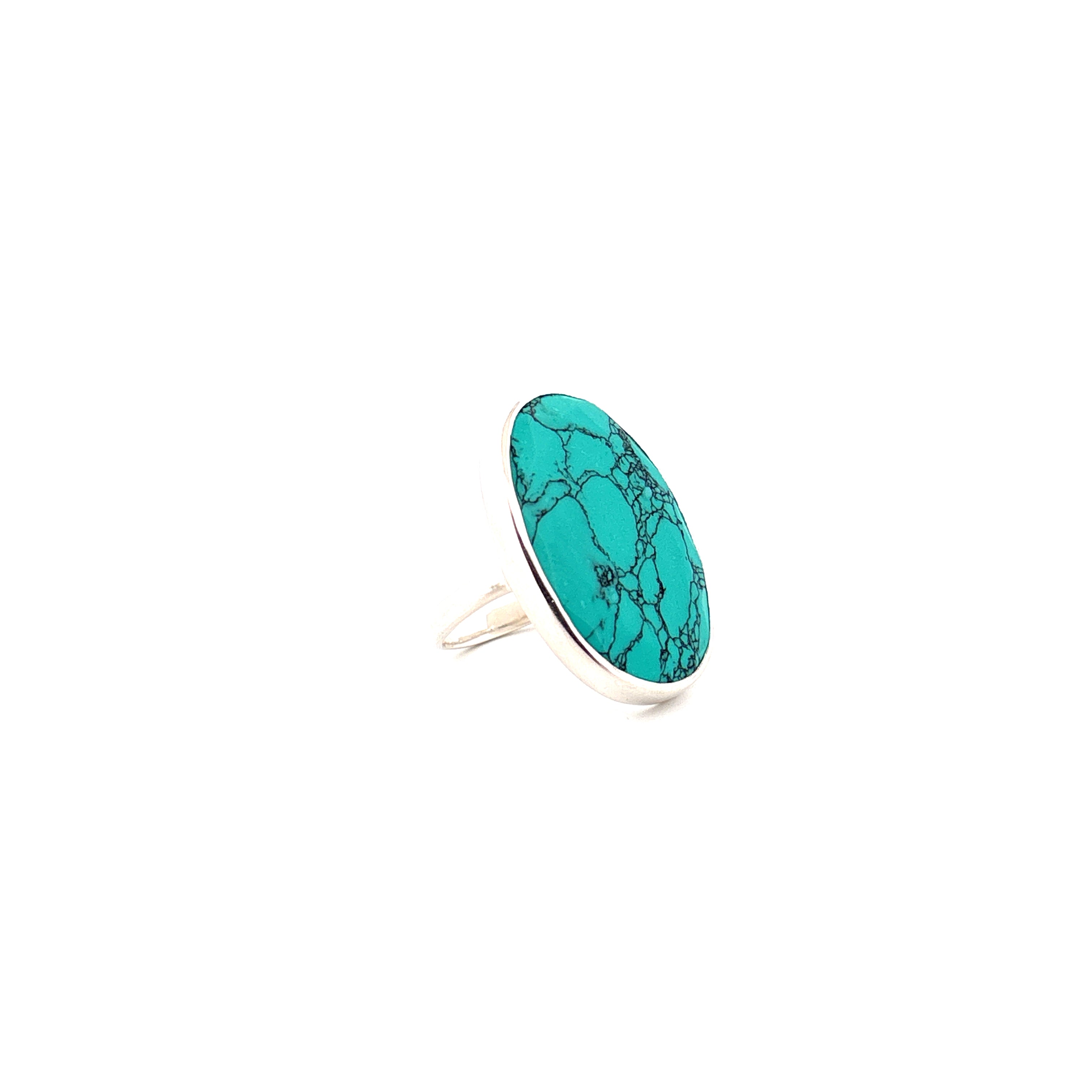
Our large silver turquoise ring is the statement option, with a stone roughly 30mm by 20mm in a contemporary sterling silver setting, available from small through to XXL. For something lighter, the small square turquoise ring in a claw setting on a hammered band suits everyday wear.
Ready to find a ring that passes every check on this list? At SilverStory, every piece is ethically sourced and handcrafted by skilled artisans, with hallmark-stamped sterling silver and stones chosen for character. Browse the collection, compare the settings, and add to cart with confidence.
Frequently Asked Questions
How can you tell if turquoise is genuine?
Genuine turquoise shows natural variation in colour and matrix, the dark veining that runs through the stone. Look for a matrix pattern that looks organic rather than printed or painted on. Ask the seller directly whether the stone is natural, stabilized, treated or imitation, and get the answer in writing. A price that seems far below the norm for the stone size is a warning sign. Reputable sellers will tell you exactly what treatment the stone has had.
Is sterling silver a good choice for a turquoise ring?
Yes. Sterling silver, stamped 925, is 92.5% pure silver alloyed with other metals for strength, which makes it suitable for everyday wear. It is softer than gold, so a well-made setting matters. Check for a clear 925 hallmark stamp on the inner band, and look at the solder joins where the setting meets the band.
How should a silver turquoise ring fit?
A turquoise ring should slide over the knuckle with slight resistance and sit snugly without pinching. Because turquoise is a soft stone, a loose ring that spins can knock the setting against hard surfaces. Measure your finger at the end of the day when it is at its largest, and use a ring sizer rather than guessing. If you are between sizes, size up and ask about resizing options before you buy.
Can turquoise rings be worn every day?
They can, with care. Turquoise is a softer stone than diamond or sapphire, so it scratches and chips more easily. A bezel setting protects the stone edges better than prongs for daily wear. Remove the ring before showering, swimming, cleaning or gym sessions, and store it separately from harder jewellery.