
The Beginner's Guide to Buying Handmade Turquoise Jewellery
Last Updated: October 26, 2026
Quick Summary
Buying handmade turquoise jewellery starts with checking the stone, the silverwork and the seller's disclosure. Confirm whether the stone is natural, stabilised or imitation, look for a 925 stamp and clean solder joins, and ask about silver weight, returns and repairs before you commit.
- Genuine turquoise is confirmed by colour, matrix, weight and documentation together, never by one check alone.
- Stabilised stone suits everyday wear, but it should not carry a natural-stone price.
- Four factors drive price: the stone, the metal, the labour and the maker's name.
- Check the setting first, then the silverwork, then the finish and stone seat.
- Ask the seller whether the stone is natural, stabilised, dyed or imitation before buying.
Table of Contents
- Why Handmade Turquoise Jewellery Rewards a Careful Buyer
- How to Tell Genuine Turquoise from Treated and Imitation Stones
- Stabilised Turquoise Meaning and What It Means for Value
- Turquoise Jewellery Price Factors That Decide What You Pay
- Judging Craftsmanship: Silverwork, Settings and Finishing
- How to Care for Turquoise Jewellery So It Keeps Its Colour
- Choosing Your Piece from the SilverStory Collection
- Frequently Asked Questions
Why Handmade Turquoise Jewellery Rewards a Careful Buyer
At SilverStory, our pieces are handcrafted by skilled artisans in Rajasthan.
How to Tell Genuine Turquoise from Treated and Imitation Stones
Genuine turquoise is a natural mineral, and the only reliable test is a combination of colour, matrix, weight and, where possible, documentation. No single check proves authenticity on its own.
The Quick Checks: Colour, Matrix and Weight
Watch out: a seller who cannot tell you whether a stone is natural, treated or imitation is not necessarily dishonest, but you should not pay natural-stone prices without that answer.
Genuine turquoise is confirmed by several checks together, never by one alone.
| Check | What to look for | Note |
|---|---|---|
| Colour | Depth and evenness of colour | No single check proves authenticity |
| Matrix | Character of the matrix | Combine with colour, weight and documentation |
| Weight | Weight of the stone | One of the quick checks |
| Documentation | Papers where possible | Ask if stone is natural, treated or imitation |
Stabilised Turquoise Meaning and What It Means for Value
Stabilised stone is perfectly reasonable for everyday wear, and much of the turquoise on the market is treated in some way. What matters is disclosure. A stabilised cabochon should not carry a natural-stone price, and a seller should say which category a piece belongs to before you commit.
Turquoise Jewellery Price Factors That Decide What You Pay
Four things drive the price of a turquoise piece: the stone, the metal, the labour and the maker's name. Understanding how they stack up tells you whether a price is fair, and it also tells you which part of a quote you are actually paying for.
The stone
Stone quality comes first. Depth of colour, evenness, the character of the matrix and whether the stone is natural or stabilised all move the number. A clean, deep blue with attractive webbing costs more than a pale, heavily treated stone of the same size. Size matters, but a large dull stone is worth less than a smaller vivid one. As a rough ordering, a natural untreated cabochon of good colour and tight matrix sits at the top, a well-coloured stabilised stone sits in the middle, and dyed or reconstituted material sits at the bottom regardless of how blue it looks in a photograph.
The metal
Sterling silver, marked 925, is the standard for handmade turquoise jewellery and carries a real material cost. The weight of silver in a piece is not trivial: a broad cuff or a heavy bezel uses several times the metal of a slim ring, and that difference shows up in the price even when the stone is identical. Gold plating adds a step and a premium, and solid gold moves the piece into a different category altogether. Ask for the silver weight in grams if you are comparing two pieces at similar prices; it is one of the few objective numbers a seller can give you.
The labour
Hand-cutting, setting and finishing take time that a cast production piece does not. A bezel set by hand, a hammered band finished on the bench and a hand-cut stone each add hours. This is the factor buyers most often undervalue, because labour is invisible in a photograph. A piece that looks simple can carry more bench time than an ornate cast design.
The maker
A named, documented maker adds a premium that has nothing to do with the materials. Attribution is worth paying for when it is documented, and worth questioning when it is asserted without evidence. Our article on why handcrafted jewellery costs more breaks down the true value behind the price tag.
How the factors stack in practice
Our collection includes a Turquoise Ring for £60.00 and a Large Silver Turquoise Ring for £125.00.
What to ask about price before you commit
A seller who can answer these questions is giving you the information you need to judge whether the price is fair. A seller who cannot is asking you to pay for certainty you do not have.
Judging Craftsmanship: Silverwork, Settings and Finishing
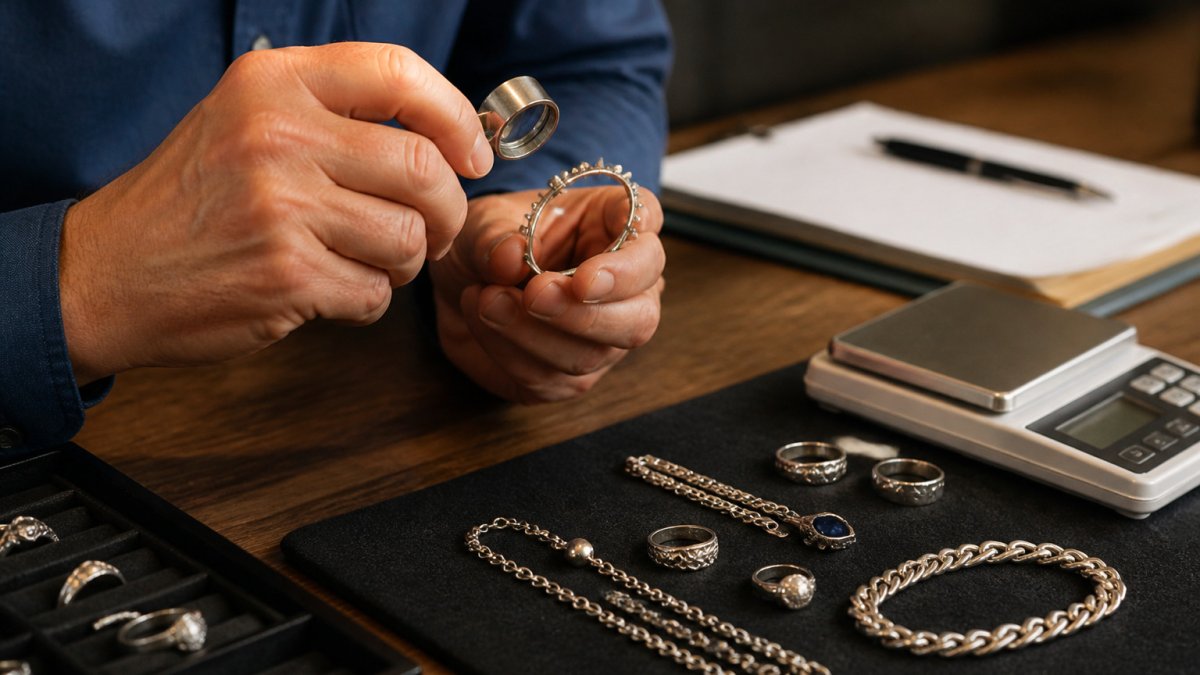
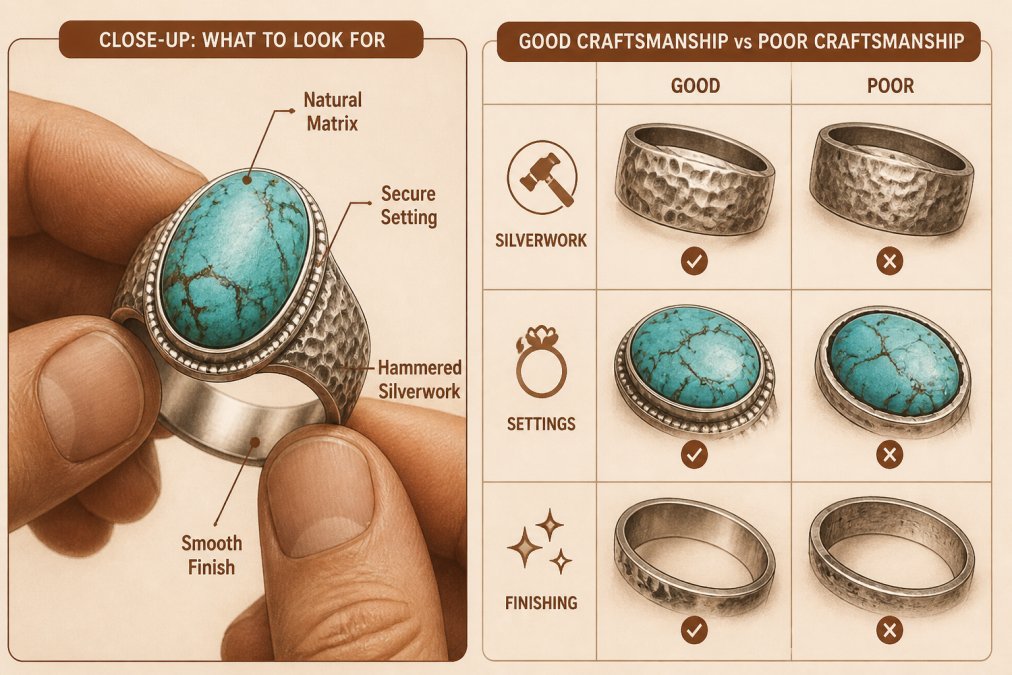
Good craftsmanship shows in three places: the silverwork, the setting and the finish. Look at the back of a piece before the front. A maker who finishes the underside cares about the whole object. What most guides leave out is the order to check things in and the questions that turn a visual inspection into a decision, so use the sequence below whether you are at a stall or reading a listing.
Step 1: the setting
Check the setting first. A claw or bezel should hold the stone firmly with no movement when you press gently. Gaps between stone and metal collect dirt and let the stone work loose over time. On a claw setting, the prongs should be even and sit snug against the stone. On a bezel, the metal should roll smoothly over the stone's edge with no thin or pinched spots. If you can see daylight between stone and bezel, the setting is loose or poorly fitted.
Step 2: the silverwork
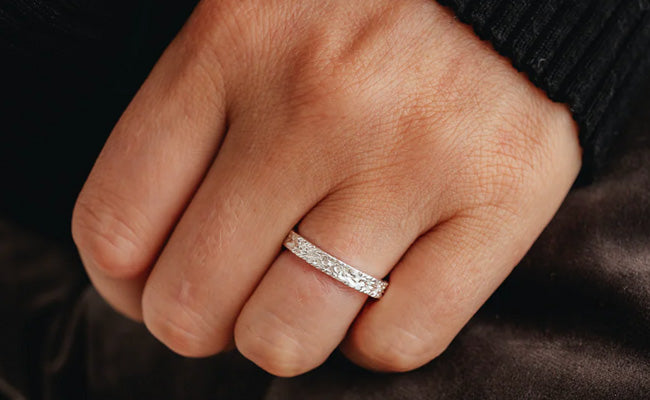
Then examine the silverwork. Handmade bands often show a hammered texture, and that texture should look deliberate rather than rough. Look for clean solder joins, no sharp edges against the skin, and a visible 925 stamp. Stamping and engraving should be crisp, not shallow. Turn the piece over: the back of a bezel, the inside of a band and the underside of a pendant are where shortcuts show. Rough file marks, uneven solder and unfinished edges on the back are the clearest sign that the front was the only part the maker cared about.
Step 3: the finish and the stone seat
Run a fingertip around the stone seat and the edges. A well-finished piece feels smooth where it meets the skin and has no burrs or sharp corners. Check that the stone sits level and that its polished surface is free of pits, cracks or cloudy patches that were not visible in the listing photo. A hairline crack at the edge of a cabochon is a weak point that can spread with wear.
Step 4: the questions to ask the seller
Visual checks only take you so far, especially online. Ask these before you commit:
- Is the stone natural, stabilised, dyed or imitation, and will that be stated on the receipt?
- Is the maker named, and can the attribution be documented?
- What is the silver weight and is it stamped 925?
- Can you send additional daylight photos of the back, the setting and the matrix close up?
- What is the returns policy, and does it cover a piece that arrives different from the listing?
- Is there a repair or resizing policy, and what does it cost?
Step 5: the documentation to request
If you want to go deeper on construction, our guide to what makes artisan jewellery more durable explains how setting and silverwork affect how a piece wears over years.
How to Care for Turquoise Jewellery So It Keeps Its Colour
For a fuller routine, our ethical jewellery care guide covers long-term storage and cleaning in more detail. A little care goes a long way: most dullness comes from lotions and water, not from the stone itself.
Choosing Your Piece from the SilverStory Collection
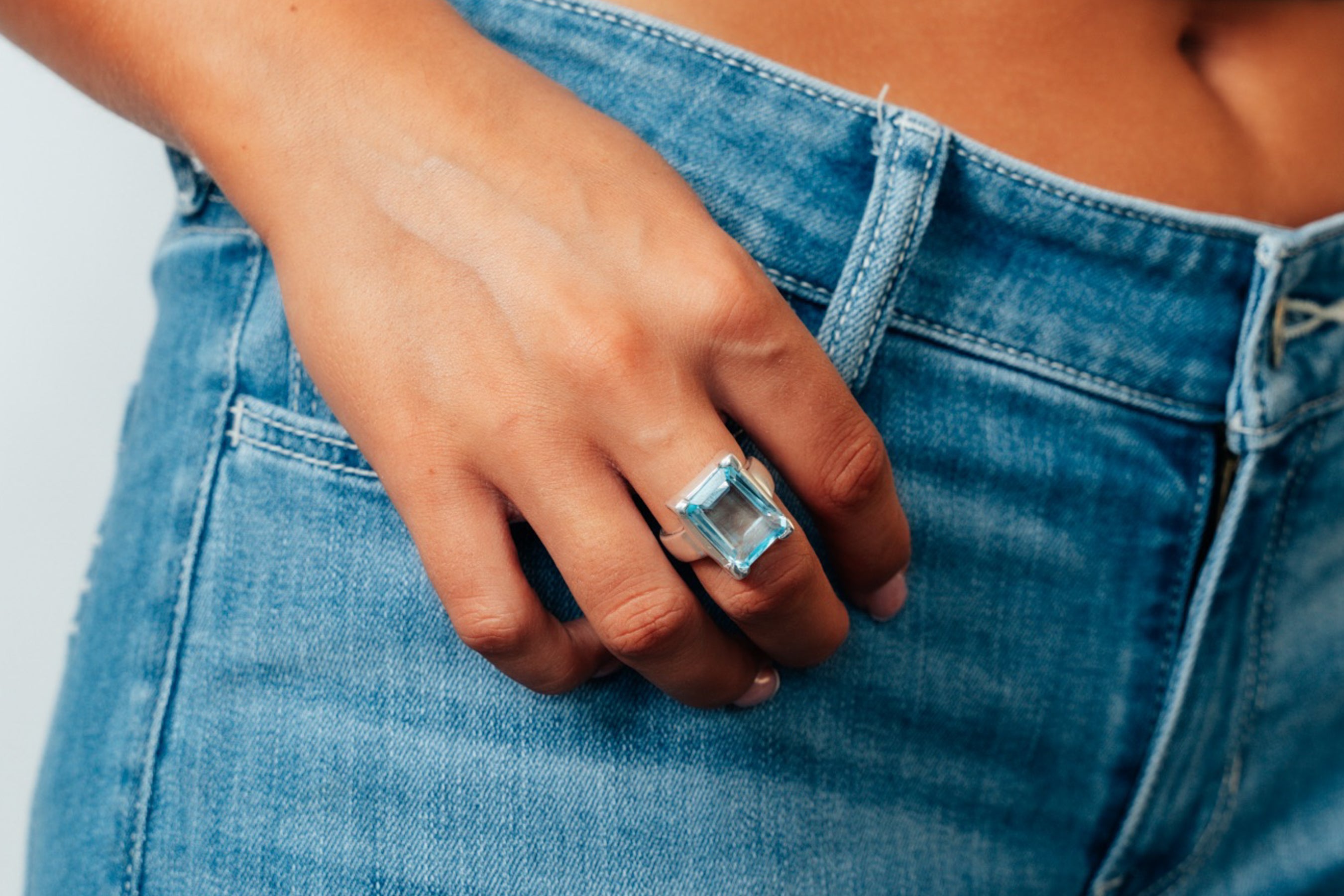
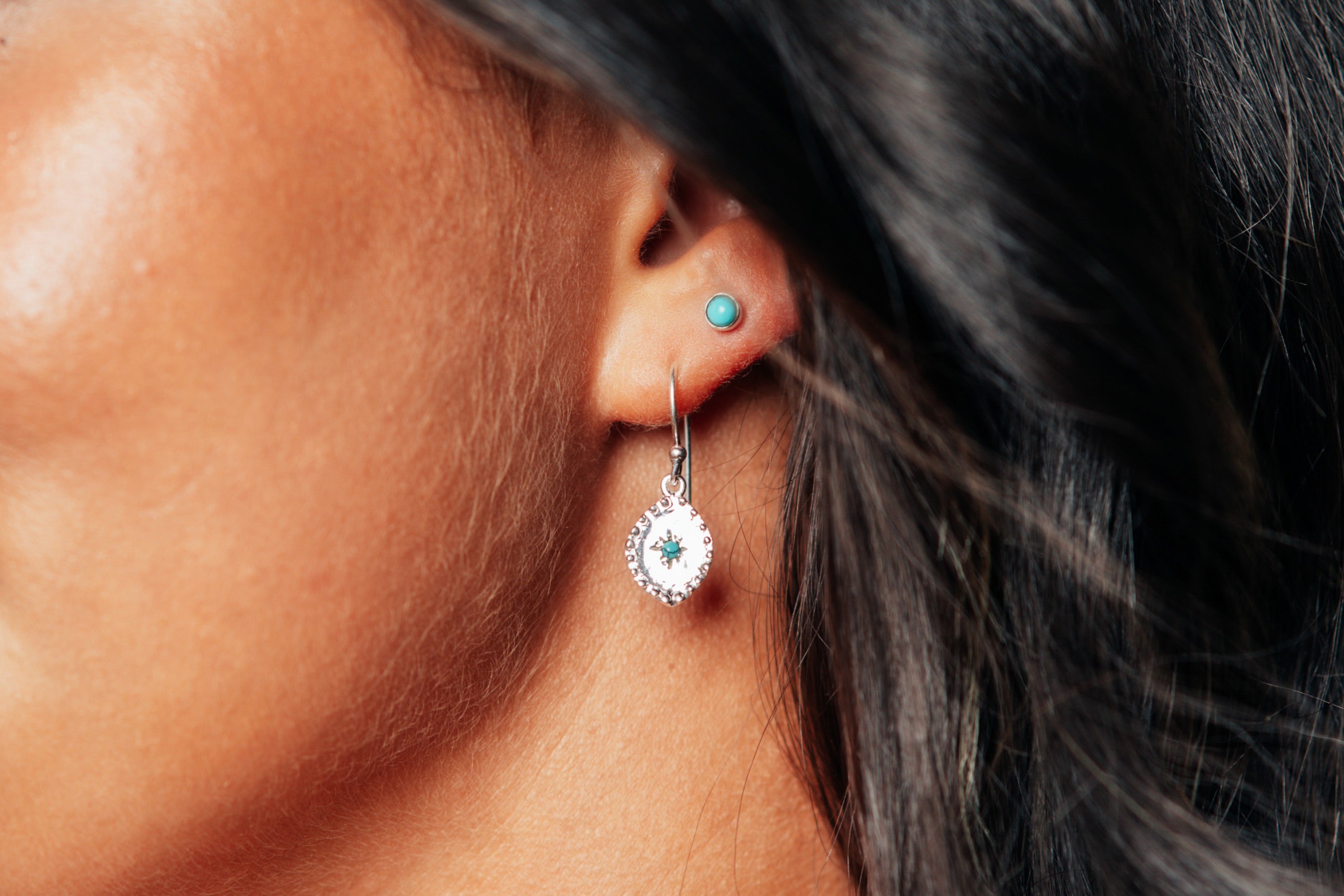
Our jewellery is handcrafted by skilled artisans in Rajasthan. The Turquoise Beaded Necklace with Detachable Silver Pendant has turquoise beads and a detachable turquoise star pendant in sterling silver, so you can wear it two ways. The Large Silver Turquoise Ring is a statement ring in a contemporary sterling silver setting, available in sizes small through XXL.


A practical checklist before you buy:
Frequently Asked Questions
How can you tell if turquoise is genuine?
Look at the matrix first. Natural turquoise has irregular veining that runs through the stone rather than sitting on the surface, and the colour shifts slightly across the face. Dyed howlite usually shows a chalky white core at the edges and veins that look painted on. Ask the seller directly whether the stone is natural, stabilised or imitation, and request a close-up photo in daylight. A seller who cannot answer clearly is a reason to walk away.
Is stabilised turquoise genuine turquoise?
Yes. Stabilised turquoise meaning is straightforward: the rough stone is treated with a resin to harden it and hold its colour, which lets softer turquoise be cut and worn without cracking. The stone is still turquoise, not a substitute. It is different from dyed howlite or reconstituted blocks, which contain little or no real turquoise. Stabilised stones are common in handmade turquoise jewellery and are usually priced below untreated, high-grade natural turquoise.
Can you wear turquoise jewellery in the shower?
Take it off first. Turquoise is porous, and repeated exposure to water, shampoo and body wash dulls the surface over time. Stabilised stones cope better than untreated ones but still fade with daily soaking. The same applies to silver: chlorine and soap residue speed up tarnish. Put your pieces on last when getting ready and take them off before showering, swimming or working out. A quick wipe with a dry cloth after wearing keeps them looking fresh.
What should you look for when buying handmade turquoise jewellery?
SilverStory pieces are handcrafted by artisans in Rajasthan.
What affects the price of handmade turquoise jewellery?
The Turquoise Ring is £60.00, and the Large Silver Turquoise Ring is £125.00.
How should you care for turquoise jewellery?
Keep it dry and keep it separate. Wipe stones with a soft damp cloth and dry immediately, never soak them. Avoid lotions, perfume, hairspray and cleaning chemicals, all of which dull the surface. Store each piece in its own pouch so silver does not scratch against stone. Put jewellery on after applying makeup and perfume, and remove it before showering, swimming or gardening. A silver polishing cloth restores shine to the metal without touching the stone.
Buying handmade turquoise jewellery asks you to slow down and ask better questions, and that is exactly where most buyers come unstuck. We built SilverStory around ethically sourced stones, handcrafted silverwork and prices that stay affordable, so you can own a piece made by skilled artisans in Rajasthan without the guesswork. Browse the collection, check the stone and setting details on each listing, and add to cart with confidence.