







How to Verify Fair Trade Jewellery Practices: A 2026 Guide
Table of Contents
- What Fair Trade Jewellery Actually Means
- Fairtrade Gold Certification Requirements Explained
- Responsible Jewellery Council Standards for Consumers
- How to Check Ethical Jewellery Supply Chain Transparency
- Your Step-by-Step Verification Checklist
- Post-Purchase Verification and Digital Tools
- Red Flags and Greenwashing Tactics to Avoid
- Why SilverStory's Verification Process Matters
- Frequently Asked Questions
Last Updated: September 9, 2026
What Fair Trade Jewellery Actually Means
Fair trade jewellery is jewellery produced under verified standards that ensure fair wages, safe working conditions, and responsible mining practices throughout the supply chain.
Most shoppers assume that "ethically sourced" and "fair trade" mean the same thing. They do not, and understanding the distinction shapes what to look for on a product page and which certification marks carry weight.
Fair Trade vs Ethical Sourcing: Key Differences
Ethical sourcing is a broad commitment to responsible practices. Fair trade is a specific, audited standard with defined criteria, third-party oversight, and certification marks you can trace.
A brand can claim ethical sourcing without external verification, which is why the term appears so frequently in greenwashing. Fair trade requires documented compliance checked by an independent auditor.
Fairtrade Gold Certification Requirements Explained
Fairtrade gold certification addresses the harsh realities of artisanal and small-scale mining. It sets requirements spanning the entire chain of custody: miners must work under safe conditions, receive a guaranteed fair trade premium, and follow environmental standards that limit mercury use.
The certification process requires rigorous documentation at every stage. Each batch of gold is tracked from extraction through refining to the jeweller, with the chain of custody verified by an independent auditor. This traceability is what allows a consumer to know that the gold in their ring was mined responsibly. According to the Fairtrade Foundation's certification standards, certified gold carries a premium that funds community projects chosen by the miners themselves, from clean water systems to healthcare facilities.
For consumers, the practical takeaway is simple: look for the Fairtrade mark on gold jewellery. The mark signals that an accredited body, not the brand itself, has verified compliance.
Responsible Jewellery Council Standards for Consumers
The Responsible Jewellery Council (RJC) offers a complementary layer of assurance. While Fairtrade focuses on specific materials like gold, the RJC certifies entire businesses across the supply chain, covering human rights, labour rights, environmental impact, and business ethics.
For consumers, RJC certification tells you that a brand has undergone a third-party audit against these standards and committed to continuous improvement. The certification is not a single product claim but an organisational one, meaning the entire business operates under a verified code of conduct. The Responsible Jewellery Council's Code of Practices outlines specific requirements covering due diligence, health and safety, and responsible sourcing of precious metals and gemstones.
When a jeweller displays RJC certification alongside product-specific claims, you gain confidence at two levels: the business is audited, and the materials are traceable.
How to Check Ethical Jewellery Supply Chain Transparency
Supply chain transparency is the backbone of any ethical claim, yet it remains the hardest element to verify from a product page. A genuinely transparent brand can tell you where materials originated, who crafted the piece, and under what conditions.
Start by examining the level of detail a brand provides. Do they name suppliers or regions? Can they describe the artisan workshops? Do they publish audit results or certification numbers? Specifics indicate a verifiable supply chain rather than a marketing narrative.
The Gemstone vs Metal Distinction
One of the most common gaps in consumer understanding is the difference between verifying metals and gemstones. Precious metals have established certification routes, including Fairtrade gold and the Kimberley Process for diamonds. Gemstones present a more complex picture.
Coloured gemstones such as rose quartz, moonstone, and chalcedony rarely carry the same third-party certification as metals, and their supply chains are often fragmented. This does not mean they are inherently unethical, but verification requires a different approach. Ask the brand directly about their gemstone sourcing, relationships with cutters and dealers, and any documentation they hold.
How to Trace a Supply Chain in Practice
A common pattern among leading brands is to publish a supplier list or a "where we source from" page. When absent, ask the brand to confirm the country of origin for the metal and each gemstone, then ask who their direct supplier is. A brand that cannot name its immediate supplier has a transparency problem.
For metals, request the refiner's name and any chain-of-custody certificate. The London Bullion Market Association (LBMA) publishes a list of accredited refiners you can check. For gemstones, ask whether the stone was sourced through a recognised programme such as the RJC's Chain of Custody certification or the Swiss Better Gold Association.
Digital Verification Tools You Can Use
A growing number of digital tools make supply chain verification more practical. Some brands issue a certificate of authenticity with a unique identifier linking to an online record of provenance. Others use blockchain-based tracking systems that create an immutable record from mine to finished product.
For gemstones specifically, digital verification is becoming increasingly important given the lack of traditional certification routes. Ask whether a brand can provide documentation tracing a stone's origin. While not every artisan workshop maintains digital records, the brands that invest in traceability demonstrate a genuine commitment to transparency.
What to Do When Documentation Is Missing
If a brand cannot provide specific supplier names or certification numbers, ask for a written explanation of their sourcing process. Some small workshops work through trusted local dealers and may not hold formal certificates, but they can still describe their relationships in detail. The absence of documentation is not always a red flag, the absence of any specific information, however, is.
Post-purchase verification also means holding brands accountable. If a piece arrives without the promised documentation, contact the brand and ask why. Consumer questions create pressure for better practices across the industry.
Your Step-by-Step Verification Checklist
Use this checklist whenever you evaluate a jewellery brand's ethical claims.

- Look for third-party certification marks. Fairtrade, RJC, and the Kimberley Process each provide independent verification. Their absence does not automatically disqualify a brand, but their presence offers strong assurance.
- Read the supply chain story in detail. Does the brand name specific regions, workshops, or artisan groups? Specificity signals genuine oversight, while vague language suggests marketing.
- Ask about gemstone sourcing separately. Remember that metals and gemstones follow different verification routes. Request specific information about each.
- Check for audit documentation. Reputable brands can share certification numbers or audit summaries. If a brand hesitates, treat that as a red flag.
- Consider the price with context. Fair wages and certified materials cost more. Pricing that undercuts the market significantly should raise questions about where corners were cut.
| Checklist Step | What to Look For | Red Flag |
|---|---|---|
| Certification marks | Fairtrade, RJC, Kimberley Process | No marks, only descriptive claims |
| Supply chain detail | Named regions, workshops, artisans | Vague "sustainable" language |
| Gemstone sourcing | Separate verification for stones | No information on stone origins |
| Audit documentation | Certification numbers, audit summaries | Hesitation or refusal to share |
| Pricing context | Fair wages reflected in price | Prices far below market rates |
Post-Purchase Verification and Digital Tools
Verification does not end at checkout. A growing range of digital tools allows consumers to trace their jewellery's journey after purchase. Some brands provide certificates of authenticity with unique identifiers linking to online records of provenance. Others use blockchain-based tracking to create an immutable record of the supply chain.
For gemstones specifically, digital verification is becoming increasingly important given the lack of traditional certification routes. Ask whether a brand can provide documentation tracing a stone's origin. While not every artisan workshop maintains digital records, the brands that invest in traceability demonstrate a genuine commitment to transparency.
Post-purchase verification also means holding brands accountable. If a piece arrives without the promised documentation, contact the brand and ask why. Consumer questions create pressure for better practices across the industry.
Red Flags and Greenwashing Tactics to Avoid
Greenwashing in the jewellery industry follows predictable patterns. The most common tactic is emotionally resonant language without verifiable substance. Terms like "conscious," "sustainable," and "ethical" appear frequently, but without certification or detailed sourcing information, they carry little meaning.
The Language of Vague Virtue
Watch for adjectives that describe intention rather than outcome. "We care about people and planet" tells you nothing about wages or working conditions. Compare this with language that names specific actions: "Our gold is Fairtrade certified," "Our silver is 100% recycled," or "Our gemstones are sourced from RJC-certified suppliers." Specific claims can be checked; vague claims cannot.
Another pattern is imagery as a substitute for evidence. A brand that fills its website with photographs of smiling artisans but cannot name a single workshop or provide a certification number is selling a story, not transparency.
Selective Certification and the Silent Component
A brand may highlight one certified material while remaining silent on others. A necklace might feature Fairtrade gold but a gemstone with no verifiable origin. The certification of one component does not certify the whole piece. Ask about every material separately: the metal, the main gemstone, and any accent stones. If a brand is transparent about one element but evasive about another, that silence is informative.
The Price Signal
Ethical production involves real costs. Fairtrade premiums, third-party audits, and traceability systems all add expense. When a piece is priced significantly below market rates, ask yourself what has been omitted. A price that undercuts comparable certified pieces by a wide margin warrants scrutiny.
What the Regulator Says
The Competition and Markets Authority guidance on green claims makes clear that environmental and ethical claims must be truthful and substantiated. Under the Consumer Protection from Unfair Trading Regulations 2008, brands making misleading claims about their ethical or environmental practices risk enforcement action. The CMA's Green Claims Code, published in 2021, sets out six principles that all sustainability claims must follow: they must be truthful and accurate, clear and unambiguous, and not omit important information. They must also consider the full lifecycle of the product, be substantiated with evidence, and not use language that overstates the environmental benefit.
How to Report a Misleading Claim
If you encounter a claim you believe to be misleading, you have formal channels for action. You can report the brand to your local Trading Standards office, contact the CMA directly through its website, or complain to the Advertising Standards Authority (ASA), which investigates misleading environmental or ethical claims in advertising.
The Verification Mindset
Ultimately, avoiding greenwashing requires a shift in mindset. Treat every ethical claim as a hypothesis to be tested rather than a fact to be accepted. Ask for evidence, check certification numbers, and look for third-party verification. Brands genuinely committed to fair trade practices will welcome your questions.
Why SilverStory's Verification Process Matters
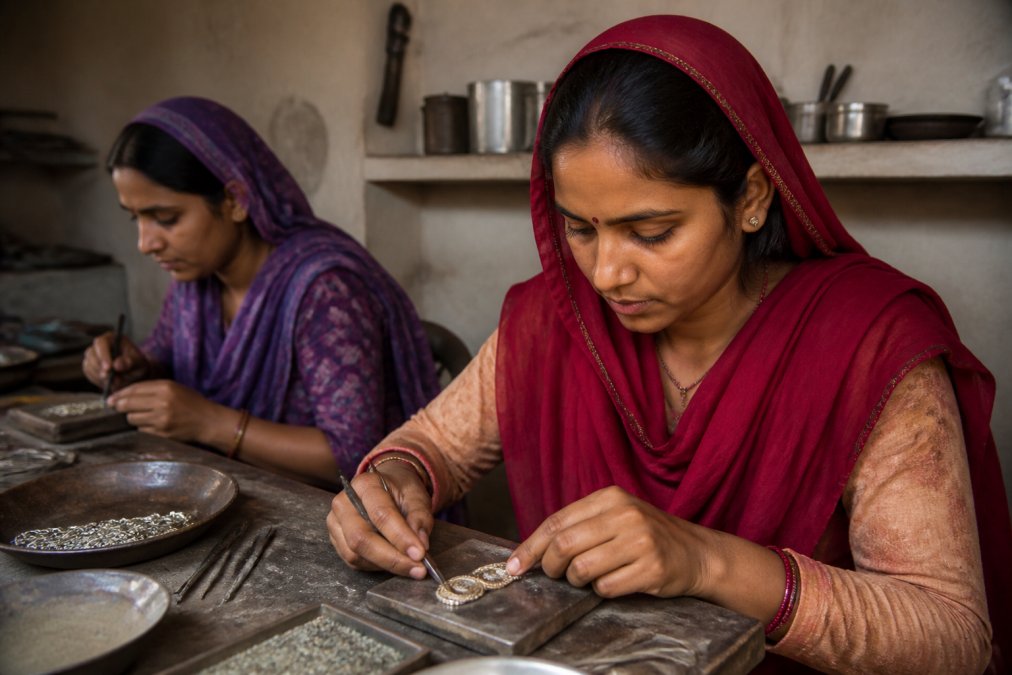
Every piece is handcrafted by skilled artisans in Rajasthan, working with sterling silver and responsibly sourced gemstones.
When you purchase from SilverStory, you receive jewellery made under ethical production standards, crafted by artisans earning fair wages for their skill. Our gemstone drop earrings and silver open circle ring each carry the story of the hands that made them.

We also understand that caring for your jewellery is part of responsible consumption. Our jewellery roll and jewellery pouch, handcrafted from 100% cotton by a family business in Rajasthan, help you store your pieces safely and extend their life.


Verifying fair trade jewellery practices requires moving beyond marketing language to examine certification, supply chain detail, and independent oversight. The process takes effort, but it ensures your purchases support artisans and miners working under fair conditions. At SilverStory, we offer ethically sourced jewellery handcrafted by skilled artisans in Rajasthan.
Frequently Asked Questions
What is the difference between 'fair trade' and 'ethical' jewellery?
Fair trade jewellery has specific, third-party audited standards covering wages, working conditions, and environmental impact, like Fairtrade gold certification. Ethical sourcing is a broader, often self-defined term that includes fair trade principles but also covers wider issues like mining practices and community development. While all fair trade is ethical, not all ethical jewellery meets formal fair trade certification requirements. Look for specific certifications and audit documentation to confirm claims.
What are the core requirements for Fairtrade gold certification?
Fairtrade gold certification requirements ensure miners receive a fair price plus a premium for community development. It mandates safe working conditions, prohibits child labour and hazardous chemicals like mercury, and requires a clear chain of custody from mine to market. This means the gold is tracked and audited at every stage. For consumers, this certification is the strongest proof that the gold in your jewellery supports responsible mining practices.
How do I check if a brand follows the Responsible Jewellery Council standards?
Brands that are members of the Responsible Jewellery Council (RJC) must be audited by independent third parties against their Code of Practices. To check, look for the RJC logo on the brand's website or ask for their membership number, which you can verify on the RJC's official member directory. Certification covers the entire supply chain, from mining to retail, ensuring ethical, human rights, and environmental standards are met.
How can I verify if a jewellery brand is truly ethical?
Start by checking for third-party certifications like Fairtrade or RJC membership, which provide independent auditing. Then ask direct questions about their supply chain transparency, such as where their metals and gemstones are sourced and how artisans are paid. Look for detailed information on their website, not just vague marketing terms. A brand committed to ethical practices will have documented evidence, like audit reports or artisan stories, to share with you.
Are there independent bodies that audit jewellery supply chains?
Yes, several independent bodies audit jewellery supply chains. The Responsible Jewellery Council (RJC) audits against its Code of Practices, while the Fairtrade Foundation certifies gold under specific standards. Other bodies like SCS Global Services and UL provide third-party certification for various sustainability claims. These independent auditors verify everything from mining practices and fair wages to traceability, giving you confidence that a brand's ethical claims are backed by compliance checks.
What is the difference between Fairtrade gold and recycled gold?
Fairtrade gold is newly mined gold from certified small-scale miners who receive fair wages and a community premium. Recycled gold comes from existing sources like old jewellery or electronics, reducing the need for new mining. Both are ethical choices but address different concerns. Fairtrade focuses on improving mining practices and miner welfare, while recycled gold focuses on environmental impact by avoiding new extraction. Some brands also combine both approaches.


