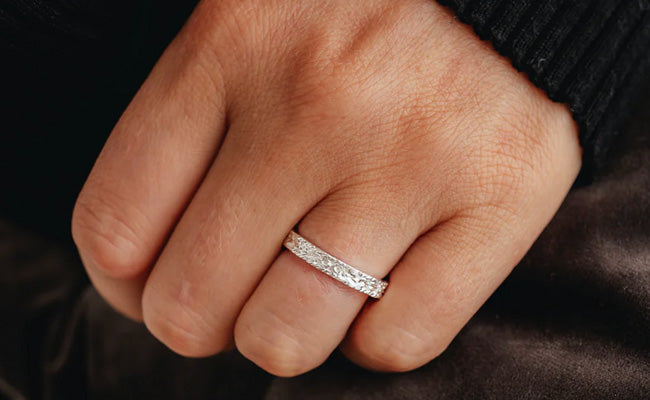
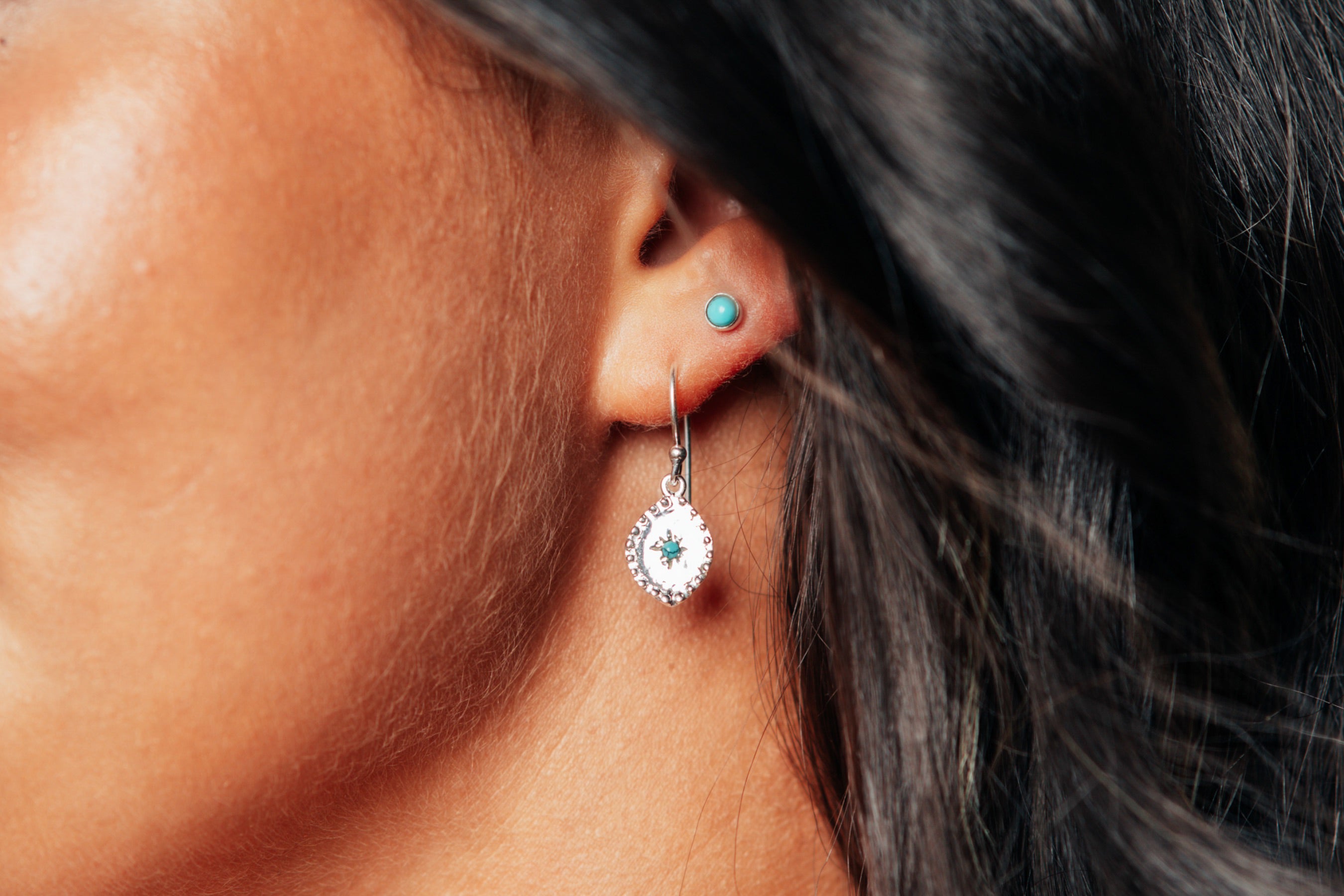
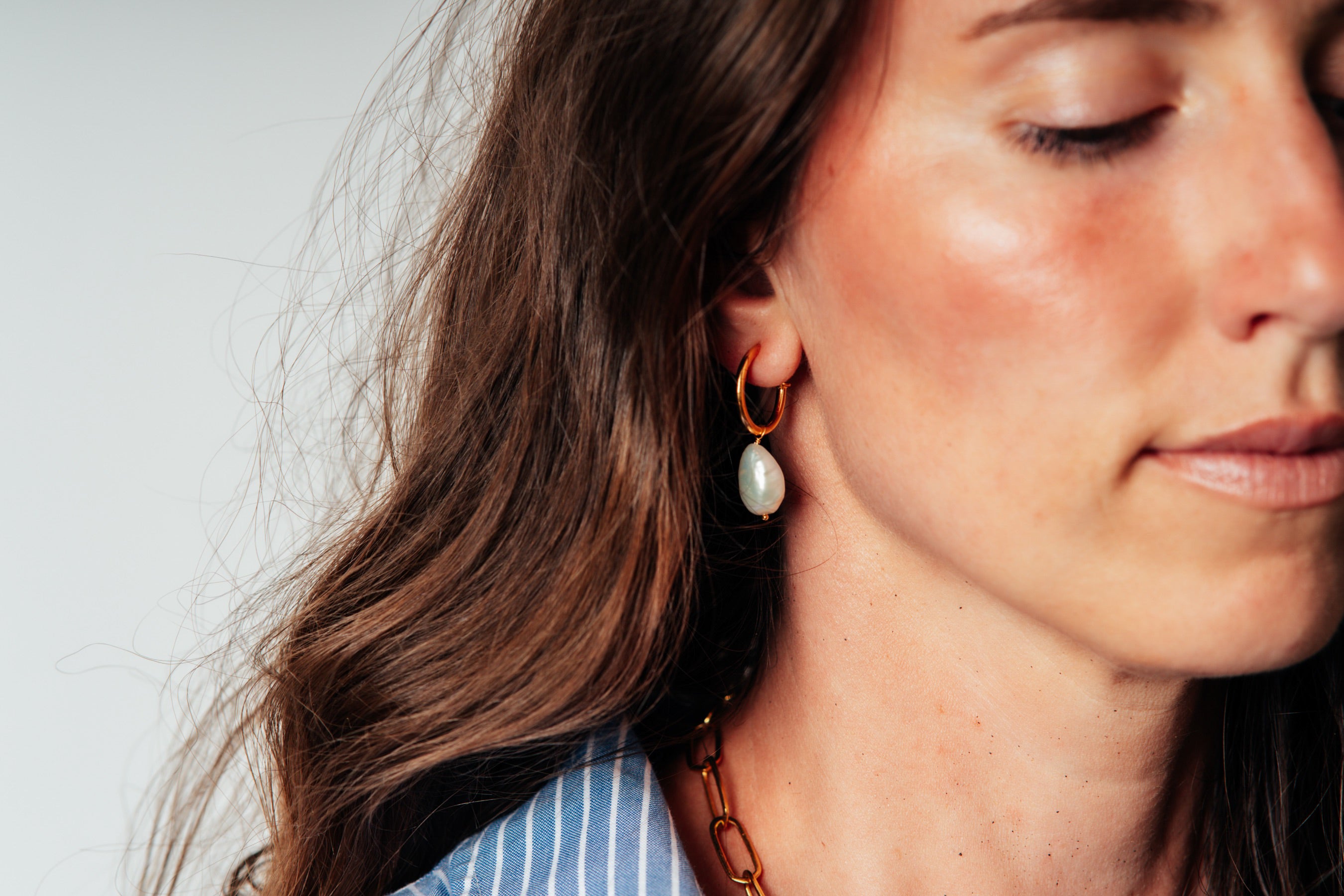
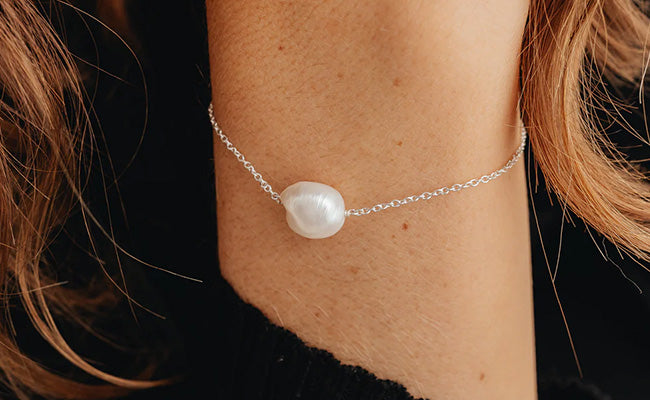

Handcrafted Silver Earrings for Sensitive Skin
Table of Contents
- Quick Comparison: Handcrafted Silver Earrings for Sensitive Skin
- What Makes Hypoallergenic Sterling Silver Earrings Safe for Sensitive Ears
- Signs of Metal Allergy from Earrings (and What to Do Next)
-
Top Handcrafted Silver Earrings for Sensitive Skin
- Silver Hammered Disc Stud Earrings
- Silver Hammered Moon Stud Earrings
- Silver Heart Stud Earrings
- Silver Open Circle Stud Earrings
- Silver Topaz Earrings
- Silver Horseshoe Stud Earrings
- Silver Gemstone Huggie Earrings
- Silver Hammered Huggie Earrings
- Tiny Silver Pearl Huggies
- Large Silver Pearl Huggie Earrings
- How to Clean Silver Earrings at Home Without Causing Irritation
- Why Handcrafted Silver Earrings Beat Mass-Produced Options for Sensitive Skin
- Frequently Asked Questions
Last Updated: September 10, 2026
Quick Comparison: Handcrafted Silver Earrings for Sensitive Skin
If your earlobes itch, redden or swell within hours of putting in earrings, you are not imagining it. Nickel is a leading cause of allergic contact dermatitis and hides in plenty of jewellery that claims to be gentle (the CDC). This guide covers what makes handcrafted silver earrings for sensitive skin safe, how to spot a reaction early, and which pieces suit reactive ears.
Below, we compare ten sterling silver designs, from £25 studs to a £120 pearl statement pair.
| Earring | Price | Style | Best For |
|---|---|---|---|
| Hammered Disc Stud | £25 | Stud, 5mm | Everyday minimalists |
| Hammered Moon Stud | £25 | Stud, 8mm | Subtle detail lovers |
| Heart Stud | £25 | Stud, 7mm | Gifting |
| Open Circle Stud | £25 | Stud | Second piercings |
| Topaz Earrings | £40 | Gemstone stud | Colour and sparkle |
| Horseshoe Stud | £25 | Stud | Good-luck gifts |
| Gemstone Huggie | £58 | Hoop, 10mm | Statement everyday |
| Hammered Huggie | £30 | Hoop, 10mm | Daily wear |
| Tiny Pearl Huggies | £38 | Hoop with pearl | Bridal and smart |
| Large Pearl Huggies | £120 | Baroque pearl hoop | Occasions |
What Makes Hypoallergenic Sterling Silver Earrings Safe for Sensitive Ears
Hypoallergenic sterling silver earrings release little to no nickel onto the skin, because sterling silver is 92.5% pure silver. The remaining 7.5% is usually copper, far less reactive than nickel.

Contact dermatitis is the itchy, flaky, sometimes weeping rash that appears where metal touches skin. It is a delayed reaction, often showing up a day or two after you put the earrings on, which is why people blame the wrong pair. Dermatologists point to nickel as the main offender in costume jewellery, followed by cobalt and chromium.
Sterling silver, sometimes stamped 925 silver, is a precious metal, not a plated base metal, so there is no nickel layer waiting to wear through. That is why many people with earlobe sensitivity wear it daily when they cannot wear high-street fashion earrings at all.
Signs of Metal Allergy from Earrings (and What to Do Next)
Signs of metal allergy from earrings typically appear as redness, itching, swelling or a dry, scaly patch around the piercing, usually within 24 to 48 hours (the American Academy of Dermatology). If you notice this, take the earrings out, clean the area with lukewarm water, and leave the piercing empty until the skin settles.
The reaction can spread: a nickel allergy on the earlobe often creeps down the jaw or up toward the hairline if you keep wearing the offending pair. Continuing to wear them "to see if it settles" turns a two-day irritation into a two-week one.
A few practical steps once you have identified the culprit:
- Stop wearing the earrings and set them aside, ideally in a labelled bag so you do not re-wear them
- Clean the piercing with lukewarm water and a mild, fragrance-free soap, then pat dry
- Avoid alcohol wipes and perfumed creams, which sting and slow healing
- Keep the piercing empty until the skin looks and feels normal, usually a few days
- Reintroduce jewellery with a sterling silver pair, worn for a short period first
If the rash blisters, spreads widely or does not improve after a week, speak to a pharmacist or GP. You can read more about the condition on the NHS page on contact dermatitis, which explains triggers and when to seek help.
Top Handcrafted Silver Earrings for Sensitive Skin
Every pair below is sterling silver, handcrafted for SilverStory at an ethical workshop in Rajasthan, so the metal touching your ear is the same all the way through. Each design is also available in gold.
Silver Hammered Disc Stud Earrings
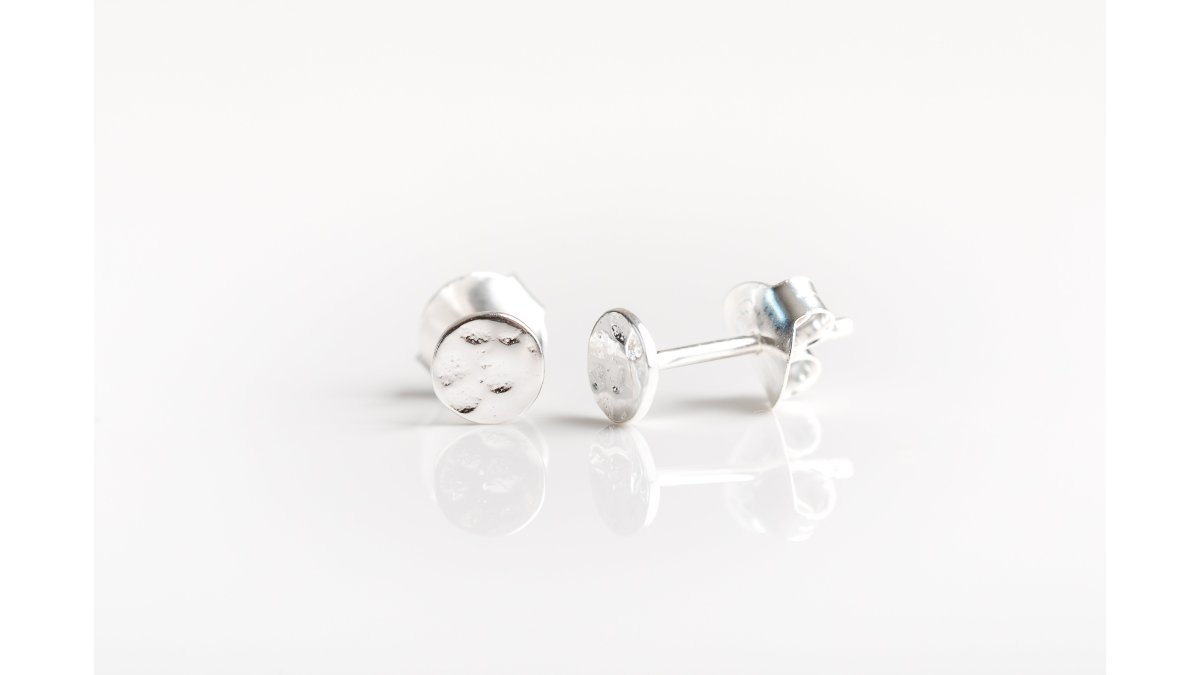
The smallest piece in the range. A 5mm hammered disc sits flat against the lobe, so nothing catches on hair or clothing. At £25, it is an easy way to test whether sterling silver suits your ears. Matching necklace and bracelet available.
Silver Hammered Moon Stud Earrings
A crescent shape, roughly 8mm top to bottom, with the same hammered finish. It pairs with our Lunar Necklace and is small enough for a second or third piercing, where sensitivity often shows up first.
Silver Heart Stud Earrings
Seven millimetres across at the widest point, handcrafted in sterling silver. These are our most-gifted pair, partly because the shape reads clearly even at a small size. Also available in gold.
Silver Open Circle Stud Earrings
An open hammered circle, discreet enough for work and simple enough to sleep in if your ears tolerate it. A good option if you want something more interesting than a plain ball stud.
Silver Topaz Earrings
A round topaz set in a circle of sterling silver, at £40. The design was inspired by earrings inherited from a great-grandmother, so the setting is deliberately simple. A matching necklace is available.
Silver Horseshoe Stud Earrings
Tiny horseshoe studs, handcrafted in sterling silver. A popular gift for horse lovers, and a quiet nod to good luck. Matching necklace and bracelet available.
Silver Gemstone Huggie Earrings
Our gemstone huggies have a square stone in a sterling silver setting, a 10mm inner hoop diameter and a gemstone of roughly 5mm. Choose Pink Tourmaline, Turquoise or the limited edition Black Onyx. At £58, this is the pair for colour without a heavy drop.
Silver Hammered Huggie Earrings
A 10mm huggie hoop with a hammered finish, at £30. These work well for a second piercing and sit close enough to the lobe that they rarely snag. Also available in gold.
Tiny Silver Pearl Huggies
Our hammered huggie hoops with a single tiny seed pearl. At £38, they lift an everyday earring into something more special, which is why they are a frequent bridal choice. Matching necklace and bracelet available.
Large Silver Pearl Huggie Earrings
Large baroque pearls on hammered sterling silver huggies, at £120. Each pearl varies in size, shape, texture and colour, so no two pairs are identical. A bridal or occasion piece rather than an everyday one.
How to Clean Silver Earrings at Home Without Causing Irritation
To clean silver earrings at home, use lukewarm water with a drop of mild washing-up liquid, rub gently with a soft cloth or baby toothbrush, rinse thoroughly and dry completely before wearing. Harsh chemicals and abrasive polishes scratch the surface and leave residue that irritates sensitive skin.
For reactive ears, what matters more is what you clean off and what you clean with, because residue and moisture cause more irritation than tarnish itself.
The two-part routine: the earring and the piercing
Most guides only cover the metal. For sensitive skin, the piercing channel needs equal attention, because product build-up, dead skin and trapped moisture sit there and mimic an allergic reaction.
- The earring: lukewarm water, a drop of mild washing-up liquid, a soft baby toothbrush for the crevices around a huggie hinge or gemstone setting, then rinse and dry fully with a lint-free cloth.
- The piercing: plain lukewarm water and a mild, fragrance-free soap, worked gently around the front and back of the hole. Pat dry. Do not rotate the earring aggressively or scrub the channel.
- The backing: butterfly and silicone backs collect soap residue and skin oils. Wash them separately, or replace silicone backs every few months, as they degrade and harbour bacteria.
What to avoid, and why
- Silver dips and liquid polishes: effective on tarnish, but they leave a chemical film in the crevices of a setting. If you use one, rinse far longer than the bottle suggests and dry thoroughly.
- Alcohol wipes and perfumed creams: these sting an already-irritated piercing and slow healing.
- Ultrasonic cleaners: fine for solid metal, but they can loosen a glued pearl or soft gemstone setting. Check the construction first.
- Baking soda or toothpaste scrubs: abrasive enough to dull a hammered finish and leave micro-scratches that trap residue.
The drying step most people skip
Trapping moisture behind a huggie or inside a stud backing is a common cause of irritation that has nothing to do with metal allergy. Dry the earring and the lobe before putting it back in, and if you shower or swim with earrings in, dry them immediately rather than letting them air-dry against the skin.
Storage that protects both the metal and your ears
- Store earrings in a dry place, ideally a small airtight bag or lined box, to slow tarnish.
- Keep pairs separate so a harder metal does not scratch a softer one.
- Put earrings on last, after perfume and hairspray have dried.
- Take them off before chlorinated water or a hot tub.
- Wipe them with a soft cloth after wearing to remove oils and product residue.
Tarnish is normal on sterling silver, not a sign of poor quality: it is sulphur in the air reacting with the surface, and it comes off easily. A silver polishing cloth handles light tarnish; reserve liquid dips for heavy build-up and rinse meticulously afterwards.
Why Handcrafted Silver Earrings Beat Mass-Produced Options for Sensitive Skin
Handcrafted silver earrings beat mass-produced alternatives for sensitive skin because the metal is solid sterling silver throughout, with no plated layer that can wear thin and expose a reactive base metal. Mass-produced fashion earrings often use a nickel-containing core with a thin gold or silver coating, and once that coating rubs away, the nickel touches your skin directly.
The more useful question is how you verify it, and how the design of a handmade piece changes what your ear experiences over a full day.
How to verify 925 sterling silver before you buy
A hallmark is the first check. In the UK, precious metal items above a set weight must carry an assay office hallmark, and sterling silver is marked 925. A stamped '925' alone is a maker's mark, not a legal hallmark, so treat it as a claim rather than proof.
Practical checks you can run yourself:
- Look for the full hallmark: the assay office mark, the 925 fineness mark and the maker's mark together. A lone '925' stamp is weaker evidence.
- Check the weight and feel: sterling silver is denser than plated brass or zinc alloy. A pair that feels unusually light for its size is worth questioning.
- Inspect the post and backing, not just the front: the post sits in the piercing channel, so it matters most. A silver front on a mystery-metal post defeats the purpose.
- Ask the maker directly: a handcrafted seller should know the metal composition of the post, backing and any solder at the join. Mass-market listings rarely can.
- Be wary of 'hypoallergenic' as a standalone claim: the term is not tightly regulated in jewellery, and a plated earring can still carry it. Look for sterling silver, 925 silver or surgical stainless steel stated explicitly.
Weight and ergonomics: the comfort factor competitors ignore
Weight is the angle most buyers overlook. Heavier earrings pull on the lobe, and constant tugging keeps a piercing slightly inflamed, worsening any sensitivity. A lightweight stud or small huggie strains the ear far less than a large drop.
Three design details affect comfort more than the decorative front:
- Post thickness: a thinner post slides through a healed piercing with less friction. A post too thick for your hole causes micro-abrasion that reads as irritation.
- Backing type: butterfly backs sit close to the lobe and are less likely to catch; silicone backs are gentler but degrade over time. For huggies, a smooth hinge with no sharp internal edge matters more than the clasp style.
- Overall drop and diameter: a 5mm disc or 10mm huggie stays close to the lobe and rarely snags. A large drop swings, tugs and concentrates weight at the piercing site.
Handmade pieces are finished by hand rather than stamped out at speed, so edges are smoothed and posts set cleanly. That matters for comfort, and for anyone prone to irritation at the piercing site.
Clean materials and ethical sourcing
Reactive ears often react to what is in the metal and what is on it, so a maker who controls the metal source and finishing process controls the two variables that matter most.
Our pieces are made exclusively for SilverStory at an ethical workshop in Rajasthan, and we work with the same makers rather than chasing the cheapest quote each season. That continuity keeps the alloy, solder and finishing compounds consistent, so a pair that suits your ears this year should suit them next year.
If your ears are reactive, start with a plain sterling silver pair before adding gemstones or pearls. It removes one variable and tells you whether silver works for you.
Frequently Asked Questions
What type of silver earrings are best for sensitive ears?
Sterling silver, marked 925, is the best choice for sensitive ears. It contains 92.5% pure silver and 7.5% other metals, usually copper, which is far less likely to trigger a reaction than nickel. Handcrafted silver earrings from ethical workshops avoid nickel plating altogether. Look for studs or small huggies with smooth posts and secure backs to reduce friction and irritation during everyday wear.
How can I tell if silver earrings are hypoallergenic?
Check for a 925 hallmark stamp, which confirms sterling silver purity. Hypoallergenic sterling silver earrings should be nickel-free. Ask about the earring post material, as this is the part in direct contact with your piercing. If a seller cannot confirm nickel-free construction, treat it as a warning sign and look elsewhere.
What are the signs of metal allergy from earrings?
Common signs of metal allergy from earrings include redness, itching, swelling, or a rash around the earlobe or piercing site. Symptoms may appear hours or days after wearing. In more severe cases, you might notice blistering, dry patches, or a burning sensation. If you experience these signs, remove the earrings immediately, clean the area with mild soap and water, and allow the skin to heal before trying a different pair.
How do I clean handcrafted silver earrings at home to prevent irritation?
Mix a few drops of mild washing-up liquid with warm water. Soak the earrings for two to three minutes, then gently brush the posts and details with a soft toothbrush. Rinse well and pat dry with a lint-free cloth. For tarnish, use a silver polishing cloth. Avoid harsh chemicals, bleach, and abrasive cleaners, as residue can irritate sensitive skin. Clean your earrings every few weeks, or more often if you wear them daily.
Can I wear handcrafted silver earrings every day if I have sensitive skin?
Yes, provided they are genuine sterling silver and nickel-free. Handcrafted silver earrings made from 925 silver are designed for everyday wear, especially lightweight studs and small huggies.