5 Affordable Ethical Silver Bracelets for Women
Table of Contents
- Why Ethical Silver Bracelets Are Worth the Investment
- What Makes Silver Jewellery Ethical? How to Identify Ethical Silver Jewellery
- 5 Affordable Ethical Silver Bracelets for Women
- Caring for Sterling Silver Bracelets: Keep Them Tarnish-Free
- Sustainable Jewellery Trends 2026: What's Next for Conscious Consumers
- Lifecycle Cost and Circularity: The Long-Term Value of Ethical Silver
- Conclusion
- Frequently Asked Questions
Last Updated: September 11, 2026
Why Ethical Silver Bracelets Are Worth the Investment
A £35 piece that lasts a decade is cheaper than three £15 pieces that tarnish by Christmas. That maths sits at the heart of the ethical silver bracelets question, and it is why this guide from SilverStory focuses on value rather than sticker price.
Ethical silver jewellery is made from responsibly sourced precious metals, produced by workers paid fairly, with a supply chain the buyer can trace. It costs more to make than costume jewellery, and it shows in how long the piece stays wearable.
The case for buying well is straightforward. Sterling silver is a durable precious metal, so a well-made bracelet survives daily wear, gym sessions and the occasional shower far better than plated alternatives. The Assay Office guidance on UK hallmarking explains the legal framework that protects that quality claim.
Below, we cover what makes silver ethical, how to verify it, and five affordable bracelets for women that meet the bar.
What Makes Silver Jewellery Ethical? How to Identify Ethical Silver Jewellery
Ethical silver jewellery meets three tests: responsibly sourced metal, fairly paid makers, and a supply chain transparent enough to verify both. Most "handcrafted" labels fail at least one.
A common mistake is treating "handmade" as a synonym for "ethical". A piece can be assembled by hand in unsafe conditions and still carry that word on the tag.
The Three Tests, and How to Actually Verify Each One
1. Responsible sourcing. The metal should be recycled or certified responsibly mined silver, not "sourced globally". Recycled sterling silver is chemically identical to newly mined silver and meets the same 92.5% purity standard, making it the easiest ethical claim to make honestly. A named refiner, programme or mine beats a logo.
2. Fair labour. Look for a named workshop or region; "made overseas" tells you nothing. The strongest signal is a brand that names the workshop behind a specific bracelet and describes how it is audited. Fair trade certification is one route, but a small brand working directly with a workshop it visits can be more accountable than a large brand with a certificate and a long subcontracting chain.
3. Transparency. Ask where a piece is made. If the answer changes between the website and the reply, walk away. Consistency across the product page, about page and a direct email is the cheapest verification test available.
Sterling, Fine and Argentium: Which Silver Alloy You Are Actually Buying
This matters for both ethics and durability.
- Fine silver is 99.9% pure. It is softer, tarnishes slowly, and is rarely used for bracelets because it dents and stretches.
- Sterling silver is 92.5% silver alloyed with copper. It is the UK standard, hard enough for a bracelet, and the alloy most ethical brands use. The copper is why sterling tarnishes.
- Argentium silver is a sterling-family alloy (minimum 92.5% silver) that replaces some copper with germanium, making it more tarnish-resistant and sometimes harder. It is not a purity upgrade, it is a different alloy, and worth asking a brand why they chose it.
A brand that names its alloy and explains the trade-off understands its supply chain. A brand that says "pure silver" without qualification is using the phrase loosely.
A Greenwashing Checklist for Jewellery Marketing
Run any product page through these five questions before you buy:
- Does the claim have a subject? "Recycled silver" is a claim. "Sustainable" is a mood.
- Is the origin named? A country, a region, a workshop, a refiner. "Ethically sourced" with no noun is a red flag.
- Is the certification verifiable? If a logo appears, can you find the brand on the certifier's own register? If not, it is decoration.
- Does the brand publish a repair or take-back policy? A brand that will not repair its own piece in five years is not planning for it to last.
- Are the claims consistent across channels? Check the product page, the about page and a direct email. Divergence is the tell.
Hallmarking and Metal Purity: What UK Buyers Should Check
Sterling silver in the UK must be 92.5% pure, and any piece above 7.78 grams must carry a legally recognised hallmark. That mark is applied by an independent assay office, not the brand, so it is one of the few jewellery claims you can trust without research.
Check three things: the maker's mark, the fineness mark (925 for sterling) and the assay office symbol. If a bracelet claims sterling silver with no hallmark, treat the claim as unverified. Below 7.78 grams hallmarking is optional, which is why delicate chain bracelets often have no stamp.
The Assay Office guidance on UK hallmarking sets out the full framework, including the exemptions that apply to lightweight pieces.
5 Affordable Ethical Silver Bracelets for Women
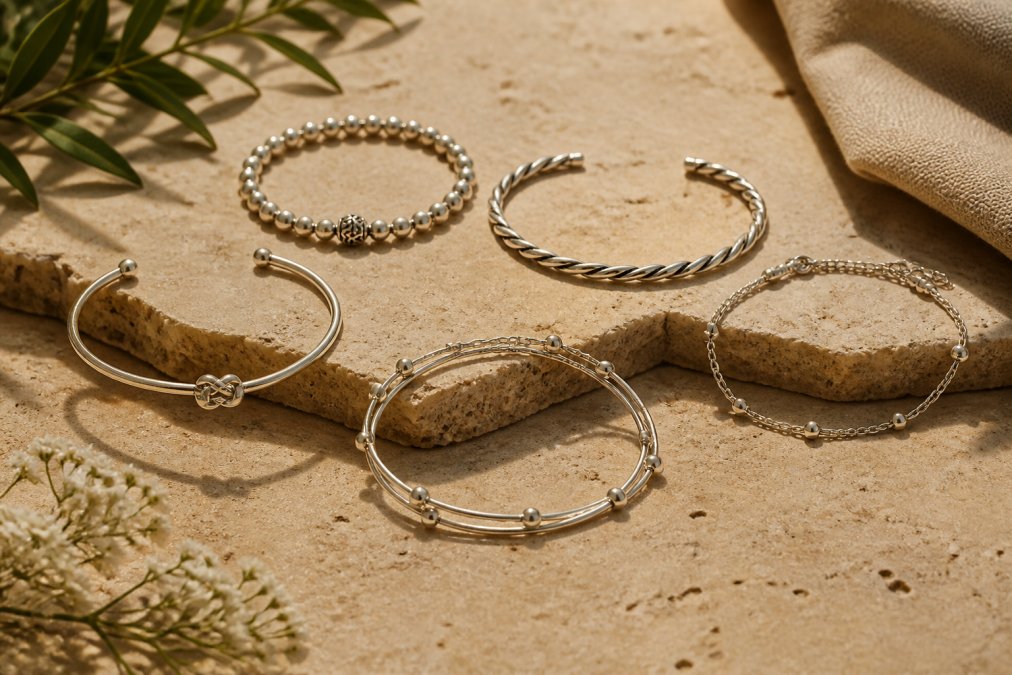
Each bracelet below is handcrafted in sterling silver at an ethical workshop in Rajasthan and priced £35-£48. They cover minimalist, gemstone, pearl and textured styles.
| Bracelet | Price | Best For | Key Detail |
|---|---|---|---|
| Silver Infinity Bracelet with Pearl | £35 | Gifting, bridal | Seed pearl, adjustable chain |
| Silver Interlinked Circle Bracelet | £40 | Everyday minimalist wear | Two interlinked circles, 8-10mm |
| Silver Gemstone Beaded Bracelet | £42 | Colour and layering | Pink tourmaline or turquoise |
| Silver Mini Hammered Disc Bracelet | £45 | Texture and stacking | 5mm hammered discs |
| Silver Pearl on Chain Bracelet | £48 | Statement simplicity | Baroque pearl, one of a kind |
1. Silver Infinity Bracelet with Pearl (£35)
The cheapest piece in the range is also perfect for gifting: a delicate sterling silver chain with an infinity symbol and a tiny seed pearl, adjustable 16-20cm.

It is the obvious pick for bridesmaids or a birthday under £40. The matching gold version exists if you are buying for someone who never wears silver.
2. Silver Interlinked Circle Bracelet (£40)
Two small interlinked circles, each roughly 8-10mm across, sit on a silver chain. The deliberately plain design works with everything from office wear to weekend denim. Chain length runs 16-19cm.
This is the one to buy if you want a single bracelet that never looks out of place.
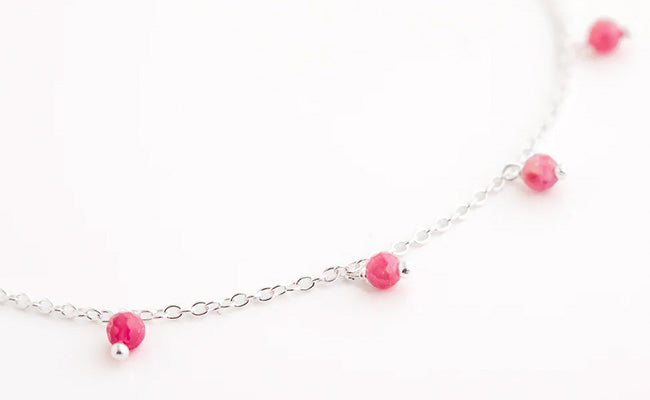
3. Silver Gemstone Beaded Bracelet (£42)
Tiny pink tourmaline or turquoise beads sit between sterling silver links on a 16-20cm adjustable chain. The colour is subtle enough for minimalist wardrobes but breaks up an all-silver stack.
Wear it alone or layer it with the infinity bracelet for contrast.
4. Silver Mini Hammered Disc Bracelet (£45)
A string of 5mm hammered discs hangs from a fine chain, 16-20cm adjustable. The hammered finish catches light differently from a polished surface, so it reads as more expensive than its price. Matching necklace and earrings exist if you want a set.
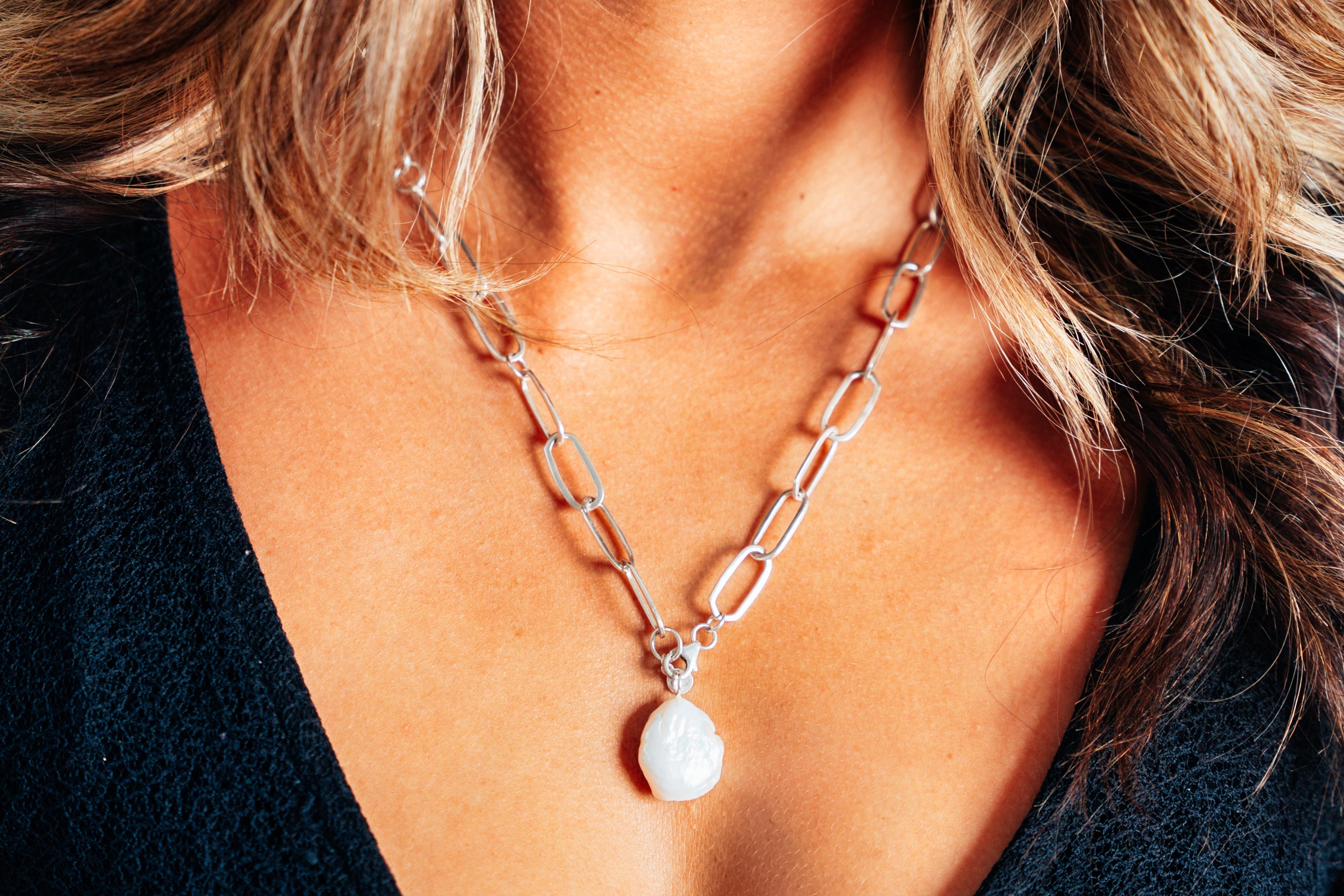
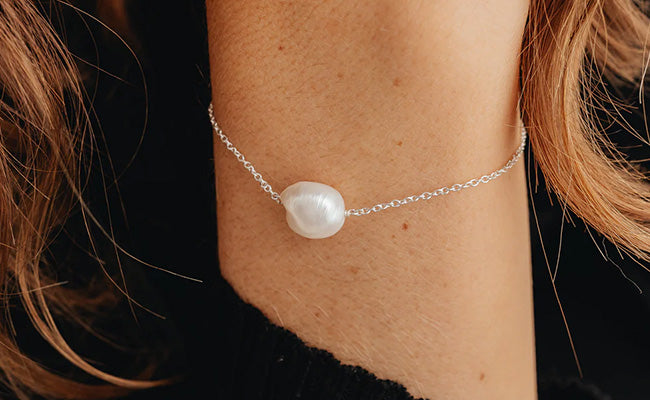
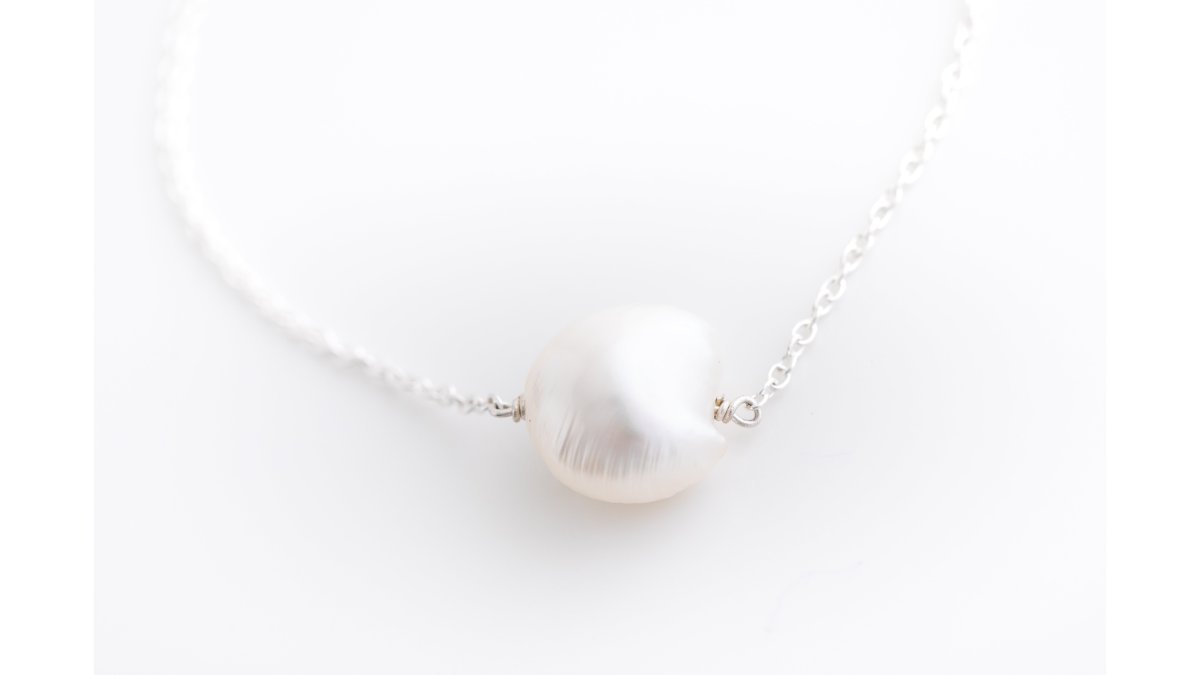
5. Silver Pearl on Chain Bracelet (£48)
A single irregular baroque pearl sits on a fine sterling silver chain, 16-19cm. No two pearls are identical, so the bracelet you receive is genuinely one of a kind.
Caring for Sterling Silver Bracelets: Keep Them Tarnish-Free
Sterling silver tarnishes because sulphur compounds in air and on skin react with the copper alloyed into it. The fix: keep it dry, store it away from air, and polish when a dull film appears.
A practical routine:
- Last on, first off. Put bracelets on after perfume, lotion and hairspray have dried; take them off before showering or swimming.
- Wipe after wear. A dry soft cloth removes skin oils that speed up tarnish.
- Store sealed. A small zip bag with the air pressed out slows tarnish dramatically.
- Polish, don't scrub. A silver polishing cloth restores shine in under a minute. Abrasive pastes wear down the finish over time.
- Skip the dishwasher, chlorine and hot tubs. All three damage silver and any gemstone or pearl set into it.
Pearls need one extra rule: keep them away from perfume and hairspray entirely, because the nacre surface absorbs chemicals and dulls permanently.
Sustainable Jewellery Trends 2026: What's Next for Conscious Consumers
Recycled silver is the defining trend of 2026, and it is not a gimmick: recycled sterling silver is chemically identical to newly mined silver, meets the same 92.5% purity standard, and requires no new mining.
But the more useful shift is not what brands claim, it is what they are asked to prove, and what they do after the sale. Three changes matter.
Repairability Is Becoming the Real Ethical Test
A bracelet that can be re-clasped, re-strung or re-polished extends its working life by years, the difference between a piece recycled once and one worn by three owners.
Ask three questions before you buy:
- Does the brand offer repairs, and for how long? A lifetime repair policy is a strong signal. A 12-month warranty is not the same thing.
- Can the piece be re-sized or re-strung? Adjustable chain bracelets are easier to repair than fixed-length pieces with soldered fittings.
- Does the brand take back old pieces? Some buy back, some recycle on your behalf, some credit you against a new purchase. All three keep silver in circulation.
Circularity: What Happens to a Bracelet After You Stop Wearing It
Precious metal retains value in a way costume jewellery does not. Even a broken sterling bracelet has scrap value, and a UK jeweller or refiner will pay by weight. That floor makes the lifecycle maths work.
A common pattern among ethical brands is a two-stage circularity offer: repair first, recycle second. Repair keeps the piece in use; recycling recovers the metal when repair is no longer viable. Brands offering neither are selling a disposable product with a precious-metal label.
Traceability Is Moving From Claim to Evidence
Buyers now ask which workshop made a piece, not just whether the brand is "sustainable". The brands responding well publish workshop names, audit summaries and refiner details on the product page itself, rather than burying them in a sustainability report.
The UK government guidance on responsible business conduct is a useful reference for how supply chain due diligence is framed for UK retailers, and it explains why more brands are publishing workshop details.
Lifecycle Cost and Circularity: The Long-Term Value of Ethical Silver
A £45 sterling silver bracelet worn three times a week for five years costs roughly 6p per wear. A £12 plated bracelet binned after eight months costs around 12p per wear, and ends up in landfill.
That is the lifecycle argument in one line, and the angle most buying guides skip. Three factors decide whether the maths holds:
- Metal purity. Solid sterling silver can be polished, repaired and resold indefinitely. Plated base metal cannot.
- Repairability. A chain that can be re-clasped or re-strung extends its life by years. Ask before you buy.
- Resale and recycling. Precious metal retains value; even a broken sterling bracelet has scrap value, unlike costume jewellery.
Circularity is where ethical silver earns its premium: a piece repaired twice then recycled has served three owners instead of one.
Conclusion
Choosing between five bracelets is easy. Verifying that the silver was responsibly sourced and the makers paid fairly is harder, and it determines whether your purchase actually supports the values you care about.
At SilverStory, every bracelet is handcrafted by skilled artisans in Rajasthan, made from sterling silver, and priced £35-£48. Each piece can be layered, gifted or worn daily, and customers rate selected designs 5.0 stars.
Browse the collection and add to cart with confidence.
Frequently Asked Questions
How can I verify if a silver bracelet is ethically sourced?
Look for transparency about the supply chain. Reputable brands explain where the silver comes from and who makes the jewellery. Check for hallmarks proving metal purity, and look for statements about fair pay and safe working conditions. SilverStory, for example, states that pieces are handcrafted at an ethical workshop in Rajasthan. If a brand cannot answer basic questions about its sourcing, treat that as a warning sign.
Are affordable silver bracelets durable enough for everyday wear?
Yes, if they are made from sterling silver (92.5% purity) and cared for properly. Sterling silver is durable enough for daily wear, though it can tarnish over time without attention. Pieces like the Silver Paperclip Chain Bracelet (£60) or the Silver Knot Bangle (£70) are suitable for regular use. Remove them before showering or swimming to extend their shine, and store them in a dry place.
What is the difference between sterling silver and recycled silver?
Sterling silver refers to the alloy itself: 92.5% pure silver mixed with other metals for strength. Recycled silver is sterling silver (or fine silver) that has been reclaimed from existing sources rather than newly mined. Both can be high quality. Recycled silver reduces demand for new mining, which is why it is often highlighted as a more sustainable option. Always check for a hallmark to confirm purity.
How do I care for sterling silver bracelets to prevent tarnishing?
Keep sterling silver bracelets away from moisture, perfumes, and household chemicals. Put them on last when getting ready and take them off first at night. Wipe them with a soft polishing cloth after wearing to remove oils. Store each piece separately in an airtight bag or lined box to slow tarnishing. For deeper cleaning, use a silver polishing cloth or a gentle silver dip, following the product instructions.
Where can I buy handcrafted ethical silver bracelets?
Specialist artisan brands often provide more detail about their supply chain than large retailers. SilverStory offers a range of handcrafted sterling silver bracelets, with prices from £35 to £70. Each piece is made in Rajasthan, and the brand shares information about its ethical workshop. When buying anywhere, look for clear sourcing information, hallmarks, and a returns policy so you can shop with confidence.
Ethical jewellery only works if it is genuinely traceable, and that is the standard SilverStory holds itself to. Every bracelet is handcrafted in sterling silver at an ethical workshop in Rajasthan, with adjustable chain lengths, matching pieces across the range, and prices that keep conscious craftsmanship within reach. Get started with SilverStory and choose a bracelet you will still be wearing in five years.