What Makes Artisan Jewellery More Durable: A 2026 Guide
Table of Contents
- Why Artisan Jewellery Outlasts Mass-Produced Pieces
- Durable Artisan Jewellery Materials: Solid Metals and Gemstones
- Construction Details That Make Handmade Jewellery Last
- How to Tell If Jewellery Is Well Made Before You Buy
- Handcrafted Silver Jewellery Care and Repair
- Durability vs Weight, Comfort and Price: The Trade-Offs
- Conclusion
- Frequently Asked Questions
Last Updated: October 17, 2026
Why Artisan Jewellery Outlasts Mass-Produced Pieces
Durability in artisan jewellery comes from three things: solid precious metals, hand-formed construction, and settings built around each stone. Mass-produced pieces skip all three to hit a price point.
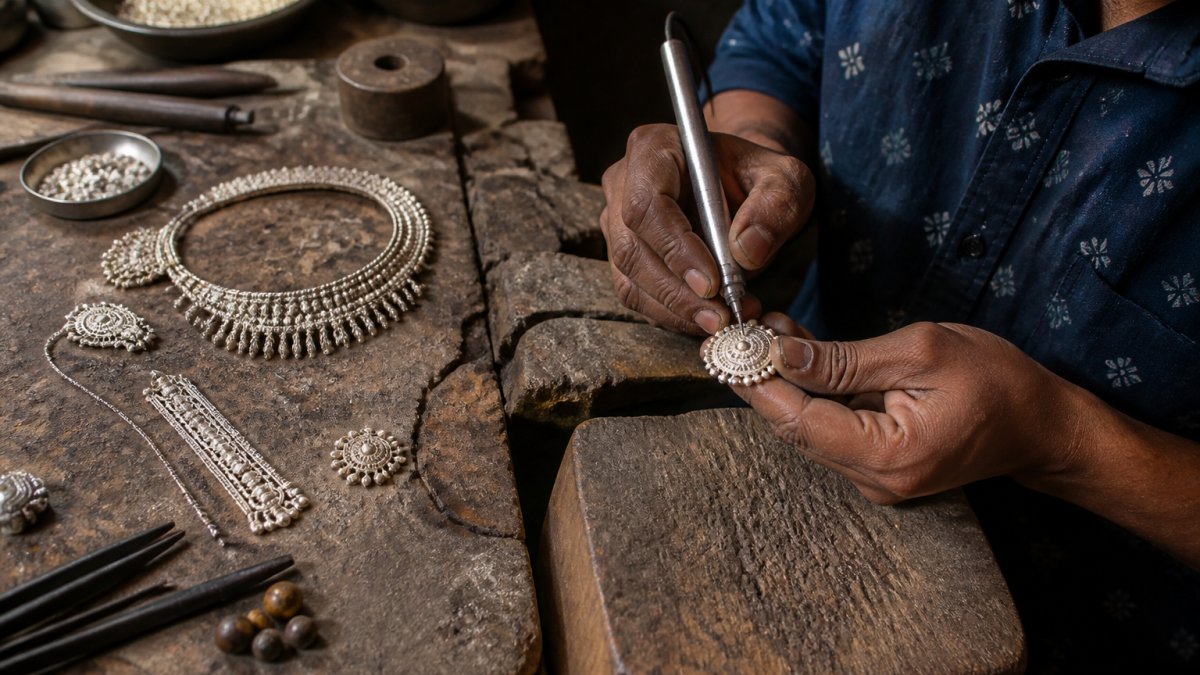
A cast, machine-finished ring is poured into a mould and polished in seconds; a hand-fabricated piece is cut, formed, soldered and finished by someone who can feel where the metal is thin.
The UK Hallmarking Convention guidance exists for a related reason: precious metal content in the UK must be independently tested and marked.
Durable Artisan Jewellery Materials: Solid Metals and Gemstones
Material choice decides most of a piece's lifespan. Solid precious metals last for decades. Plated base metals do not.
Solid gold, sterling silver and platinum are the durable artisan jewellery materials because the precious metal runs all the way through. With no coating to wear off, scratches polish out and the piece is repaired rather than replaced.
Precious Metals and Alloys: Gold, Sterling Silver and Platinum
Pure gold is too soft for everyday wear, so jewellers alloy it for strength; sterling silver is 92.5% silver with copper added for the same reason. Platinum is dense and naturally hard-wearing.
- Sterling silver: strong enough for daily wear, easy to repair, tarnishes over time but polishes back
- Solid gold: 9ct and 18ct are the common UK alloys; higher carat means softer metal
- Platinum: heaviest and most scratch-resistant of the three, and the most expensive
Alloys also affect colour. Copper-rich alloys warm the tone; nickel or palladium lightens it. A good maker picks the alloy to suit the design, not just the price.
Plating, Vermeil and Solid Gold: What Lasts
Plating is a thin layer of gold over a base metal. It looks the same on day one and very different after a year of daily wear, as the layer rubs away at contact points.
Gold vermeil is a step up: a thicker gold layer over sterling silver. It lasts longer than plating but still wears eventually.
Solid metal has no layer to lose. If you want a piece you can wear daily for years and have repaired rather than replaced, solid sterling silver or solid gold is the honest answer. Our Silver Knot Bangle is solid sterling silver for exactly this reason.

Construction Details That Make Handmade Jewellery Last
Specific construction choices separate a piece that survives daily wear from one that fails in a year. The details are small and mostly invisible, which is why they are easy to skip.
Solder Joints: Where Pieces Crack First
A solder joint is the seam where two pieces of metal are fused with a filler alloy, and its quality decides whether a ring shank, chain link or setting survives stress.
A well-made joint has full contact between the surfaces, with solder flowed through the whole seam.
- Full-contact joints: the two metal faces meet along their whole length before soldering, so the seam is as strong as the surrounding metal
- Gapped joints: solder bridges a gap and becomes the weakest point; repeated flexing opens it
- Over-soldered joints: excess solder pools and creates a brittle blob that can chip
Hand-fabricated work often pins or interlocks the joint before soldering, so the solder seals rather than holds.
Chain Links and Clasps: The Stress Points
On a necklace or bracelet, the chain and clasp take more repeated stress than any other part, and links fail in predictable ways.
- Soldered links: each link is closed with solder, so it cannot pull open under load
- Open or butted links: the link ends meet but are not joined; these stretch open over time, especially on finer chains
- Stamped or folded links: cheaper construction where the link is formed from sheet and folded closed; these are the first to open
Clasps follow the same logic: a solid lobster clasp with a soldered jump ring outlasts a spring ring, whose small moving part wears out and whose jump ring can open.
Settings: Protecting the Stone and the Metal
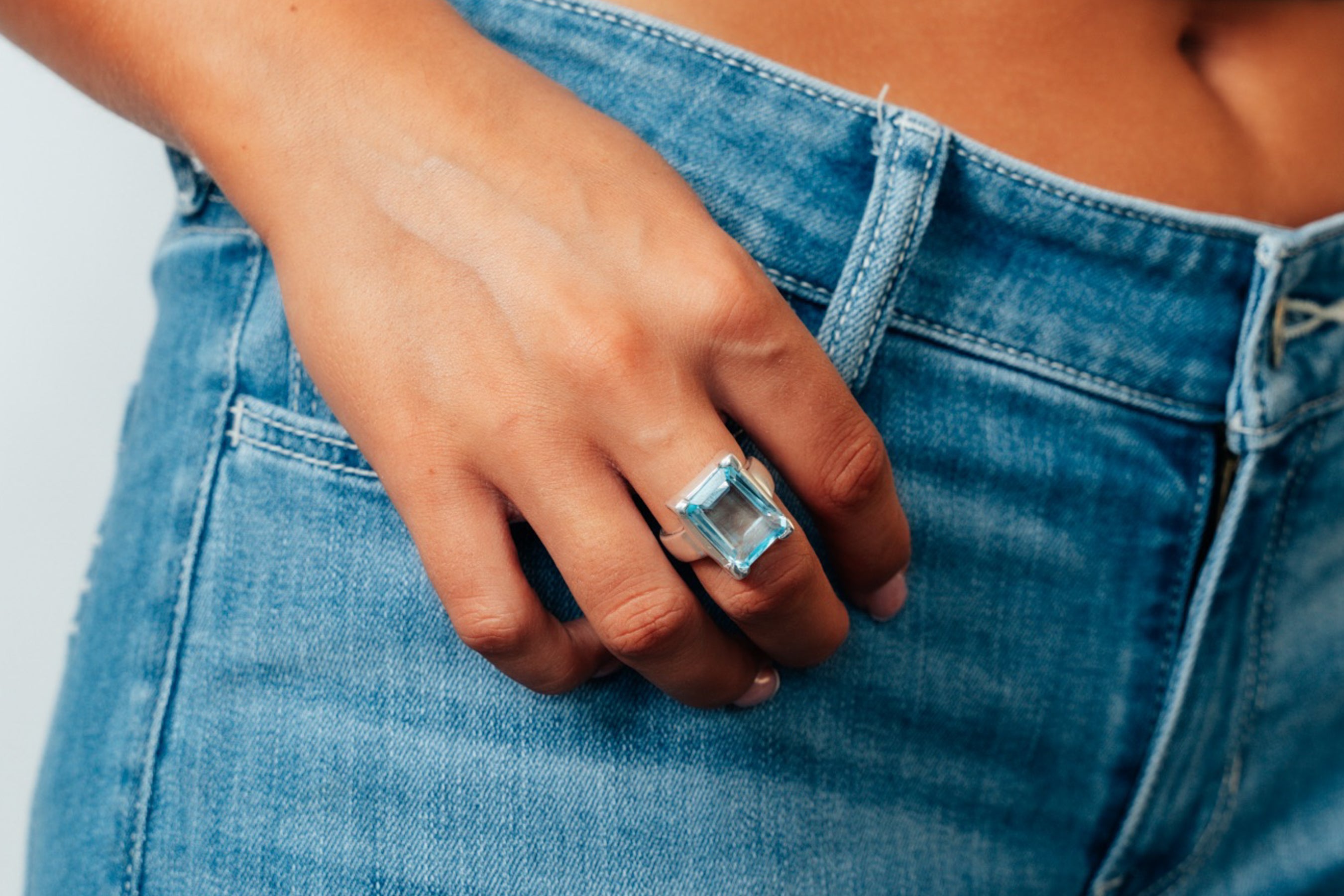
A setting holds the stone and protects the metal around it, so the choice changes both the risk of losing the stone and the risk of damaging the piece.
- Bezel settings wrap a rim of metal around the stone, protecting the edges from knocks and spreading impact across the rim rather than the stone
- Prong settings show more stone but snag on clothing and bend if caught; a bent prong releases the stone
- Closed-back settings stop grit collecting behind the stone, which reduces abrasion on the pavilion
A reinforced connection between setting and band matters as much as the setting itself. Where a setting meets a shank with a thin neck of metal, cracks begin there; a maker who thickens that junction, or adds a gallery rail, builds for wear rather than display.
Reinforced Connections and Metal Thickness
Durability is often a question of where the maker chose to leave metal. Thin metal fails first: it bends, cracks at stress points, and wears through at the base of a setting. Hand-forming lets a maker thicken exactly those areas rather than casting a uniform thickness.
Look for these signs of reinforced construction:
- Thicker shanks at the base: the bottom of a ring takes the most wear, so a shank that thickens toward the base lasts longer than one of even thickness
- Shoulders that taper gradually: an abrupt change in thickness is a stress riser where cracks start
- Rounded internal corners: sharp internal angles concentrate stress; a small radius spreads it
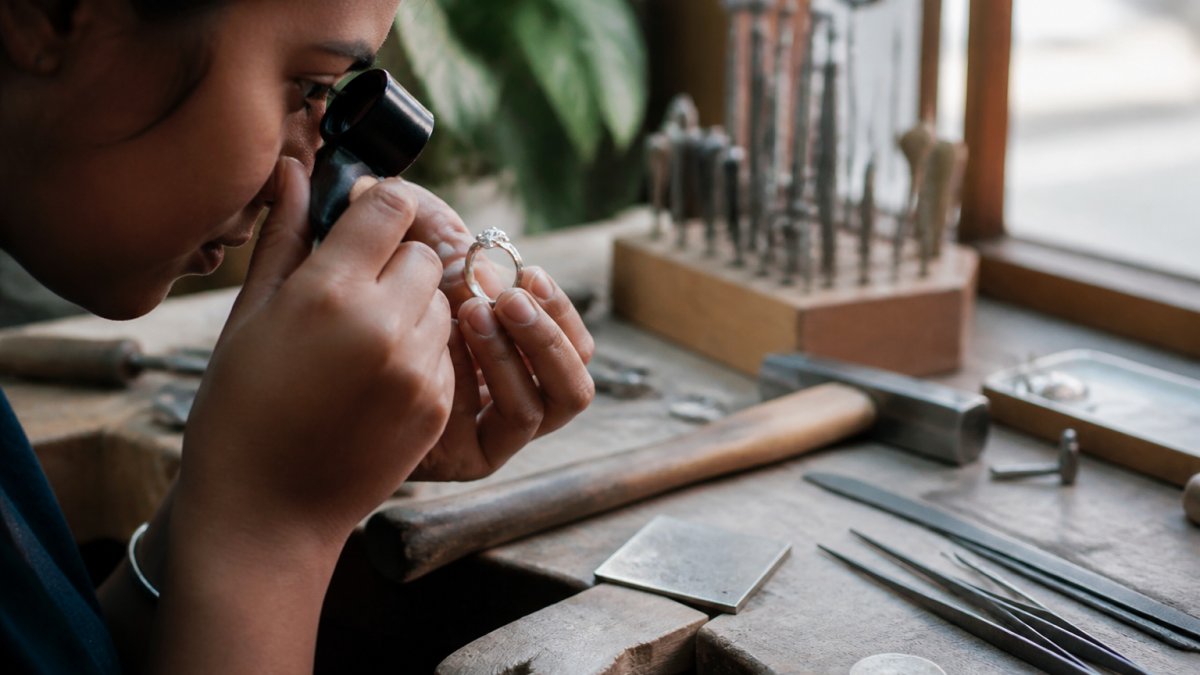
None of this is visible in a product photo, only in the hand, under a loupe, and in how a maker describes their process.
How to Tell If Jewellery Is Well Made Before You Buy
You can judge build quality in about two minutes with your hands and eyes. These checks catch most weak pieces before money changes hands.
A Practical Inspection Checklist
Start with weight. A solid piece feels denser than expected for its size. A plated or hollow piece feels light and slightly tinny.
Then work through these checks in order:
- The hallmark: UK law requires precious metal items above set weights to carry an assay office mark. A missing hallmark on a "sterling silver" piece is a warning. The UK Hallmarking Convention guidance explains the weights and exemptions.
- The joints: run a fingernail along solder lines. A smooth, filled joint is well made; a visible gap or rough blob is not.
- The setting: check that the stone sits level and the metal grips it on all sides with no movement.
Material and Finish Comparison
The table below compares common jewellery materials on the criteria that matter for long-term wear. It is a guide to trade-offs, not a ranking.
| Material or finish | Wear resistance | Tarnish risk | Repairability | Best for |
|---|---|---|---|---|
| Solid sterling silver | Good; scratches polish out | Tarnishes; polishes back | High; can be resized and refinished | Daily wear, repairable pieces |
| Solid 9ct gold | Good; harder alloy | Low | High | Daily wear, rings and chains |
| Solid 18ct gold | Moderate; softer alloy | Very low | High | Occasional wear, finer designs |
| Platinum | Very good; dense and scratch-resistant | None | High, but specialist work | Heirloom pieces |
| Gold vermeil | Moderate; thicker layer than plating | Low until the layer wears | Limited; re-plating possible | Lower-budget gold look |
| Gold plating | Poor; wears at contact points | Base metal may show through | Usually replaced, not repaired | Occasional wear |
| Base metal (brass, steel) | Varies; often plated | High unless coated | Low | Fashion pieces |
The cheaper the finish, the sooner it needs replacing rather than repairing. That is the real cost difference between solid and plated pieces.
Wear Conditions and Realistic Lifespan
How long a piece lasts depends as much on how it is worn as on how it is made. The same ring can last decades or a couple of years depending on exposure.
- Water and sweat: repeated exposure to water and sweat accelerates tarnish on silver and wears plating at contact points
- Chemicals: perfume, hair products, cleaning agents and chlorine attack metal surfaces; chlorine can pit sterling silver in a way that cannot be polished out
- Impact: knocks bend prongs and chip stones; bezel settings reduce this risk
Solid precious metal pieces worn daily, with basic care, last for many years and can be refinished to look close to new. Plated pieces typically show visible wear at contact points within a year or two.
Repairability and Long-Term Maintenance
Repairability is the durability factor buyers most often overlook. A solid metal piece can be resized, have a clasp replaced, a stone reset, or be refinished; a plated piece usually cannot be repaired economically, only replaced.
- Resizing: solid silver and gold rings can be resized; plated and hollow pieces often cannot
- Clasp replacement: straightforward on solid metal chains; the chain itself is the limiting factor
- Stone resetting: possible where the setting is accessible; bezel settings are more work than prong settings
Care follows the material: keep sterling silver dry, stored sealed and polished with a soft cloth; solid gold needs little beyond gentle cleaning; keep vermeil and plated pieces away from water and chemicals.
Handcrafted Silver Jewellery Care and Repair
Handcrafted silver jewellery care comes down to three habits: keep it dry, store it sealed, and clean it gently. Silver tarnishes when it meets air and moisture, so the fix is mostly about limiting exposure.
- Take pieces off before showering, swimming or working out
- Store each piece in a sealed bag or lined box, not loose in a drawer
- Polish with a soft silver cloth; skip abrasive pastes on textured or hammered surfaces
Repair is where solid silver earns its keep. A worn clasp, a stretched bangle or a scratched surface can be fixed by a jeweller because the metal is solid throughout.
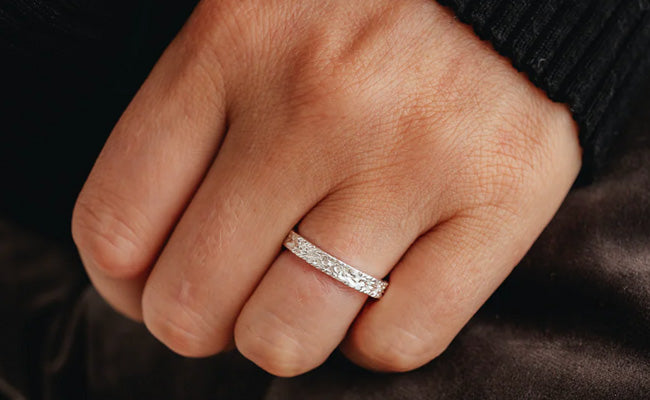
Our Wide Hammered Band Ring is a good example of a piece built to be worn hard: solid sterling silver, roughly 10mm across the band, with a hammered surface that hides everyday scratches rather than showing them.

Durability vs Weight, Comfort and Price: The Trade-Offs
Thicker metal lasts longer and costs more. That is the whole trade-off, and no amount of marketing changes it.
A heavier band resists bending and wears more slowly, but some people find a wide, heavy ring uncomfortable for all-day wear.
Price follows metal weight and stone quality. Affordable artisan pieces are usually affordable because the design uses less metal or a simpler setting, not because the metal is inferior.
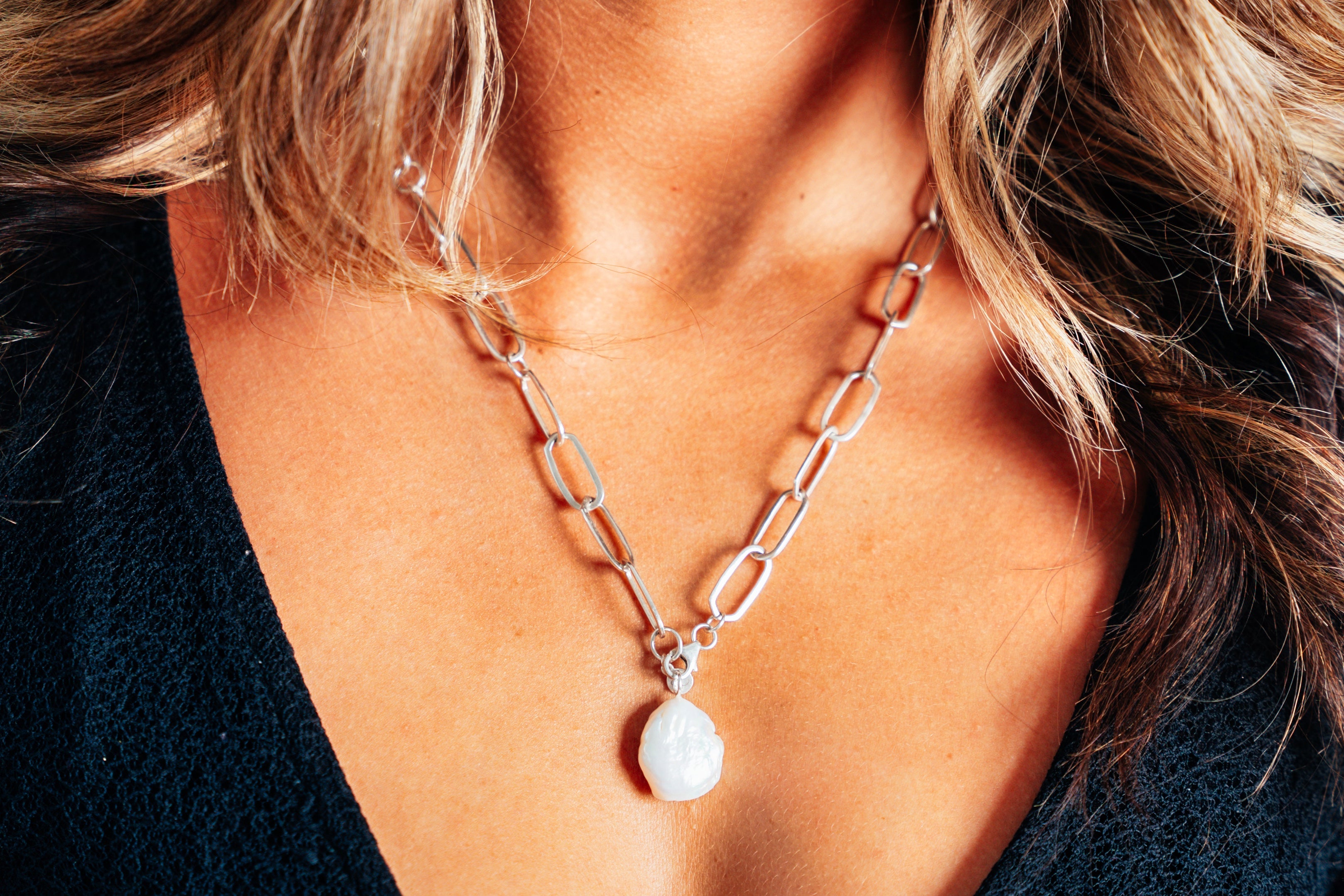
Our Silver Paperclip Chain Necklace sits at the lighter end of that scale, and our Oval Malachite Ring puts the metal into a sturdy bezel-style setting around the stone rather than spreading it across a wide band.

| Priority | Better choice | Trade-off |
|---|---|---|
| Daily wear, decades of use | Solid sterling silver or solid gold | Higher price, more weight |
| Occasional wear, lower budget | Lighter solid silver, simpler settings | Shows wear sooner |
| Statement look, low maintenance | Hammered or textured solid silver | Texture limits high polish |
| Stone protection | Bezel or closed-back setting | Less visible stone |
Conclusion
The hard part is not finding artisan jewellery. It is telling a well-built piece from a pretty one before you pay for it, and that comes down to solid metal, honest construction and a maker willing to say what a piece is made of.
At SilverStory, every piece is handcrafted by skilled artisans in Rajasthan at an ethical workshop, in solid sterling silver, at prices that stay within reach. Start with the Silver Knot Bangle or browse the full collection and add to cart with confidence.
Frequently Asked Questions
Is handmade jewellery durable enough for everyday wear?
Handmade jewellery in solid sterling silver or solid gold is durable enough for daily wear. The key factors are the metal itself and the construction. Pieces made from solid metal resist tarnish and wear far better than plated alternatives. Look for secure settings, smooth finishes and a clear hallmark. Removing rings before heavy lifting or gym sessions and storing pieces dry will extend their life significantly.
What is the most durable metal for jewellery?
Platinum and solid gold are the most durable precious metals for jewellery. Platinum is dense and resists scratching well, while 18ct gold balances hardness with workability. Sterling silver, at 92.5% silver, is softer but still suitable for everyday pieces when cared for properly. Base metals with plating wear through over time. For artisan jewellery, solid sterling silver offers a strong balance of durability and affordability.
How can you tell if handcrafted jewellery is well made?
Check the hallmark, which confirms the metal purity in the UK. Look for smooth solder joints, secure stone settings and clasps that open and close firmly. Run your finger along edges to feel for sharp spots or rough finishing. Examine the piece under good light for uneven plating or gaps around stones. Ask about the making process and whether repairs are possible. A well-made piece will feel solid without being uncomfortably heavy.
How should you care for artisan silver jewellery?
Store silver jewellery in a dry, airtight container away from sunlight. Remove pieces before showering, swimming or applying lotions. Clean with a soft polishing cloth and mild soapy water, then dry thoroughly. Avoid harsh chemicals and abrasive cleaners. Sterling silver tarnishes naturally over time, so a quick polish restores shine. Check settings and clasps periodically and have loose stones tightened by a jeweller before they fall out.