


Are Recycled Gold Jewellery Benefits Real?
Last Updated: October 29, 2026
Quick Summary
Choosing recycled gold jewellery delivers six main benefits: less demand for newly mined gold, lower greenhouse gas emissions, reduced water use and contamination, less toxic waste, protection of ecosystems, and better human rights through avoided mining. Recycled gold is real gold, identical in purity to mined gold, and it skips the extraction stage entirely.
- Recycled gold comes from post-consumer, pre-consumer and industrial sources, all melted and re-refined into new pieces.
- Recycled gold is identical in every measurable way to newly mined gold and refined to the same purity standards.
- Ask for written confirmation of recycled content, the refiner's identity and any chain-of-custody standard.
- Recycled gold reduces demand for new mining at the margin but does not by itself reduce global mining.
- Fair-mined gold addresses mining conditions directly, while recycled gold addresses avoiding new extraction.
Table of Contents
- What recycled gold jewellery actually means
- The environmental impact of gold mining
- Six benefits of choosing recycled gold jewellery
- Recycled gold vs mined gold: a lifecycle comparison
- Is recycled gold real gold?
- How to identify recycled gold jewellery: a buyer's checklist
- What recycled gold can and cannot guarantee
- Choosing your recycled gold piece
- Frequently Asked Questions
What recycled gold jewellery actually means
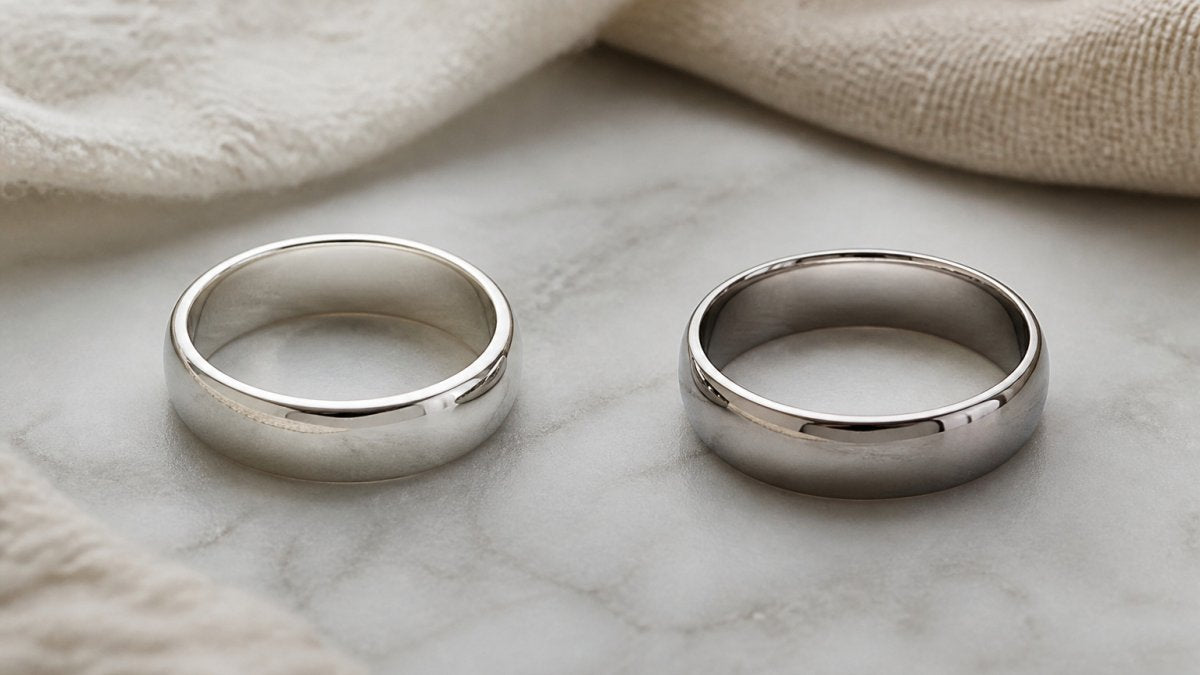
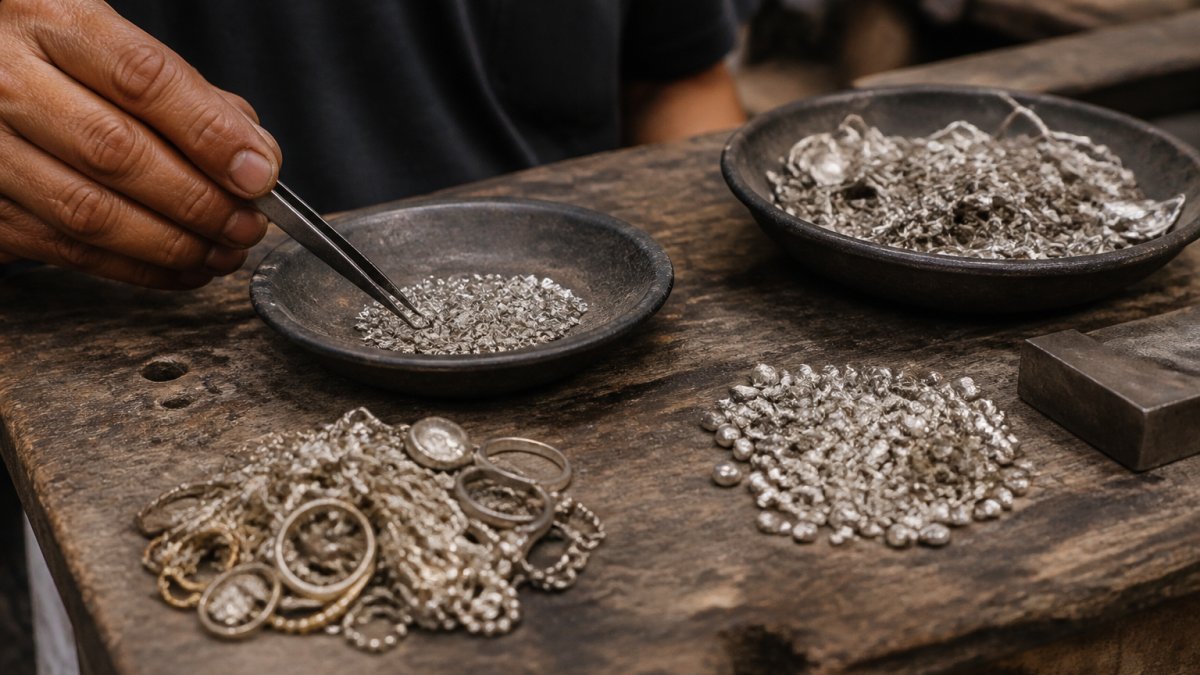
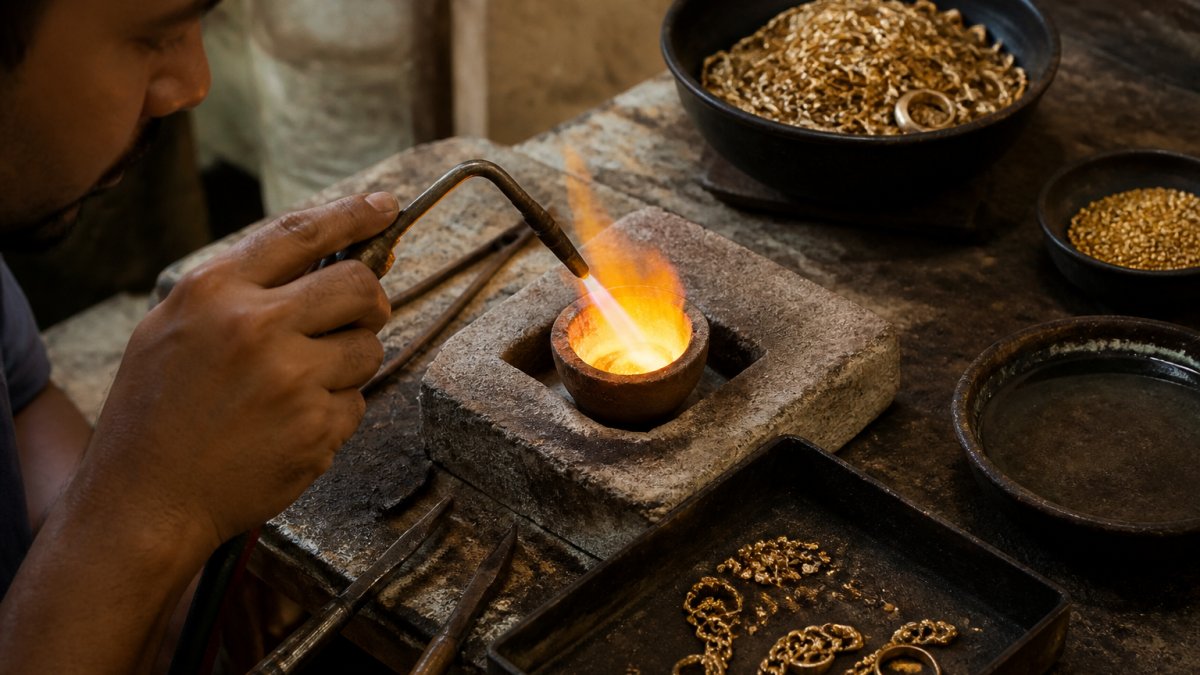
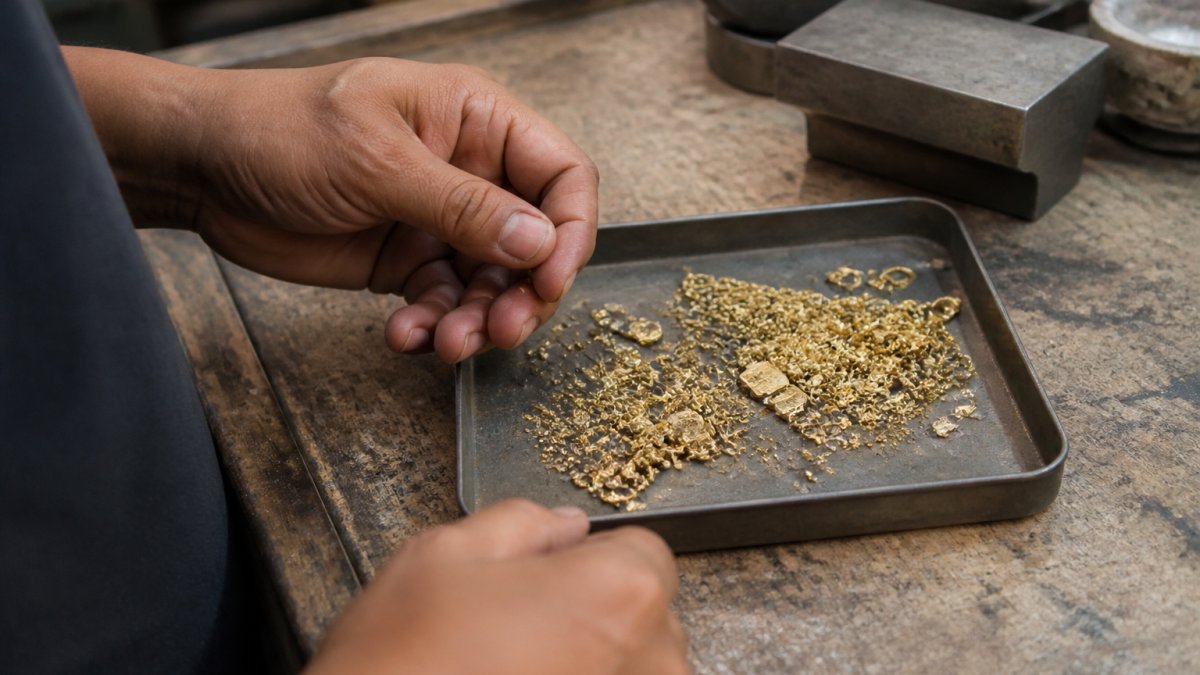
Recycled gold jewellery is made from gold that has already been extracted, refined and used before, then melted down and re-formed into new pieces. No fresh ore is dug to make it.
The gold is chemically identical either way; what changes is everything that happens before the metal reaches the workshop.
The environmental impact of gold mining
Gold mining is one of the more resource-intensive industries on the planet.
The environmental guidance from the UK's regulator on mining waste sets out how destructive the waste streams can be when they are not managed carefully.
Open-pit operations reshape landscapes, remove vegetation and displace wildlife; underground mines generate waste rock and can affect groundwater. In both cases, the damage outlasts the mine.
Recycled gold sidesteps the extraction stage entirely.
Six benefits of choosing recycled gold jewellery
Here are the six benefits we hear customers ask about most.
- Less demand for newly mined gold, which reduces pressure to open new mines
- Lower greenhouse gas emissions and a smaller carbon footprint
- Reduced water use and less water contamination
- Less toxic waste and chemical pollution
- Protection of ecosystems and habitats
- Better human rights and more ethical sourcing
Less demand for newly mined gold
Every gram of recycled gold is a gram that does not need to be mined. That is the simplest version of the argument, and it holds. When buyers choose recycled metals, they reduce mining demand at the margin.
The honest caveat: recycled gold alone will not shut down a mine. Global demand is enormous and growing, and recycling cannot yet meet it. Recycling slows the rate at which new extraction becomes necessary, a brake, not a reversal.
Lower greenhouse gas emissions and carbon footprint
Refining recycled gold generally takes less energy than extracting and refining newly mined gold. You skip blasting, hauling, crushing and the energy-heavy separation of ore. The metal is already concentrated and ready to be melted.
For a buyer weighing carbon footprint, that difference is real but hard to quantify precisely, because recycling supply chains vary. A piece refined locally with renewable energy will outperform one shipped across the world.
Reduced water use and water contamination
Mining consumes water at scale, and the contamination risk is the part that worries communities living near operations. Processing chemicals and fine waste can leach into rivers and groundwater.
Recycling uses a fraction of that water. The metal is melted and re-refined, not separated from tonnes of rock. Fewer processing steps mean fewer opportunities for water pollution. For buyers who care about water impact, this is one of the strongest arguments for recycled gold.
Less toxic waste and chemical pollution
Ore processing relies on chemicals to separate gold from rock, and the waste that results needs careful handling. When containment fails, the consequences for soil and waterways can last decades.
Recycled gold avoids the bulk of this. Refining scrap metal still uses chemicals, but volumes are far smaller and waste streams easier to control.
Protection of ecosystems and habitats
Mines sit where the ore is, which is often where forests, wetlands or fragile landscapes happen to be. Clearing land for extraction removes habitat, fragments ecosystems and can push species out of an area permanently.
Choosing recycled gold keeps demand away from those landscapes. It is an indirect benefit, but a genuine one. The less new mining the market requires, the fewer habitats get disturbed.
Better human rights and ethical sourcing
This is where recycled gold gets complicated, and where we think buyers deserve straight answers. For a fuller case on why ethical sourcing matters beyond recycled gold, read Why Ethical Sourcing Matters for Jewelry.
Mining has a documented history of labour abuses, unsafe conditions and conflict financing in some regions. Recycled gold avoids the mining stage, removing a large part of that exposure.
That is why traceability matters.
Recycled gold vs mined gold: a lifecycle comparison
The clearest way to see the difference is stage by stage. Mining and recycling diverge sharply at the front end, then converge once the metal is refined.
| Stage | Newly mined gold | Recycled gold |
|---|---|---|
| Extraction | Blasting, hauling, open pits or shafts | None, metal already above ground |
| Ore processing | Crushing, chemical separation, tailings | Collection and sorting of scrap |
| Water use | High, with contamination risk | Low, contained refining process |
| Energy and emissions | High across extraction and refining | Substantially lower |
| Land and habitat impact | Significant and long-lasting | Minimal |
| Refining | Same final refining step | Same final refining step |
| Final metal quality | Identical purity possible | Identical purity possible |
The takeaway: everything after refining is the same. The environmental and social difference sits almost entirely in the stages recycled gold removes.
Is recycled gold real gold?
Yes. Recycled gold is real gold, identical in every measurable way to newly mined gold. It is refined to the same purity standards.
The confusion comes from the word "recycled," which some buyers read as "lower grade." It is not. Gold is an element.
What you should check is purity, expressed in karats. 18k gold is 75% gold mixed with an alloy; 9k and 14k contain less. The alloy affects colour and durability, not whether the gold is recycled.
How to identify recycled gold jewellery: a buyer's checklist
Start with the paperwork, then look at the piece. A genuine recycled-gold claim should be backed by documentation, not just a label.
- Ask the brand where the gold was sourced and who refined it
- Request written confirmation of the recycled content, not a verbal claim
- Check for a recognised recycling certification or chain-of-custody standard
- Look for a hallmark confirming metal purity on the piece itself
- Ask whether the alloy metals are also recycled or responsibly sourced
- Confirm the brand publishes a sourcing policy you can read
- Ask what happens to the piece at end of life, including take-back or repair
If a brand cannot answer the first three questions, treat the recycled claim as marketing until proven otherwise.
What recycled gold can and cannot guarantee
Recycled gold means no new mining was required for that metal. Everything else depends on the supply chain behind it.
That gap is where greenwashing lives. A brand can say "recycled gold" truthfully while saying nothing about the rest of the piece.
The practical rule: recycled gold is a strong starting point, not a complete ethical verdict. Pair it with traceability and transparent sourcing.
The limits and nuance of recycled gold's impact
A fair reading of the evidence is that recycled gold reduces demand for newly mined metal at the margin, but does not by itself reduce global mining.
That nuance is not a reason to avoid recycled gold. It is a reason to be sceptical of any brand presenting recycling as a complete environmental solution. The strongest claims are specific: which stage of the lifecycle is affected, by how much, and on what basis.
Recycled gold versus reclaimed, vintage and fair-mined gold
These terms are often used interchangeably, but they describe different things:
- Recycled gold is gold that has been used before and re-refined into new pieces. It says nothing about the original mine.
- Reclaimed gold is often used as a synonym for recycled, though some brands use it to mean gold recovered from industrial processes specifically.
- Vintage gold is old jewellery sold in its existing form, not melted down. Its provenance is the piece itself.
- Fair-mined gold comes from specific mines that meet social and environmental standards, usually verified by an independent certification body (¿QUÉ ES FAIRMINED?). It addresses mining conditions directly, which recycled gold does not.
If your priority is supporting better mining practices, fair-mined certification is the more direct route. If your priority is avoiding new extraction, recycled gold is the more direct route. They are complementary, not competing.
Questions to ask a jeweller
- What percentage of the gold in this piece is recycled, and how is that verified?
- Who refined the gold, and where?
- Which certification or chain-of-custody standard does the brand work to?
- Are the alloy metals also recycled or responsibly sourced?
- What is the warranty, repair policy and end-of-life take-back offer?
- Can the brand provide written confirmation of the recycled content?
If a brand cannot answer the first three questions, treat the recycled claim as marketing until proven otherwise. The same applies to any claim about carbon, water or human rights, ask for the methodology, not just the headline.
Choosing your recycled gold piece
Decide what matters most before you browse. If environmental impact is the priority, ask about refining location and energy source.
On durability, the questions are practical.
Price and resale value deserve honesty too.
Skip if: you need certified fair-mined provenance specifically, or you want a fully traceable single-origin story.
When you are ready to choose, you can explore the SilverStory collection on our website for current options and prices.
Frequently Asked Questions
What are the benefits of recycled gold jewellery?
Recycled gold jewellery reduces demand for newly mined gold, which lowers greenhouse gas emissions, water use and toxic waste. It also avoids the habitat destruction and human rights concerns linked to large-scale mining. Because recycled gold is real gold, it keeps the same purity, durability and finish as mined gold. Choosing recycled gold also gives old gold a second life rather than sending it to landfill.
Is recycled gold as good as newly mined gold?
Yes. Recycled gold is chemically identical to newly mined gold. Refining removes impurities, so the final 18k or 9k alloy meets the same purity standards. It does not look or wear differently: the durability, colour and finish depend on the alloy and the making, not on the gold's origin.
How can you tell if gold jewellery is recycled?
Look for a written sourcing claim from the jeweller, not just a label. Ask for the refiner's name and whether they hold a recognised chain-of-custody certification. Reputable brands will explain where the gold comes from and how it is traced. A hallmark proves purity, not origin, so pair it with a clear statement. If a brand cannot answer basic questions about its supply chain, treat the recycled claim with caution.
Is recycled gold more expensive than mined gold?
Recycled gold is the same metal as newly mined gold of the same karat, so the recycled status alone does not change its value. For SilverStory pricing, please check the website for current prices.
The challenge is simple: most jewellery brands will tell you their gold is recycled, and few will show you the paperwork behind it. We built SilverStory around the opposite approach, with ethically sourced pieces handcrafted by skilled artisans in Rajasthan and priced to be genuinely affordable. Every piece is designed to be treasured, whether you are treating yourself or buying a gift. Get started with SilverStory and choose jewellery you can feel good about wearing.