7 Differences Between Silver and White Gold
Quick Summary
Silver and white gold differ in composition, price and upkeep. Sterling silver is 92.5% pure silver, while white gold is gold alloyed with white metals and usually finished with rhodium plating. Silver costs less but tarnishes and scratches more, while white gold costs more and needs periodic replating.
- Sterling silver is 92.5% pure silver, while white gold is gold mixed with white metals.
- Check the hallmark: 925 or Sterling marks silver, while 375, 585 or 750 mark gold karats.
- Silver tarnishes in air and needs regular polishing, while white gold's rhodium plating wears and needs replating.
- Nickel-based white gold can cause reactions, so ask whether the alloy is nickel or palladium based.
- Silver is cheaper to buy, but white gold holds up better to daily wear and keeps scrap value.
Table of Contents
- Silver and White Gold: What Sets Them Apart
- Composition and Metal Alloys in Each
- How to Tell Silver from White Gold
- 925 Silver vs White Gold: Durability, Shine and Appearance
- Tarnishing, Rhodium Plating and Care for Each Metal
- Silver Jewellery Tarnishing and Everyday Care
- Price, Allergy Considerations and Lifetime Cost
- Choosing the Right Piece From the SilverStory Range
- Frequently Asked Questions
Silver and White Gold: What Sets Them Apart
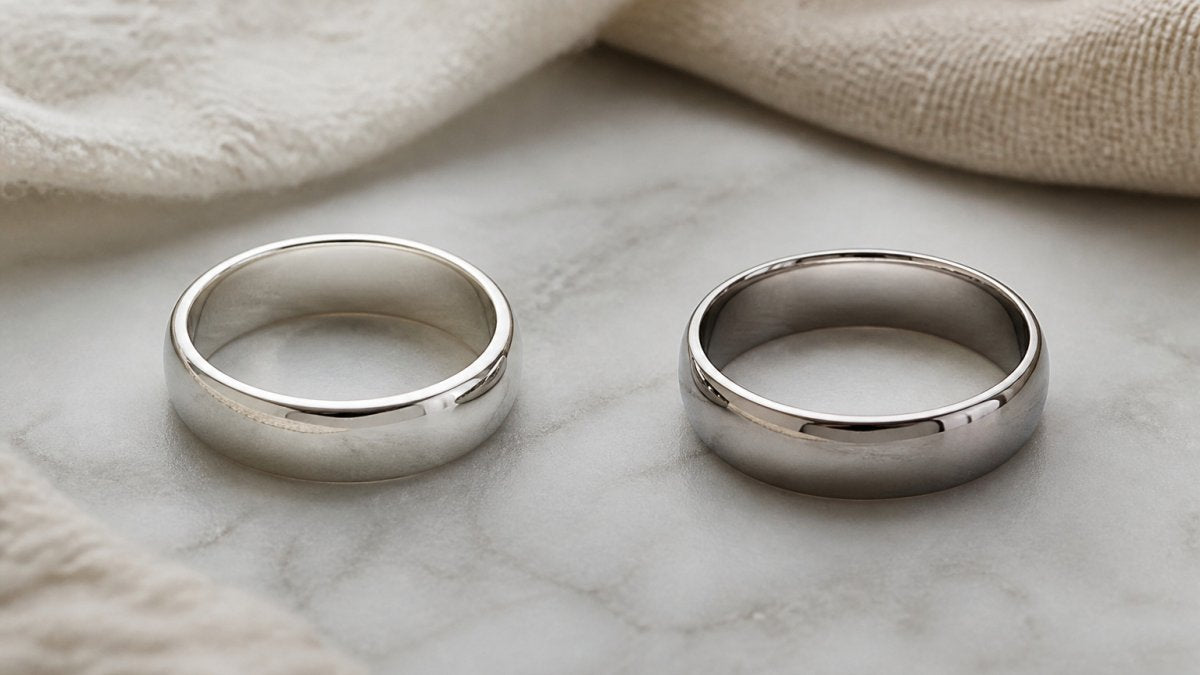
Silver and white gold look similar in a shop window, but they are very different metals with different prices, care needs and lifespans. Sterling silver is an alloy of 92.5% pure silver, while white gold is gold alloyed with white metals and often finished with rhodium plating.
Silver is the lighter, more affordable option. Gold, even white gold, carries a higher material cost, and that cost shapes the price of every piece. The Gemological Institute of America's guide to gold and silver alloys is a useful reference if you want to read further on how these metals are classified.
Composition and Metal Alloys in Each
Sterling silver contains 92.5% silver and 7.5% other metals, usually copper, which makes it hard enough for everyday jewellery. White gold is never pure gold. Gold on its own is too soft and yellow for most designs, so jewellers mix it with white metals to create a silvery colour.
The alloy used in white gold varies. Palladium-based white gold is common, while nickel-based versions are cheaper but can cause reactions in some wearers. Knowing the alloy helps you judge both comfort and value.
How to Tell Silver from White Gold
Many pieces look almost identical at first glance, so a few checks help you confirm what you are buying. The most reliable route is the hallmark, but the simple tests below can narrow things down before you reach for a loupe.
Hallmarks and Purity Stamps to Look For
In the UK, precious metal items above the statutory weight thresholds must be hallmarked by an assay office (Hallmarking: practical guidance - summary). The UK Hallmarking Act guidance from GOV.UK sets out which items must be hallmarked and what each mark means. A full hallmark is not a single stamp, it is a set of marks that together identify the piece:
- Sponsor's mark, the maker or importer, usually initials in a shield.
- Fineness mark, the purity. Sterling silver carries "925" or the word "Sterling". Gold carries its karat, such as "375" for 9ct, "585" for 14ct or "750" for 18ct.
- Assay office mark, a symbol identifying which assay office tested the piece (for example, the anchor for Birmingham or the leopard's head for London).
- Date letter, a letter that indicates the year the piece was assayed.
White gold carries the same karat mark as yellow gold, because the hallmark records gold content, not colour. A "750" mark tells you the piece is 18ct gold whatever its surface looks like. Look for the marks on the inside of a ring band, the clasp of a chain, or the back of a pendant. A stamp such as "925" on its own is a fineness stamp, not a full hallmark, and is common on imported or lightweight pieces.
Simple At-Home Checks
- Magnet test: Neither silver nor gold is magnetic, so a magnet will not separate them. What it can do is flag a piece with a magnetic core, a strong pull suggests a base-metal or plated item rather than solid precious metal. A weak or absent pull proves little on its own.
- Weight and density: White gold is noticeably denser than silver. Two pieces of similar size will feel different in the hand, with the gold piece heavier for its volume. This is a useful sanity check, not a definitive test.
- Colour over time: Silver darkens and tarnishes to black or brown as sulphur in the air reacts with it. White gold keeps a cooler, brighter tone unless the rhodium plating wears away, at which point a faint yellow or warm cast appears at high-wear points such as the edges of a band.
- Wear patterns: Rhodium plating tends to thin first on the parts of a ring that rub against neighbouring fingers, revealing a warmer tone underneath. Silver tarnishes more evenly across the surface.
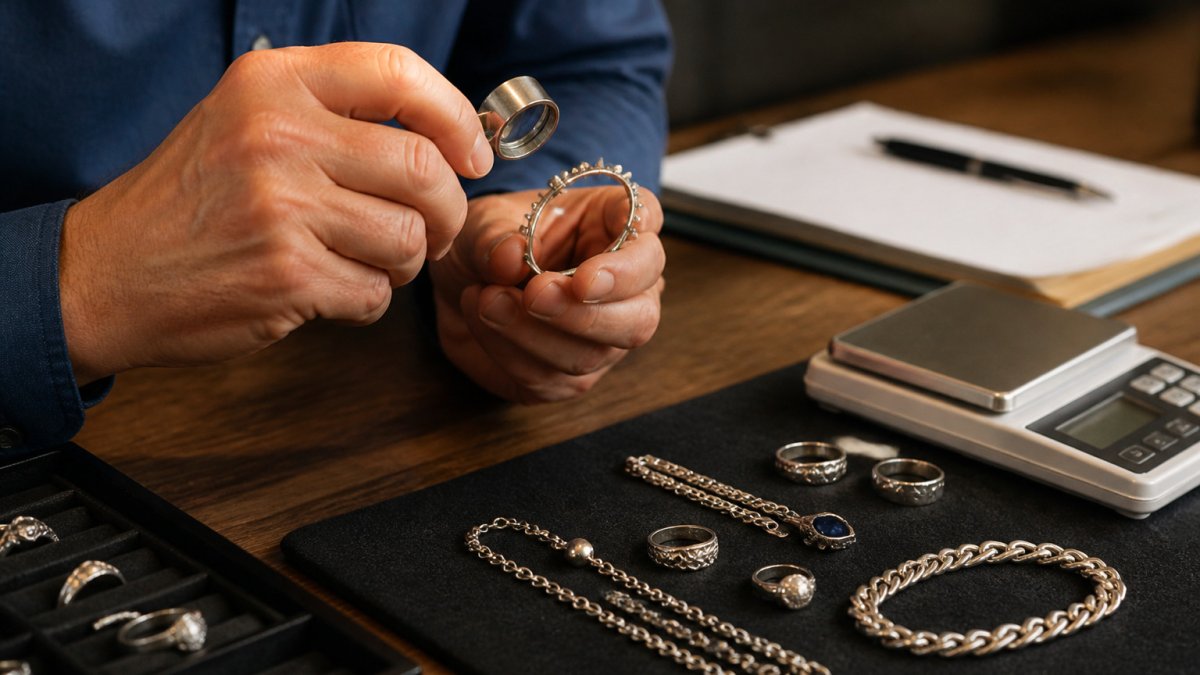
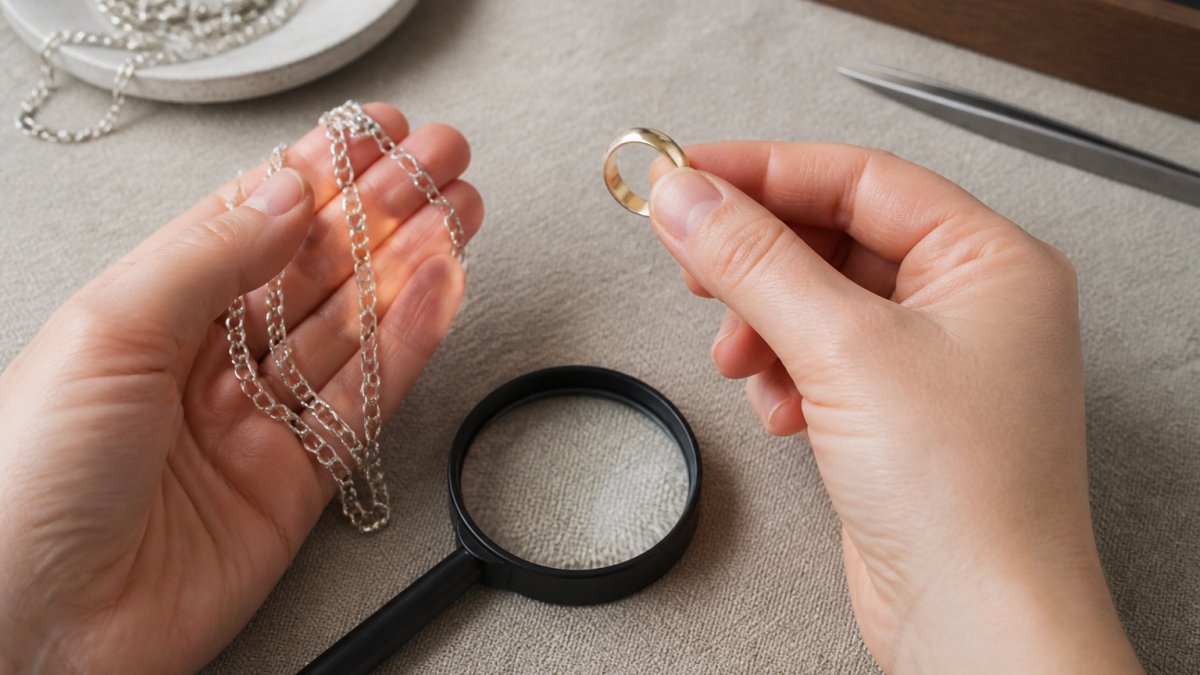
- Markings under magnification: A loupe is the cheapest reliable check. Faint, shallow or oddly spaced marks are a warning sign; crisp, consistent marks from an assay office are a good sign.
None of these at-home checks is conclusive. For a high-value purchase, ask the seller for the hallmark details and, where possible, have the piece checked by a jeweller or assay office.
What the Marks Tell You About Alloy
The hallmark records fineness, not the alloy recipe. Two 18ct white gold pieces can contain different white metals and still carry the same "750" mark. If nickel sensitivity matters to you, the hallmark alone will not answer the question; you need the maker's alloy specification or a jeweller's confirmation.
Quick Reference: Reading a Hallmark
| What you see | What it means |
|---|---|
| "925" or "Sterling" | Sterling silver, 92.5% pure silver |
| "375" | 9ct gold |
| "585" | 14ct gold |
| "750" | 18ct gold |
| Anchor, leopard's head or other symbol | Assay office that tested the piece |
| Letter in a shield | Date letter for the assay year |
Check the hallmark first, use the magnet and weight checks only as supporting evidence, and treat any unmarked "precious metal" piece with caution.
925 Silver vs White Gold: Durability, Shine and Appearance
Sterling silver is softer than gold alloys, so it scratches more easily. White gold is harder and holds fine detail well.
On appearance, white gold has a bright, almost mirror-like shine when freshly plated. Silver has a softer, slightly warmer lustre. Many buyers prefer silver for a relaxed, vintage look and white gold for something sleeker. Neither is wrong; the choice depends on your style.
Tarnishing, Rhodium Plating and Care for Each Metal
Silver tarnishes because sulphur in the air reacts with the metal, forming a dark layer. This is normal, and a soft cloth or silver polish removes it. Storing pieces in a sealed bag and removing jewellery before swimming or showering slows the process.
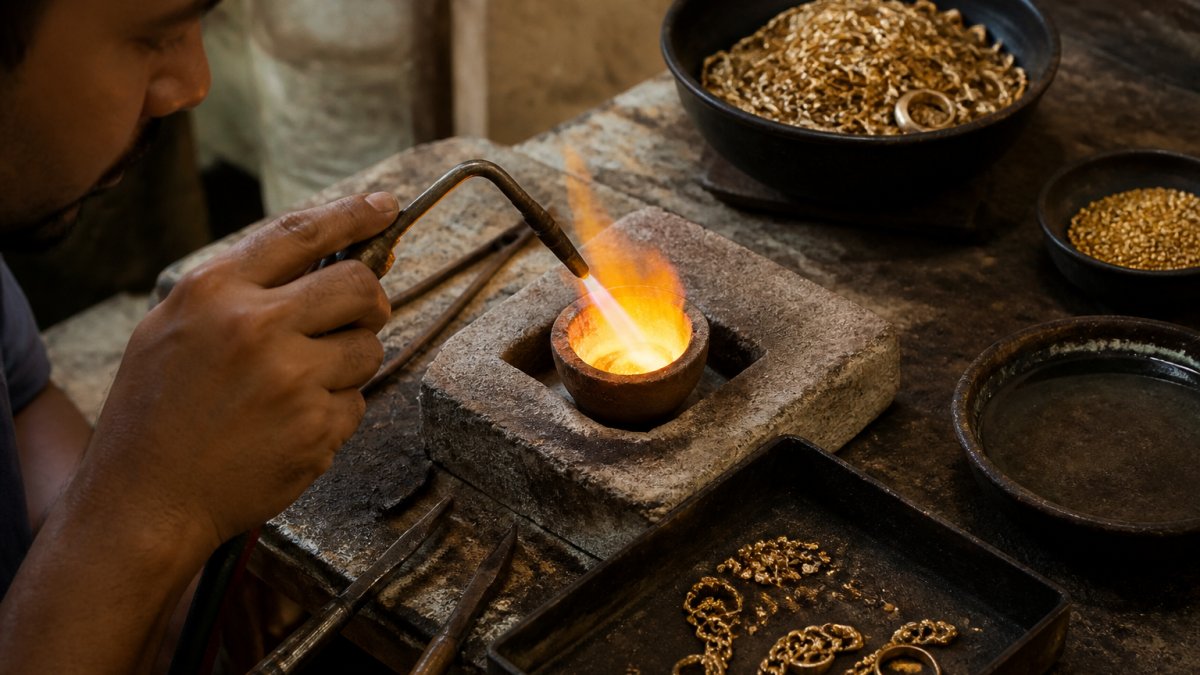
White gold is usually coated in rhodium, a bright white metal that gives it its colour. Rhodium wears off over time, so the piece may start to look slightly yellow. Replating restores the finish and is a routine service for most jewellers.
Silver Jewellery Tarnishing and Everyday Care
Everyday wear is where silver shows its limits and its charm. Regular gentle cleaning keeps it bright, and a light patina is part of its character for many people. For daily pieces, choose sturdier designs and remove them during exercise, cleaning or sleep to reduce scratches and tarnish.
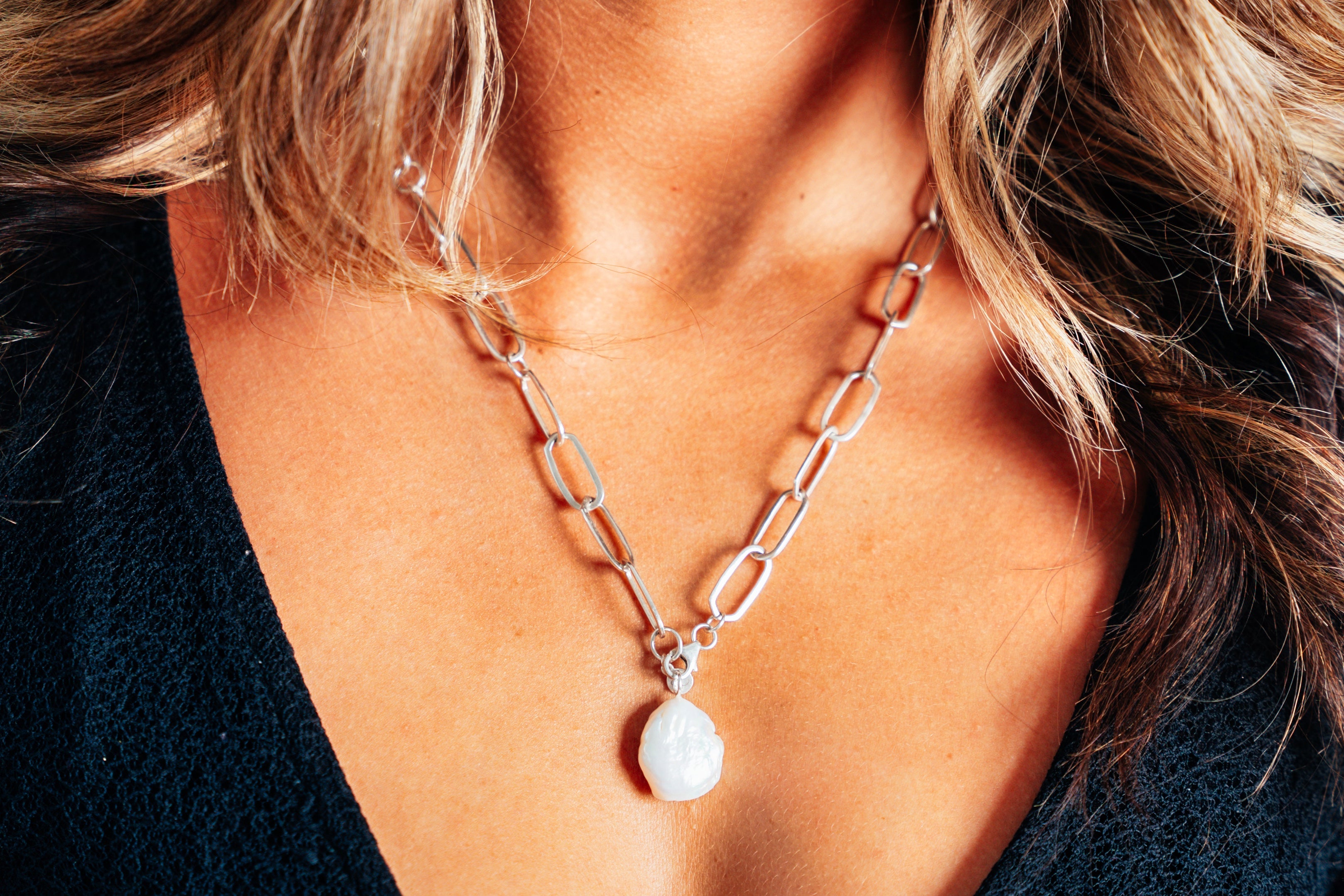
Silver Interlinked Circle Necklace →
If you shower or work out with your jewellery on, expect to clean silver more often. White gold tolerates water better, though the rhodium finish may need refreshing after a few years of heavy wear.
Price, Allergy Considerations and Lifetime Cost
Purchase price is only the first number in the cost of owning a piece. The metal you choose shapes what you pay up front, what you spend on upkeep, and how long the piece stays wearable, and allergy risk depends on the specific alloy rather than the metal's name.
What Drives the Price Gap
Gold is a far rarer and more expensive raw material than silver, and that difference flows straight into the retail price.
At SilverStory, our silver pieces are priced to suit gifting. The Silver Interlinked Circle Necklace is £45.00, the Silver Open Circle Ring is £35.00 and the Silver Chunky Chain Bracelet is £65.00. For a gold-toned option, the Gold Interlinked Circle Necklace is £55.00 and the Gold Open Circle Ring is £40.00.
Allergy Risk by Alloy, Not by Metal Name
White gold is where reactions are more common, and the culprit is usually nickel in the alloy rather than the gold itself.
A few practical points reduce risk:
- Ask the maker whether the white gold alloy is nickel-based or palladium-based. The hallmark will not tell you.
- Rhodium plating acts as a barrier between the alloy and your skin, so a freshly plated piece is less likely to provoke a reaction, but the protection fades as the plating wears.
- If you have reacted to cheap earrings or watch backs before, assume nickel sensitivity until proven otherwise and choose palladium-based white gold or silver.
- A reaction that appears only after months of wear often points to worn plating rather than a new allergy.
Lifetime Cost: Replating, Repairs and Replacement
White gold's hidden cost is rhodium. The plating that gives it its bright white finish wears away with friction over time.
Silver's lifetime cost profile is different. Its weakness is wear: sterling is softer, so scratches, dents and thin spots accumulate faster, and a well-worn silver piece may eventually need replacing rather than repairing. For pieces worn daily, that replacement cycle can matter more than the lower purchase price suggests. Choose durable earrings for daily use for a deeper guide to sturdier pieces.
Compare the metals on total cost of ownership, not sticker price: silver is cheaper to buy and service but wears faster; white gold costs more up front and carries a recurring replating bill, but holds up better to daily wear.
Resale and Recycling
Solid white gold retains scrap value because of its gold content, and a piece can be sold or recycled for its metal value even when the design is dated. Sterling silver has scrap value too, but at a much lower price per gram, so resale rarely recovers a meaningful share of the purchase price. Neither metal is a financial investment, but the gold content gives white gold a floor that silver does not have.
Choosing the Right Piece From the SilverStory Range
If you want a bright, low-maintenance daily piece, a silver option suits most lifestyles. The Silver Interlinked Circle Necklace is a simple design that layers well. For a gold-toned finish, the Gold Interlinked Circle Necklace offers the same understated look with a warmer tone. Shoppers wanting a minimalist ring can compare the Silver Open Circle Ring and the Gold Open Circle Ring, and bracelet fans can consider the Silver Chunky Chain Bracelet.


Whichever metal you choose, check the hallmark, ask about the alloy and plan for the care each one needs. That single decision will shape how your jewellery looks and lasts for years to come.
Frequently Asked Questions
What is the point of white gold?
White gold is gold alloyed with white metals such as palladium, nickel or silver, then often rhodium plated, to give a bright, silvery look while keeping the warmth and value of gold. It suits people who like the look of platinum or silver but want a precious metal with a karat rating. Because the rhodium coating wears over time, white gold needs occasional replating to keep its colour, so it is a choice for those happy with a little upkeep.
Does white gold tarnish like silver?
Silver tarnishes because sulphur in the air and on skin reacts with it to form a dark layer of silver sulphide, which is why sterling silver needs regular polishing. White gold does not tarnish in the same way, since gold alloys resist this reaction, but the rhodium plating can wear thin and reveal a yellowish tone underneath.
Which is better for everyday wear, silver or white gold?
For everyday wear, white gold is generally the more durable choice because the alloy is harder and holds its shape well, while sterling silver is softer and scratches more easily. Silver is lighter in feel and far more affordable, which suits daily pieces you may not want to protect as carefully.
Which metal is called poor man's gold?
Silver has long been called poor man's gold because it has historically been far cheaper than gold while offering a similar lustre. Today silver remains the affordable precious metal of the two, and it suits gift-givers looking for quality without a large spend. Sterling silver pieces from SilverStory, such as the Silver Open Circle Ring at £35.00, show how handcrafted silver can feel special at an accessible price.