Is Recycled Silver Jewellery Worth It? A 2026 Guide
Table of Contents
- What Is Recycled Silver and How Is It Made?
- Benefits of Recycled Sterling Silver: Quality, Ethics and Value
- Does Recycled Silver Tarnish? Durability and Care
- Hallmarking Recycled Silver UK: Legal Standards and Verification
- Recycled Silver vs Mined Silver: Price, Purity and Sustainability
- End-of-Life Recyclability and Circular Economy
- Is Recycled Silver Jewellery Worth It? A Practical Verdict
- Frequently Asked Questions
Last Updated: September 20, 2026
What Is Recycled Silver and How Is It Made?
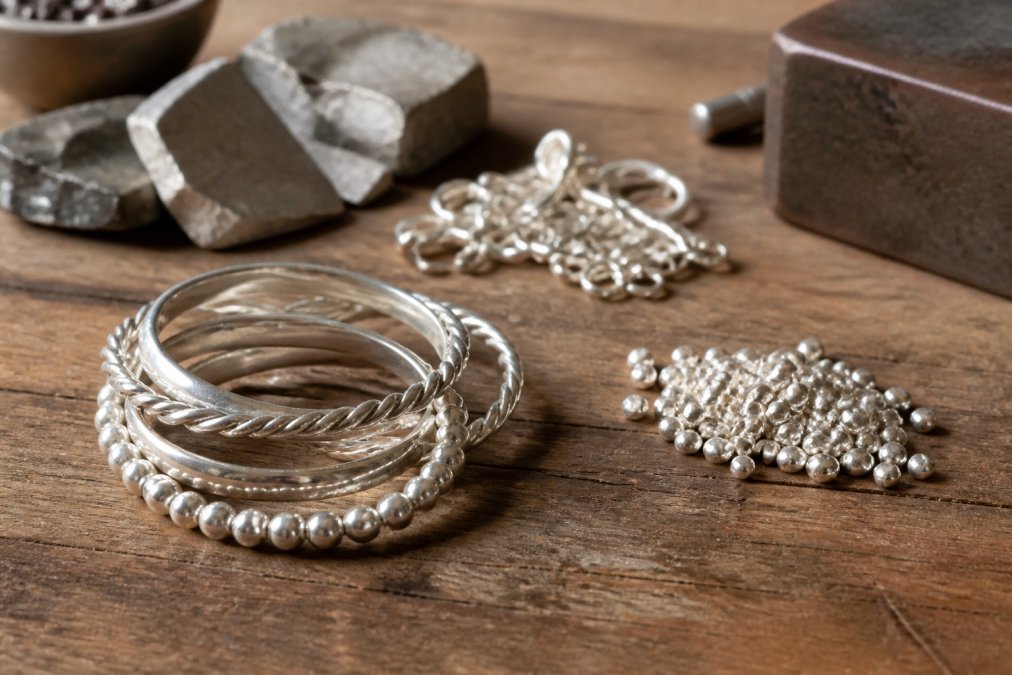
Recycled silver is silver recovered from existing sources and refined back to pure metal, rather than dug from the ground. The sources range from old jewellery and silverware to industrial scrap and even photographic waste. This guide from SilverStory explains what that means for the pieces you actually wear.
The numbers behind the question "is recycled silver jewellery worth it" are hard to argue with once you understand the supply chain.
Here's the short version. Silver can be melted and re-refined again and again without losing its core properties. The metal doesn't degrade. What changes is where it came from.
The refining process: from scrap to sterling silver
Refining starts with collecting and sorting precious metal scrap. Old rings, broken chains and workshop offcuts all go into the same pot, so to speak.
The scrap is then melted down at high temperatures. Impurities rise to the surface and get skimmed off. What's left is refined silver, usually brought up to a very high purity level.
To make sterling silver, refiners add a small amount of another metal, typically copper. This alloy gives the silver the strength it needs for everyday wear. The result is the familiar 925 silver you see stamped on quality pieces.
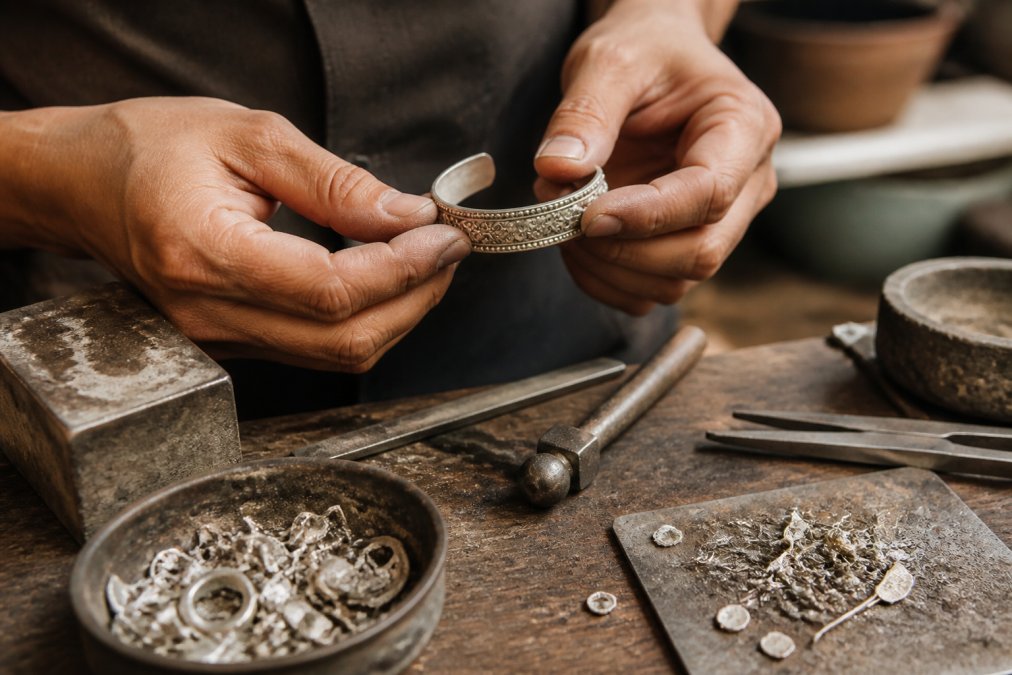
That's the whole process in plain terms. No mining required, no new metal pulled from the earth.
Benefits of Recycled Sterling Silver: Quality, Ethics and Value
The benefits of recycled sterling silver come down to three things: it performs like new silver, it avoids fresh mining, and it often costs less. Many buyers find the ethical angle alone makes the decision easy.
Let's take them one at a time.
Quality. Refined recycled silver meets the same purity standards as mined silver. A 925 stamp means 925 parts silver per thousand, whatever the origin.
Ethics. Mining extraction carries a heavy human and environmental cost. Recycling sidesteps most of it. There's no new pit, no displaced community, no fresh habitat loss.
Value. Reclaimed metal often costs less to produce, and some of that saving reaches the buyer. That's part of how brands keep prices affordable without cutting corners on materials.
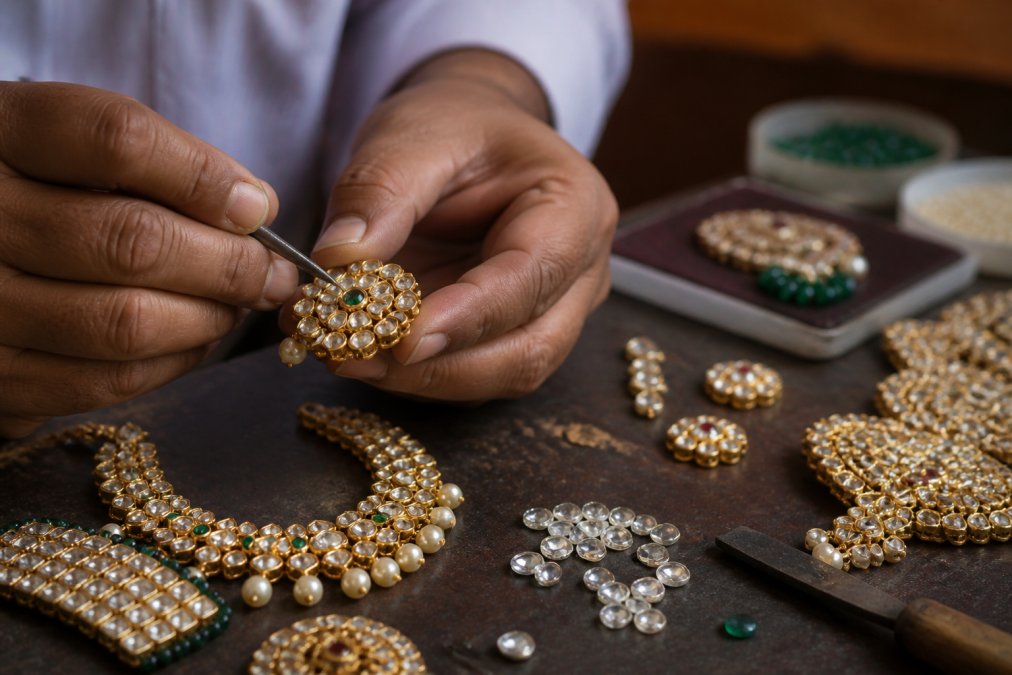
At SilverStory, every piece is handcrafted by skilled artisans in Rajasthan using ethically sourced materials. The brand keeps costs down through small-scale production.
Environmental impact: mining vs recycling
Mining extraction is energy-hungry. It moves huge volumes of rock, uses water and chemicals, and leaves a lasting mark on the landscape.
Recycling avoids nearly all of that. The metal is already above ground, so the work is melting and purifying rather than digging and blasting.
The UK Environment Agency guidance on waste and recycling sets out how recovered materials should be handled. Precious metal reclamation fits neatly into that framework.
Fewer new mines also means a smaller carbon footprint across the board. For a buyer weighing sustainability, that's the core argument.
Does Recycled Silver Tarnish? Durability and Care
Yes, recycled silver can tarnish, just like any sterling silver. Tarnish is a surface reaction with sulphur in the air, not a flaw in the metal. It affects mined and recycled silver the same way.
The good news: it's easy to manage.
- Store pieces dry in a pouch or box away from damp air
- Put jewellery on last after perfume and lotions have dried
- Wipe after wear with a soft cloth to remove oils
- Polish gently with a silver cloth when dullness appears
- Avoid chlorine by removing rings before swimming
Tarnish resistance comes down to care, not origin. A well-kept piece stays bright for years.
Maintenance and care differences
Here's what most guides miss: there is no meaningful care difference between recycled and mined sterling silver. The metal behaves identically.
What does vary is the finish.
Hallmarking Recycled Silver UK: Legal Standards and Verification
Hallmarking recycled silver in the UK is the strongest proof of quality you can get. Any piece over the legal weight threshold must carry an official hallmark from an assay office. This applies whether the silver is recycled or mined.
The hallmark tells you three things:
- The metal type, shown as 925 for sterling silver
- The assay office that tested it
- The maker's or sponsor's mark
The greenwashing risk: how to spot genuine recycled silver
Greenwashing is the big risk in this market. Some sellers slap "eco-friendly" on a listing with nothing behind it.
Here's how to separate real claims from marketing noise:
- Ask for the recycled content certification or supplier details
- Check for a hallmark confirming the metal's purity
- Look for supply chain transparency on the brand's site
- Be wary of vague words like "green" with no specifics
- Prefer brands that name their refining process and partners
Recycled Silver vs Mined Silver: Price, Purity and Sustainability
Purity is identical between the two. A 925 hallmark means the same thing regardless of origin, 925 parts silver per thousand, tested by an assay office. The difference sits in price, traceability and environmental cost.
| Factor | Recycled Silver | Mined Silver |
|---|---|---|
| Purity (925) | Same legal standard | Same legal standard |
| Environmental impact | Low, no new extraction | High, open-pit and underground mining, cyanide and mercury use in some regions |
| Carbon footprint | Substantially smaller per gram | Larger, ore must be blasted, hauled and smelted |
| Price | Often lower, but not always | Tied to the live spot price plus mining cost |
| Supply chain transparency | Easier to trace to a refiner | Harder, metal passes through multiple hands |
| Durability | Identical | Identical |
| Hallmarking | Same UK legal requirement | Same UK legal requirement |
Why recycled silver is not automatically cheaper
A common assumption is that recycled metal must cost less because there is no mine involved. In practice, the picture is more nuanced.
What the environmental comparison actually looks like
Silver mining is energy-intensive. Ore grades are typically low, which means large volumes of rock must be moved to yield a small amount of metal. The process uses water, generates tailings waste, and in some regions relies on chemicals that carry long-term risks to soil and waterways.
The UK regulatory backdrop
The Environment Agency guidance on waste and recycling sets out how recovered materials should be handled, and precious metal reclamation fits within that framework. Separately, the Competition and Markets Authority guidance on environmental claims is the reference point for how sustainability claims can be made without misleading buyers, a point that matters directly to the greenwashing question below.
The trade-offs worth knowing
- Availability. Recycled supply is broad for standard chains, bands and clasps, but can be tighter for very specific castings or unusual alloys.
- Colour consistency. Because recycled sterling is re-alloyed from mixed scrap, a refiner must control the copper content carefully to keep the final 925 alloy consistent. Reputable refiners do this routinely; it is a quality-control step, not a limitation.
- Certification cost. Chain-of-custody documentation adds administrative cost, which some brands absorb and some pass on.
For buyers who care about where their money goes, recycled wins on almost every line. The honest caveat is that 'recycled' is not a synonym for 'cheap', it is a synonym for 'traceable'.
End-of-Life Recyclability and Circular Economy
Every piece of sterling silver can be recycled again at the end of its life. That's the heart of the circular economy: metal that keeps circulating instead of being thrown away.
Is Recycled Silver Jewellery Worth It? A Practical Verdict
For most buyers, yes. You get the same quality, the same durability, and the same 925 purity as mined silver, with a smaller environmental impact and often a lower price.
Frequently Asked Questions
Is recycled sterling silver good quality?
Yes. Recycled sterling silver meets the same purity standards as newly mined silver, containing 92.5% silver and 7.5% other metals, usually copper. The refining process removes impurities, so the final material is chemically identical. In the UK, any piece sold as sterling silver must be hallmarked by an assay office, regardless of whether the silver is recycled or mined. This means you can expect the same durability and appearance from recycled silver jewellery as from conventional pieces.
Does recycled silver tarnish faster than new silver?
No. Tarnish is a reaction between silver and sulphur compounds in the air, and it affects all silver equally, whether recycled or newly mined. The rate of tarnishing depends on how you store and wear your jewellery, not its origin. Keeping pieces in a dry place, away from humidity, and wiping them with a soft cloth after wear will slow tarnish. Recycled sterling silver can be cleaned with the same gentle methods as any other sterling silver.
How can I verify if my jewellery is made from recycled silver?
Look for a UK hallmark, which confirms the silver purity but does not state whether it is recycled. To verify recycled content, ask the brand for certification or supply chain details. Reputable sellers should be able to explain where their silver comes from. Be cautious of vague claims like 'eco-friendly' without evidence. SilverStory, for example, sources ethically and handcrafts pieces in Rajasthan.
Is recycled silver jewellery worth the price compared to mined silver?
Recycled silver often costs the same as or slightly more than mined silver because the refining process is similar. The value lies in the reduced environmental impact: recycling silver uses far less energy and produces fewer carbon emissions than mining. For a comparable price, you get a piece with a lower footprint. When you buy from SilverStory, prices remain affordable; for instance, gift wrapping is £3.95, and each piece comes in recycled tissue and a cotton pouch.
The real challenge with recycled silver isn't quality. It's trust. Too many sellers make claims they can't back up, and buyers get burned. SilverStory takes the guesswork out of it with ethically sourced, handcrafted pieces made by artisans in Rajasthan, affordable pricing, and thoughtful packaging ready for gifting. Get started with SilverStory and choose jewellery that looks beautiful and does some good.