How to Style Indian Jewellery with Western Outfits 2026
Table of Contents
- What You'll Need Before You Start Styling
- How to Mix Silver Jewellery with Western Outfits
- How to Wear Jhumkas with Western Clothes
- Best Indian Jewellery for Office Wear
- Balancing Heavy Indian Jewellery with Minimalist Western Clothing
- Body Type and Skin Tone: Styling Indian Jewellery for Your Shape
- Jewellery Care and Maintenance for Mixed-Metal Pieces
- Sustainable and Upcycled Styling with Heirloom Indian Jewellery
- Frequently Asked Questions
Last Updated: September 16, 2026
What You'll Need Before You Start Styling
Styling indian jewellery western outfits in 2026 comes down to a few well-chosen pieces and a clear plan. The approach below is one we recommend for mixing heirloom pieces with a modern wardrobe.
Before you layer a single chain, gather these essentials:
- One or two statement pieces as your focal point, such as a necklace or a pair of earrings
- A mirror with good lighting so you can judge scale against your actual silhouette
- A soft cloth and a small pouch for storing pieces between wears
- A neutral base outfit (a plain shirt, dress or knit) to test combinations against
How to Mix Silver Jewellery with Western Outfits
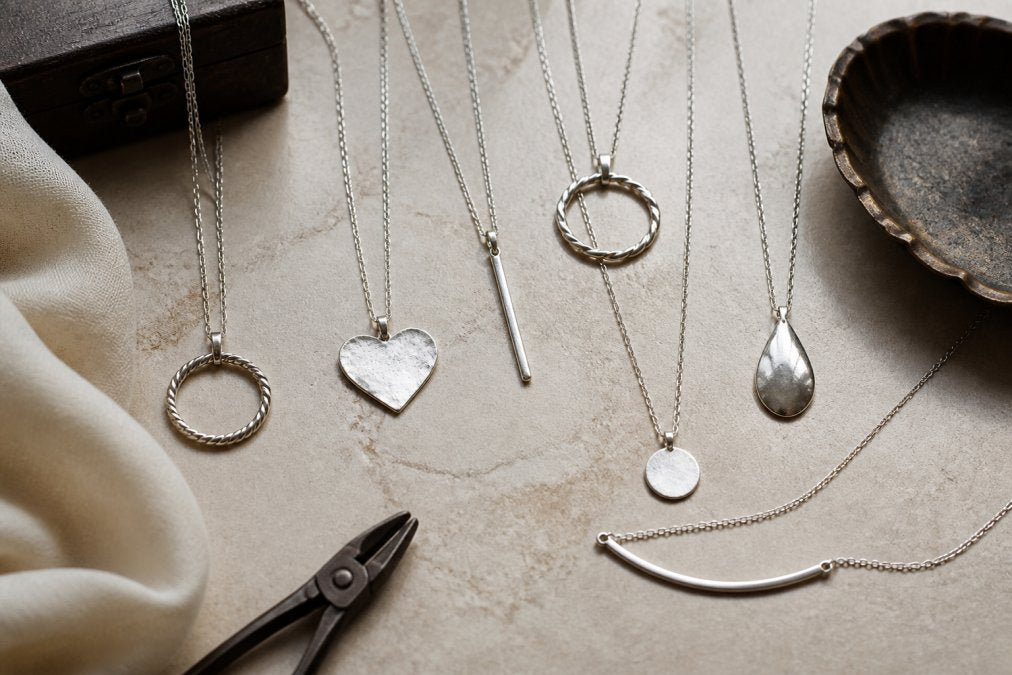
Silver is the easiest metal to wear with western clothing because it reads as understated against denim, cotton and wool. Keep the finish consistent and let one piece lead.
The 2:1:1 Rule for Balanced Layering
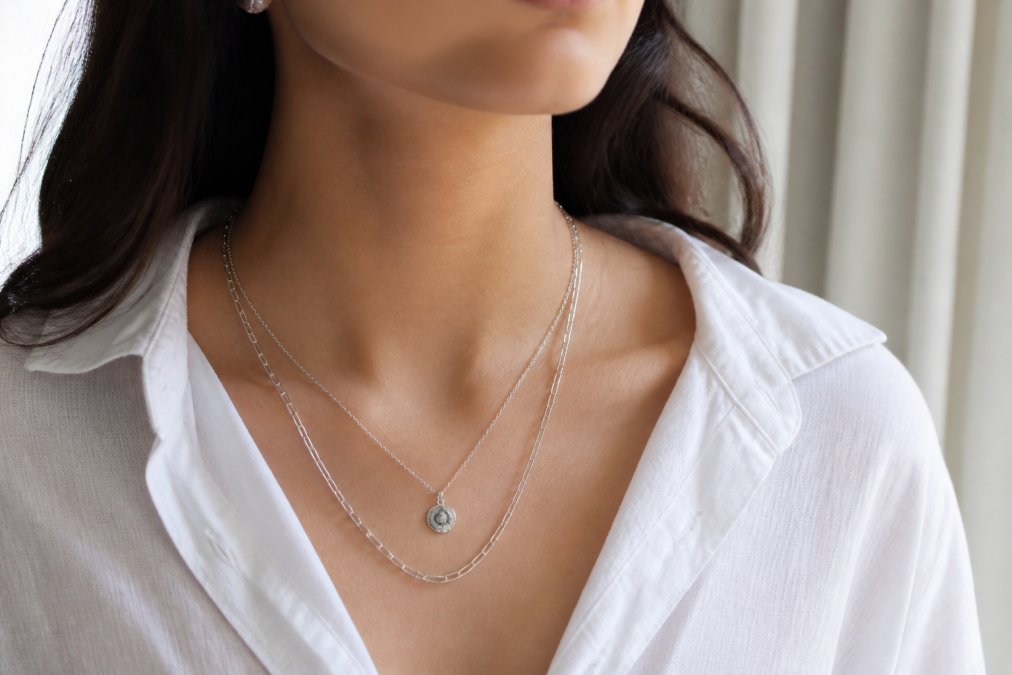
The 2:1:1 rule is a simple layering method: two fine pieces, one medium piece and one statement piece worn together. It stops layered necklaces from turning into a tangle.
Apply it like this:
- Choose two delicate chains of different lengths
- Add one medium-weight necklace as the middle layer
- Finish with one bold piece, such as a gemstone drop earring
- Check the total in a mirror and remove anything that competes
How to Wear Jhumkas with Western Clothes
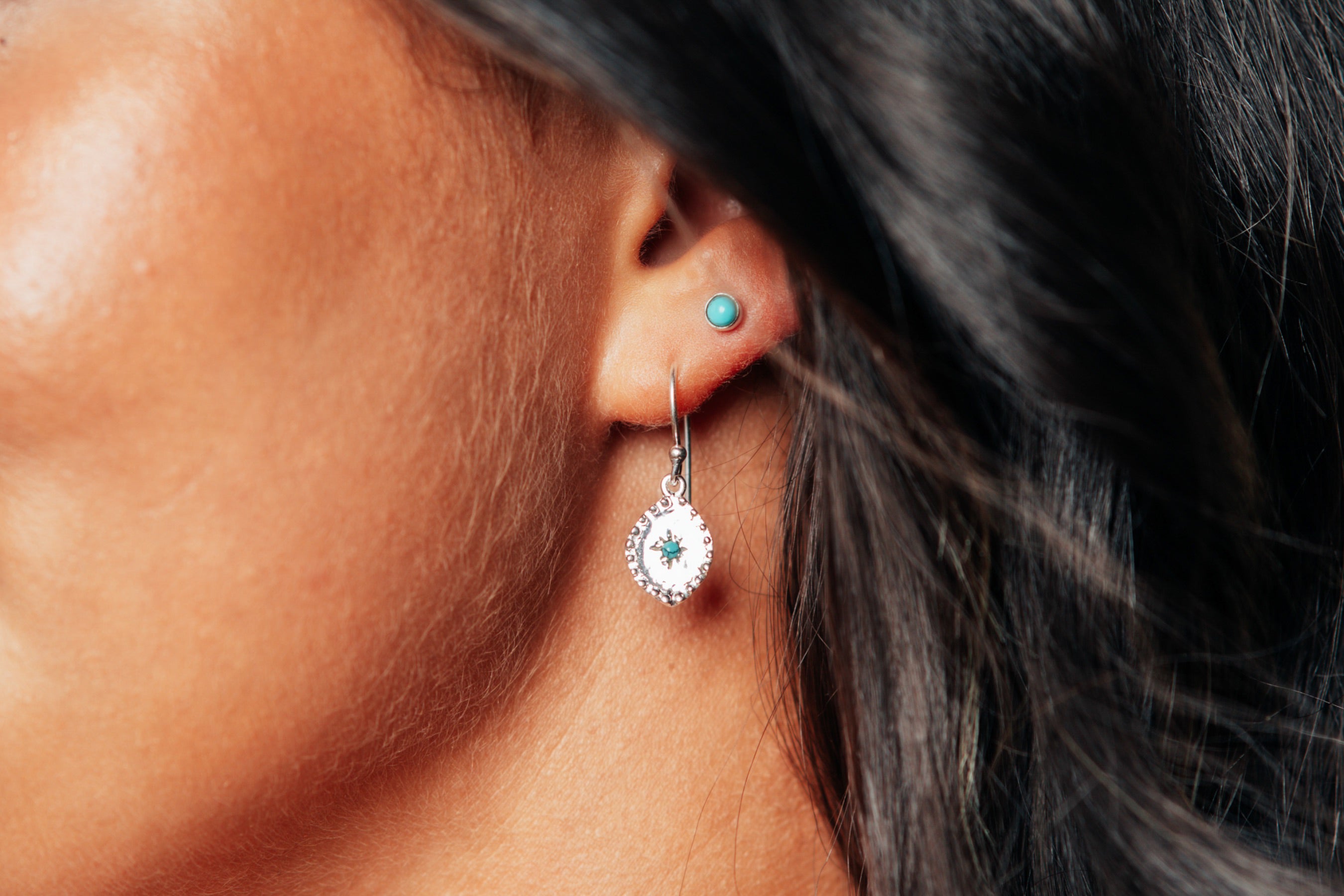
Jhumkas work with western clothes when you treat them as the outfit's focal point and keep everything else quiet. A bell-shaped earring needs space, so avoid a competing necklace.

Matching Jhumkas to Necklines and Silhouettes
The neckline decides the earring. A V-neck or open collar leaves room for a longer drop, while a high neck calls for a shorter, wider jhumka that sits close to the jaw.
- V-neck and scoop necks: longer drops, up to around 40mm
- High necks: shorter, wider jhumkas
- Off-shoulder: statement jhumkas with no necklace
- Tailored collars: small studs or slim drops
Best Indian Jewellery for Office Wear
The best indian jewellery western outfits for office wear is small, secure and quiet, but the real skill is building a base layer that transforms into an evening look with jewellery swaps alone. That desk-to-dinner approach separates a working wardrobe from a drawer of pieces you only wear on Saturdays.
The Base Layer: What Stays On All Day
Choose pieces comfortable for eight hours at a desk and appropriate for a meeting room:
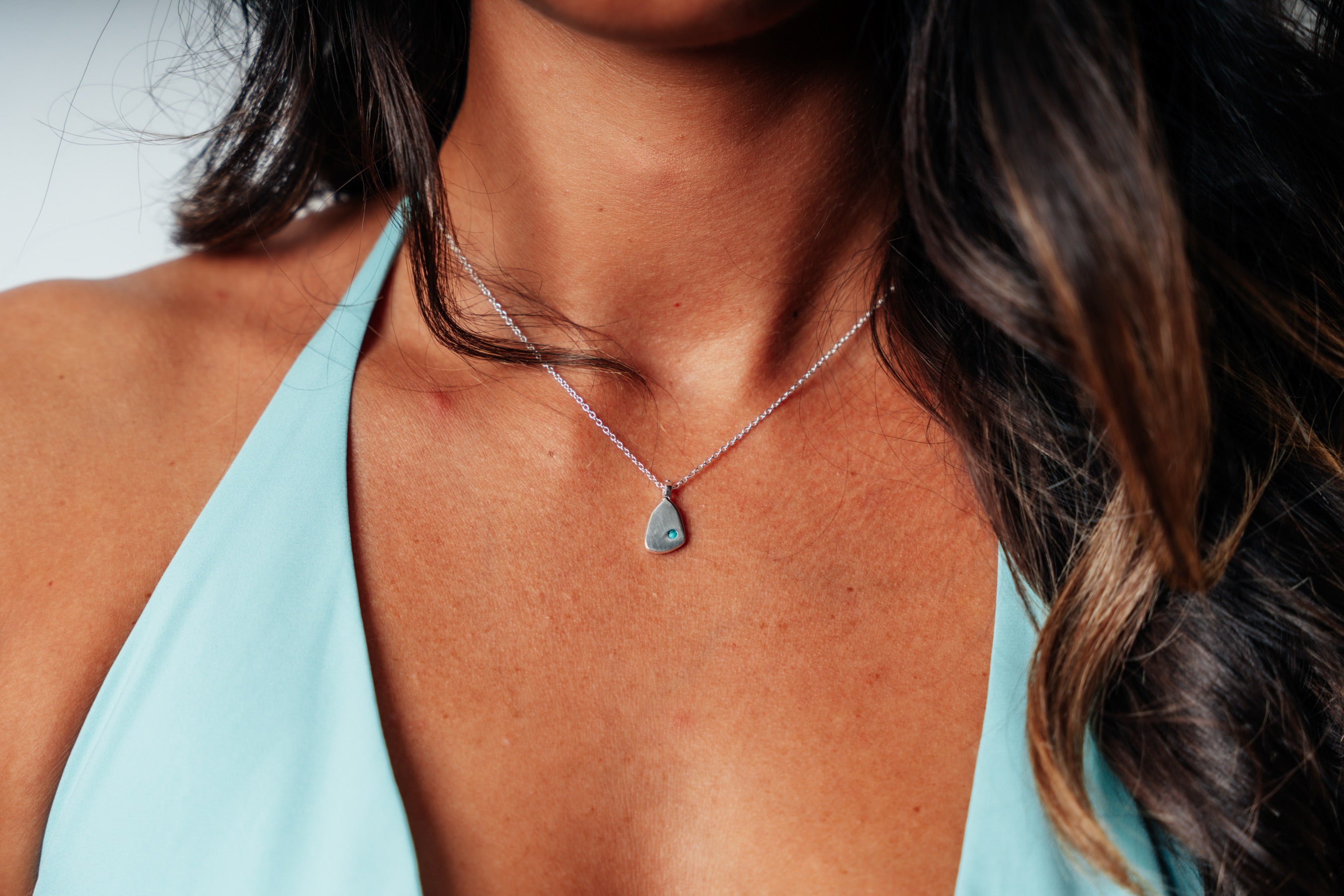
- Fine silver chains with a single small pendant, ideally 40-45cm so it sits at the collarbone
- Stud or small drop earrings, no wider than about 15mm, rather than full jhumkas
- One or two slim bangles, not a full stack, a stack rattles against a keyboard and reads as evening
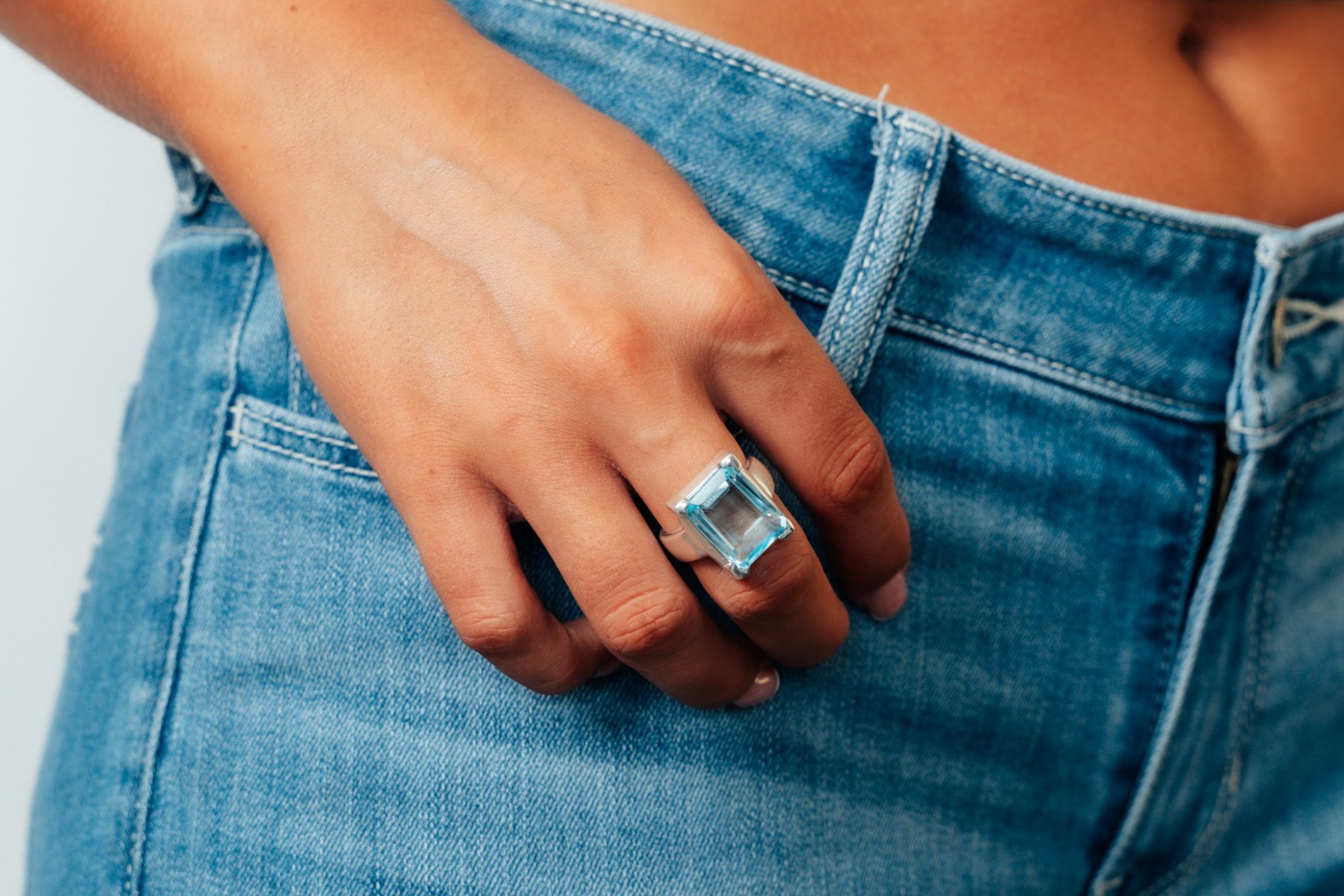
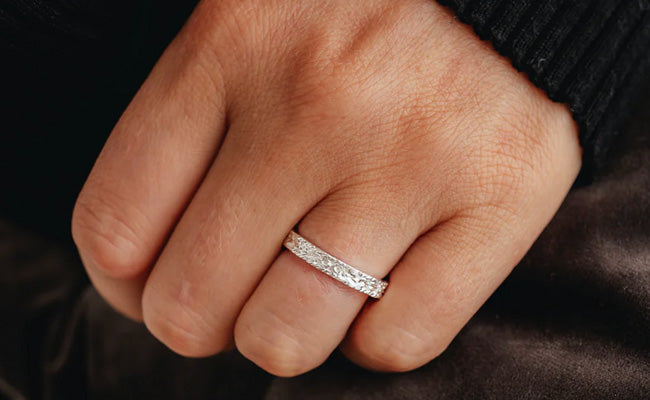
- A single ring as a finishing detail
The Desk-to-Dinner Swap
The mechanism is simple: keep the outfit, change the jewellery. A plain shirt or knit dress that works at 3pm works at 8pm if the jewellery carries the shift. Swap in this order:
- Earrings first. Remove the studs and add a fuller drop or a small jhumka. Earrings change the read of a look faster than any other piece because they sit at eye level.
- Then the neck. If your base chain is fine, layer a second chain of a different length, or add one medium-weight pendant. Do not add a statement necklace on top of a fine chain, remove the fine chain first, or the two compete.
- Then the wrist. Add two or three more bangles to the one you wore all day, or swap the slim bangle for a single bolder cuff.
- Stop. Three swaps is the ceiling. A fourth piece usually tips the look from considered to cluttered.
What to Keep in Your Bag
A small pouch with one pair of statement earrings, one medium pendant and two extra bangles covers most desk-to-dinner transitions. Keep them in separate compartments so nothing scratches. If your office has no secure drawer, a zip pouch that fits a laptop bag is the practical choice.
Trade-Offs to Accept
- Fuller earrings are less comfortable on a long call, take them off if you are on headphones for more than an hour.
- A bolder cuff can catch on a sleeve; if your outfit has close-fitting cuffs, keep the wrist swap minimal.
- If your workplace has a conservative dress code, the base layer should already be within it, and the evening swap should be something you add after hours rather than wear to a client meeting.
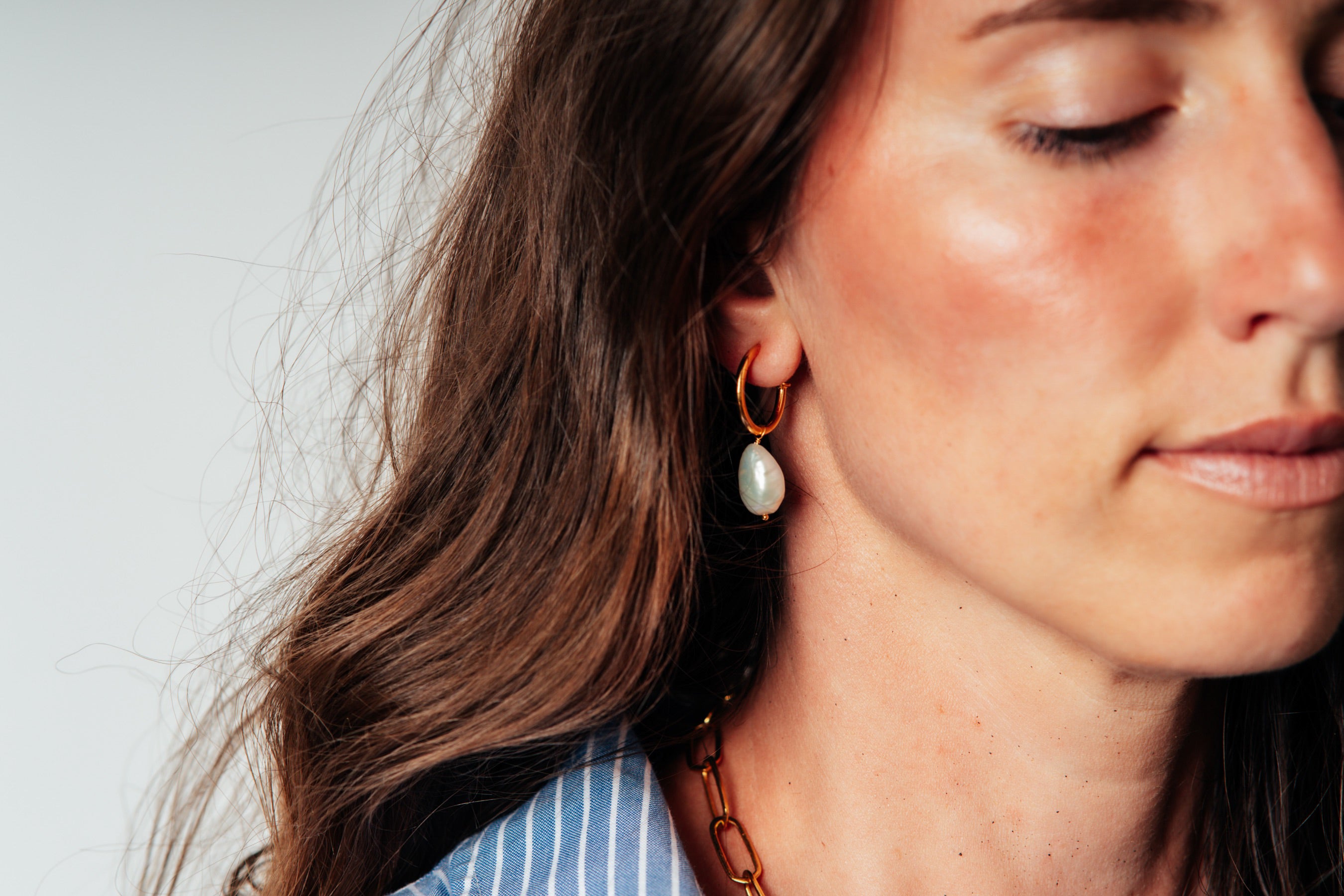
If you want a piece that genuinely moves from desk to dinner without a swap, a slim gemstone drop in a neutral tone works in both settings. Our SilverStory gemstone drop earrings sit at roughly 40mm, which is at the upper end of what most offices accept during the day and comfortably within evening territory.
Balancing Heavy Indian Jewellery with Minimalist Western Clothing
Heavy pieces need a plain backdrop. With a substantial necklace or a full set of bangles, strip the outfit back to simple lines and solid colours.
Body Type and Skin Tone: Styling Indian Jewellery for Your Shape
Jewellery should follow your proportions, not fight them. Most guides stop at frame size, but the more useful question is how a western neckline interacts with a specific Indian necklace length. That pairing, neckline plus chain length plus proportion, is where small changes make the biggest difference.
Necklace Lengths and Where They Sit
Indian necklaces are usually described by name rather than measurement, which makes them hard to compare with western necklines. As a working guide:
- Choker: sits at the base of the throat, roughly 35-40cm
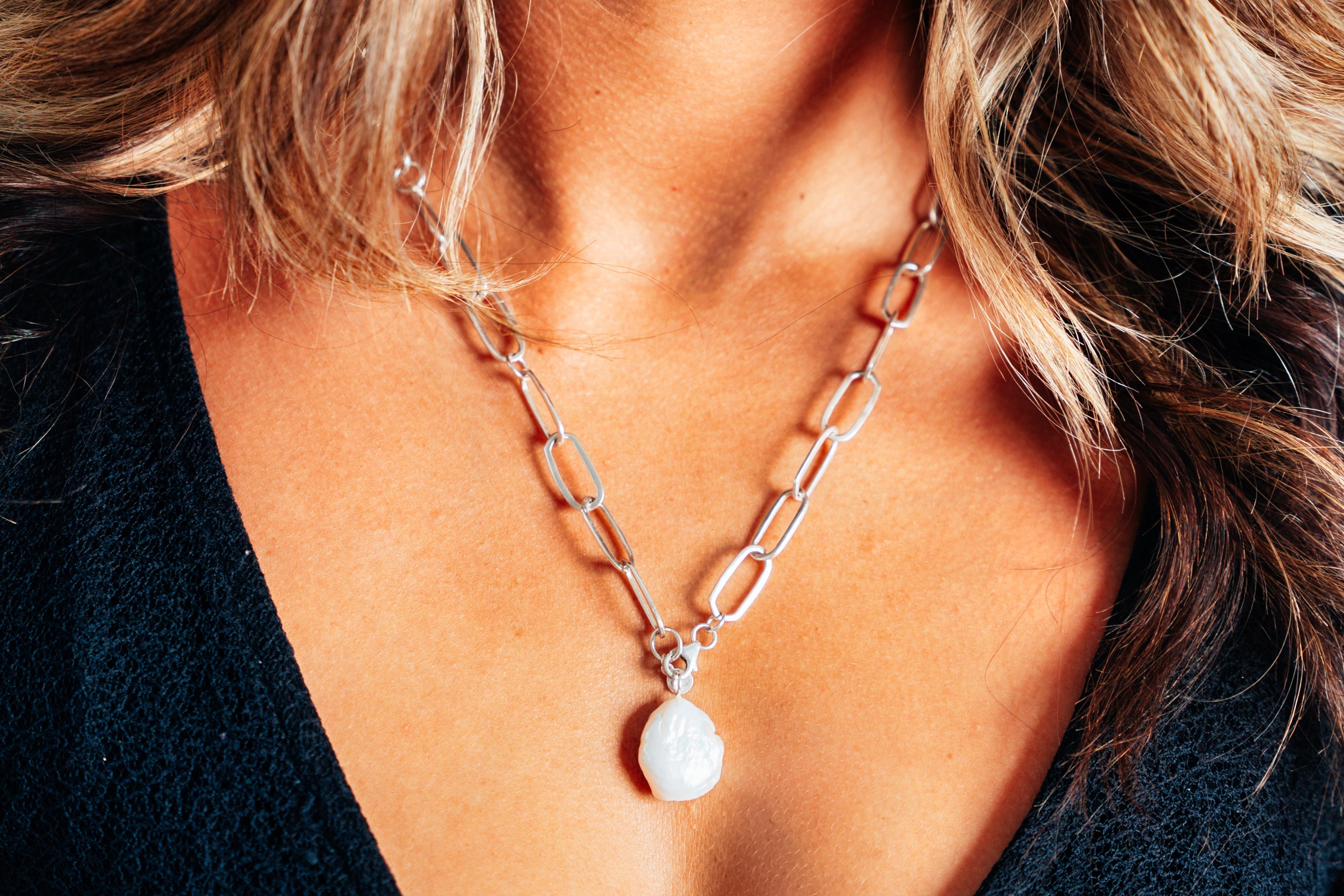
- Short necklace / collar-length: sits on the collarbone, roughly 40-45cm
- Princess length: sits just below the collarbone, roughly 45-50cm
- Matinee length: sits on the upper chest, roughly 50-60cm
- Long chain / opera length: falls to the sternum or below, roughly 70cm and up
Matching Neckline to Necklace Length
- Crew neck and high neck: a choker or short necklace fills the space without competing with the fabric edge. A long chain disappears into the neckline and looks accidental.
- V-neck: a princess or matinee length follows the V and draws the eye down. This is the most forgiving pairing for most body shapes.
- Scoop neck: a short necklace sits inside the curve; a matinee length sits below it. Avoid a choker here, it cuts the scoop in half.
- Square neck: a short necklace mirrors the horizontal line; a long chain breaks it. Choose based on whether you want to echo or interrupt the neckline.
- Off-shoulder: skip the necklace entirely and let earrings carry the look. A chain across bare shoulders reads as an afterthought.
- Tailored collar / shirt: a single pendant on a fine chain in an open collar, or small studs with the collar closed.
Proportion Adjustments by Frame
- Petite frames: finer chains and smaller drops; a matinee length can overwhelm a short torso, so keep to choker, short or princess lengths.
- Taller frames: longer chains and fuller jhumkas sit in proportion; a choker alone can look undersized.
- Broad shoulders: a matinee or longer necklace draws the eye down and balances the horizontal line of the shoulders.
- Long necks: chokers and short necklaces fill the space well.
- Shorter necks: princess or matinee lengths create the illusion of length; a choker emphasises the opposite.
- Fuller bust: a princess length that sits above the bust line is usually more flattering than a matinee that rests on it; a long chain can be doubled to control where it falls.
Skin Tone: A Practical Test
Skin tone matters less than most people think, and the guidance is often oversimplified. Silver tends to flatter cooler undertones, while gold warms cooler and neutral skin. The reliable test: hold the piece against your wrist in daylight, not indoor lighting, and look at your skin rather than the metal, a piece that suits you makes your skin look even, not grey or flushed.
Jewellery Care and Maintenance for Mixed-Metal Pieces
Mixed-metal pieces tarnish fastest where two metals meet, so they need more attention than single-metal jewellery. A few habits keep them sharp.
- Store each piece separately in a soft pouch to stop metals rubbing
- Put jewellery on last, after perfume and hairspray, and take it off first at night
- Wipe pieces with a dry soft cloth after wearing to remove oils
- Keep silver away from moisture and store it somewhere dry
A quick reference for keeping each piece in condition:
| Piece | Care Habit | How Often | Watch Out For |
|---|---|---|---|
| Silver chains | Wipe with dry cloth | After each wear | Moisture and perfume |
| Gold-plated drops | Store in a pouch | Every time | Rubbing against other metals |
| Bangles | Keep separate | Every time | Scratches from stacking |
| Rings | Remove before washing | Daily | Soap and hand cream |
Sustainable and Upcycled Styling with Heirloom Indian Jewellery
The most sustainable piece is the one you already own. Restyling an heirloom necklace or inherited bangles keeps the craft alive and avoids buying new.
Frequently Asked Questions
What is the 2:1:1 rule for styling statement jewellery?
The 2:1:1 rule is a simple ratio for balancing jewellery with an outfit: two small or subtle pieces, one medium statement piece, and one bold focal piece. For example, with a plain black dress, wear two thin silver bangles, a medium gemstone pendant, and one large jhumka. This prevents your look from feeling cluttered while still letting a statement piece stand out.
Can I wear traditional jhumkas with a blazer or formal wear?
Yes, jhumkas work well with formal wear if you keep the rest of your jewellery minimal. Choose a smaller, lighter jhumka in silver or gold, and pair it with a tailored blazer and trousers. Avoid heavy or oversized jhumkas for the office; instead, opt for a subtle drop style that adds a touch of Indian craftsmanship without overwhelming a professional silhouette.
How do I mix silver jewellery with western outfits without clashing?
Mixing silver jewellery with western outfits works best when you repeat the metal tone at least twice. For instance, wear silver earrings and a silver bracelet with a grey or blue outfit. If you want to combine metals, keep one metal dominant (around 70%) and the other as an accent (30%). Silver pairs especially well with cool-toned clothing like navy, grey, and white.
Which Indian jewellery pieces are most versatile for western wardrobes?
The most versatile pieces are small jhumkas, thin silver bangles, and a simple gemstone pendant. These can be worn with jeans and a blouse, a dress, or office wear. A silver gemstone drop earring, for example, transitions easily from day to night. Investing in a few understated pieces means you can add Indian flair to almost any western outfit without looking overdone.
Mixing heirloom and contemporary pieces takes a little practice, but the payoff is a wardrobe that works harder with fewer items. At SilverStory, every piece is ethically sourced and handcrafted by artisans in Rajasthan, from solid sterling silver gemstone drop earrings to gold-plated designs and cotton jewellery rolls made by a family business. Add a piece to your collection and build a look that lasts beyond a single season.