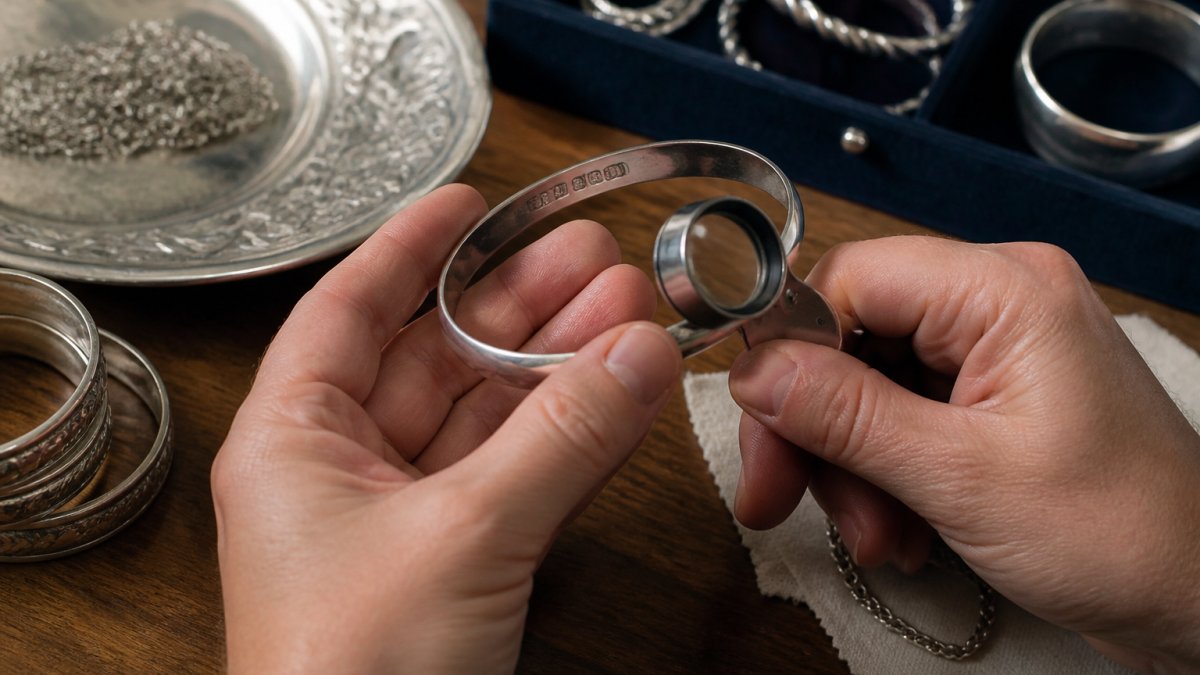
Identifying Authentic Sterling Silver Hallmarks
Table of Contents
- What Sterling Silver Hallmarks Tell You
- The Four Traditional Components of a British Hallmark
- Understanding UK Silver Hallmark Symbols and Meanings
- How to Identify Silver Maker's Marks and Silversmith Details
- Silver-Plated Versus Sterling Silver Marks: How to Tell the Difference
- Free Silver Hallmark Identification Tools and Resources
- Spotting Fake or Misleading Hallmarks
- How to Read Your Hallmark in Sequence
- Frequently Asked Questions
Last Updated: October 10, 2026
What Sterling Silver Hallmarks Tell You
A hallmark is a series of small stamps pressed into silver. These marks tell you the purity, origin, maker, and age of the piece. Think of them as the silver's passport, they verify authenticity and value.
At SilverStory, we work with artisans who craft sterling silver jewellery to exacting standards. Understanding hallmarks and identifying authentic sterling silver hallmarks in the UK helps you recognise genuine pieces from those that are merely plated or misleading.
Hallmarks serve four main purposes:
- Prove the silver meets legal fineness standards
- Identify the assay office that tested the piece
- Show when the item was made
- Credit the maker or sponsor
Without hallmarks, you're buying blind. With them, you hold proof of quality.
The Four Traditional Components of a British Hallmark
British hallmarks follow a consistent format. Each component appears as a distinct symbol or letter. Together, they unlock the piece's history.
The four components are:
- Standard mark (fineness)
- Assay office town mark
- Date letter
- Sponsor's or maker's mark
Each one answers a specific question about your silver.
The Standard Mark (Fineness Mark)
The standard mark proves silver content. In the UK, sterling silver must be at least 92.5% pure. The mark confirms this legally binding threshold.
The most common standard mark is the lion passant, a lion walking left, shown in profile. This symbol appears on virtually all British sterling silver made after 1544. It's the visual guarantee that you hold genuine sterling silver, not plated or lower-grade alloy.
Other fineness marks exist for different silver standards:
- Lion passant: 925 fineness (sterling silver)
- Britannia: 958 fineness (higher purity, rarely seen)
- Lion's head erased: 800 fineness (continental silver)
The fineness mark is your first check. If you don't see a lion passant or recognised fineness symbol, the piece may not be genuine sterling silver.
The Assay Office Town Mark
Every hallmark includes a town mark. This symbol identifies which assay office tested and approved the silver. The UK maintains four active assay offices, each with its own distinctive mark (About us - British Hallmarking Council).
The town marks are:
- London: Leopard's head (crowned or uncrowned depending on era)
- Birmingham: Anchor
- Sheffield: Crown
- Edinburgh: Castle
These symbols appear alongside the other hallmark components. They tell you where the piece was officially tested. If you see a leopard's head, the silver passed London's standards. An anchor means Birmingham certified it.
Recognising these symbols helps you trace the piece's journey. It also confirms the hallmark is British rather than imported or continental.
The Date Letter
Date letters cycle through the alphabet. Each letter represents one year in a specific assay office's cycle. The cycle runs 20 or 25 years, then repeats with a different typeface or style.
For example, if you see the letter "A" in a certain style from London, that piece was made in one specific year. The same letter "A" in a different style from London represents a different year, possibly decades later.
Date letters are essential for collectors and valuers. They pinpoint when a piece was made, sometimes to the exact year. This matters for antique silver, vintage jewellery, and understanding craftsmanship trends.
Different assay offices use different letter cycles. London's cycles differ from Birmingham's. You must match the letter to both the assay office mark and the letter style to get an accurate date.
The Sponsor's or Maker's Mark
The sponsor's mark identifies who submitted the silver for hallmarking. Often, this is the silversmith or jeweller who made the piece. Sometimes it's a dealer or merchant who sponsored the work.
Sponsor's marks vary widely. They may show initials, a symbol, a shield, or a distinctive design. The mark is unique to that maker or business. Tracing it can reveal the craftsperson's identity and working period.
For handcrafted jewellery like SilverStory's pieces, the maker's mark connects you directly to the artisan. It's a signature in metal. Recognising these marks helps you appreciate the human skill behind each piece.
Understanding UK Silver Hallmark Symbols and Meanings
Identifying authentic sterling silver hallmarks in the UK means understanding symbols that follow centuries of tradition. Each symbol carries legal and historical weight.
The lion passant is the most recognisable. It appears on nearly all sterling silver. Its presence means the piece meets the 925 fineness standard. Without it, you're not looking at guaranteed sterling silver.
The town marks anchor each piece to a specific assay office. The leopard's head (London), anchor (Birmingham), crown (Sheffield), and castle (Edinburgh) each represent rigorous testing standards in their region.
Date letters progress through the alphabet in cycles. Each cycle uses a distinct typeface. A letter from 1900 looks different from the same letter from 1925. This variation is intentional. It prevents confusion across decades.
Maker's marks vary endlessly. Some show initials in a rectangle. Others display symbols, animals, or geometric shapes. These marks are registered with the assay office.
Together, these symbols form a complete record. They prove fineness, location, date, and maker in one compact cluster of stamps. This is why hallmarks matter, they're your guarantee of authenticity and value.
How to Identify Silver Maker's Marks and Silversmith Details
Maker's marks require detective work. Unlike standardised symbols (lion, anchor, crown), maker's marks are unique. No two are identical.
Start by examining the mark closely. Does it show initials? A symbol? A shield or cartouche? Write down exactly what you see. Photograph it if possible. Good lighting and magnification help.
Next, match it to the assay office. If the piece also bears a leopard's head, it was hallmarked in London. That narrows your search. If it shows an anchor, look for Birmingham makers.
Then cross-reference the date letter. If the date letter places the piece in 1950, you're searching for a maker active in 1950 in that specific city. This combination drastically reduces the possibilities.
Many silversmiths kept registers with the assay office. These historical records document maker's marks, dates, and sometimes addresses. Libraries, museums, and specialist dealers maintain these records.
For contemporary pieces like SilverStory's handcrafted jewellery, the maker's mark directly credits the artisan. It's a transparency tool. It shows you exactly who created your piece and where they work.
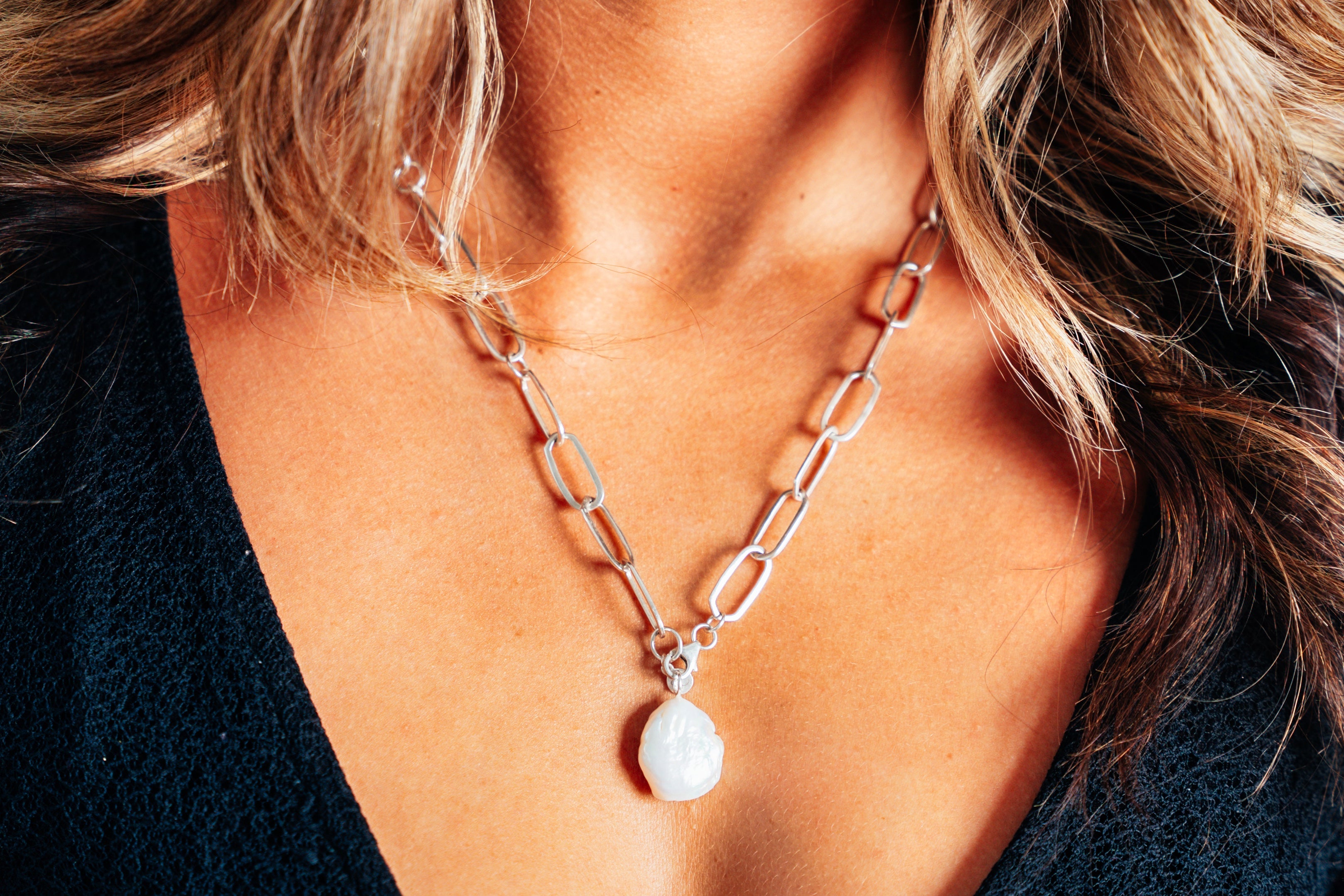
Silver Paperclip Chain Necklace →
Silver-Plated Versus Sterling Silver Marks: How to Tell the Difference
Silver-plated items carry different marks than sterling silver. Learning the difference protects you from overpaying or misidentifying pieces.
Sterling silver bears the hallmarks we've discussed: lion passant (or other fineness mark), town mark, date letter, and maker's mark. These four components appear together. Their presence guarantees 925 fineness.
Silver-plated items do not carry fineness hallmarks. Instead, you'll see abbreviations like:
- EPNS: Electroplated nickel silver
- EP: Electroplated
- Silver plate: A thin layer of silver over base metal
These marks indicate the item is plated, not solid. The silver layer is thin. Underneath is typically nickel, copper, or brass. Plated items cost far less than sterling silver. They also wear differently, the plating can fade with use.
Some plated items show no hallmark at all. Absence of hallmarks is a red flag. If you expect sterling silver but see no marks, ask questions. Genuine sterling silver is marked. Always.
The distinction matters for value, durability, and care. Plated jewellery requires gentler handling. Sterling silver tolerates regular wear and cleaning. SilverStory's pieces are solid sterling silver, handcrafted. You receive the full guarantee that marks provide.
Free Silver Hallmark Identification Tools and Resources
Several resources help you decode hallmarks without hiring an expert. These tools are free or low-cost.
Online hallmark finders let you search by symbol. You input the marks you see, and the database returns matches. These databases cover British hallmarks, continental marks, and imported silver.
Museum collections often provide hallmark guides. The Victoria and Albert Museum in London maintains extensive hallmark records. Their online resources include photographs of marks, maker details, and dating guides.
Specialist jewellery publications compile hallmark references. Books dedicated to silver identification include illustrations of thousands of marks. They're organised by assay office and date.
Assay office websites provide official information. Each of the four active assay offices publishes hallmark information. They explain current marking standards and maintain historical records.
Local antique dealers and valuers offer consultations. Many will examine a piece and provide identification for a modest fee. Their expertise catches details that online tools might miss.
Hallmark societies and collector groups share knowledge freely. Members exchange information, compare marks, and discuss dating methods. These communities are welcoming to newcomers. They're excellent for learning and verification.
Spotting Fake or Misleading Hallmarks
Not every mark is genuine. Fakes exist. So do misleading stamps that resemble hallmarks but lack legal authority.
Struck hallmarks are legitimate. These are stamped into the silver using official dies. They're sharp, clear, and consistent. The metal around them shows no damage or distortion.
Fake hallmarks often appear shallow or blurry. The detail is poor. The metal around them may show signs of tampering or additional work.
Misleading marks include maker's marks that look like fineness marks or town marks. A jeweller's personal symbol might resemble an official mark.
Absence of marks is itself a warning. Genuine sterling silver is marked. If a piece claims to be sterling silver but shows no hallmarks, investigate. Ask the seller for documentation.
Conflicting information raises suspicion. If the date letter places a piece in 1900 but the maker's mark didn't register until 1920, something is wrong. Hallmarks tell a coherent story. Inconsistencies suggest alteration or fraud.
To protect yourself:
- Examine marks under magnification
- Photograph them clearly
- Cross-check all four components
- Verify the sequence and spacing
- Consult multiple sources
- When in doubt, seek professional assessment
SilverStory's pieces come with confidence. Each item is handcrafted by skilled artisans. You receive genuine sterling silver.
How to Read Your Hallmark in Sequence
Reading a hallmark is a sequence of steps. Master this process and you'll decode any British silver mark.
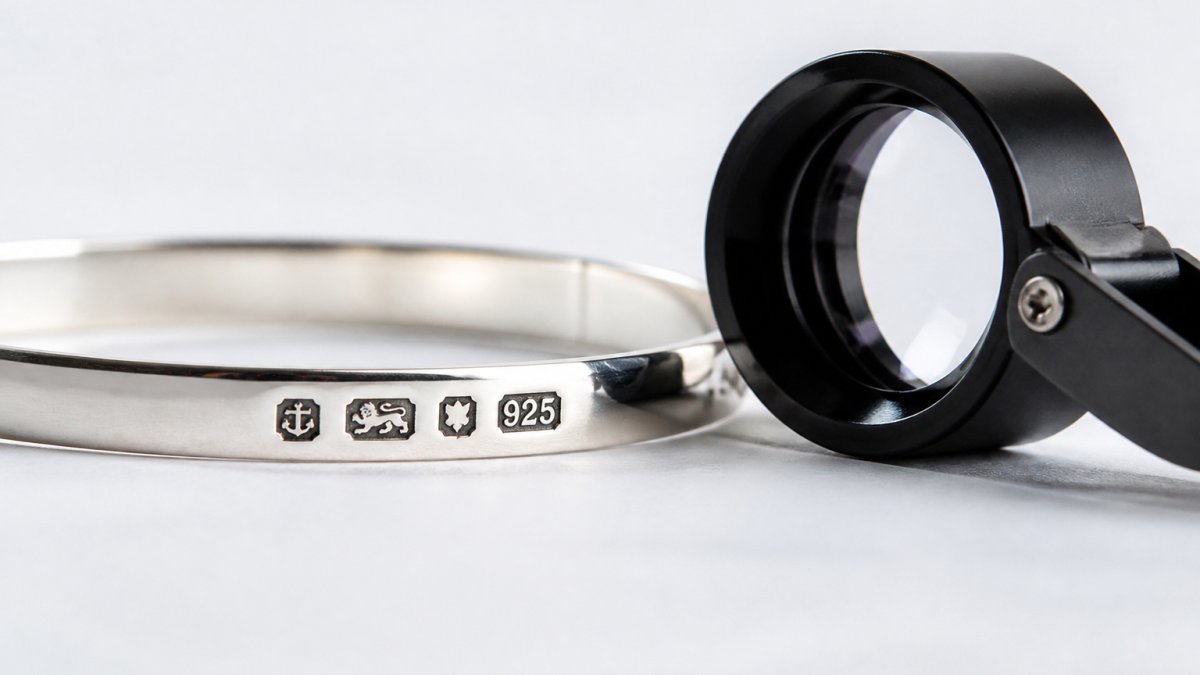
Step 1: Locate the hallmark. Hallmarks appear on the back, underside, or inside of jewellery.
Step 2: Examine the fineness mark. Look for the lion passant. This is your first confirmation of sterling silver.
Step 3: Identify the town mark. Find the second symbol.
Step 4: Locate the date letter. Find the letter symbol. Note its style and shape.
Step 5: Spot the maker's mark. The fourth component is the sponsor's or maker's mark. This is often initials or a symbol.
Step 6: Cross-reference your findings. Use a hallmark reference or online tool. Enter the town mark, date letter, and maker's mark.
The sequence takes minutes once you know what to look for.
Verifying hallmarks protects your investment. Genuine sterling silver holds value. It ages beautifully. It resists tarnish better than plated alternatives.
SilverStory's handcrafted jewellery. Explore our Silver Paperclip Chain Necklace or Silver Sun Signet Ring to see authentic sterling silver hallmarks in action.


Frequently Asked Questions
What does the 925 mark mean on sterling silver?
The 925 mark is the fineness mark that indicates the piece contains 92.5% pure silver and 7.5% other metals (usually copper for strength). This is the standard for sterling silver hallmarks in the UK and internationally. Any piece marked 925 meets the legal definition of sterling silver and has been assayed and certified by an approved assay office.
How can you tell whether a silver hallmark is genuine?
Genuine UK hallmarks are struck into the metal with precision and consistency. Look for crisp, well-defined impressions that are uniform in depth. Fake hallmarks often appear shallow, blurry, or inconsistently struck. Check that all four components (standard mark, town mark, date letter, and maker's mark) are present and correctly positioned. If marks look hastily applied, are partially worn in unusual ways, or don't match known assay office records, the piece may be counterfeit or misleadingly marked.
What is the quick test for silver authenticity?
The hallmark itself is your primary quick test for authenticity in the UK. A properly struck hallmark from a recognised assay office (London, Birmingham, Sheffield, or Edinburgh) guarantees the silver content. For additional confidence, check that the mark is crisp and properly positioned, and cross-reference the maker's mark with assay office records if needed. If a piece claims to be sterling silver but lacks a hallmark, it does not meet legal standards and should be approached with caution.
Where can you find hallmarks on silver jewellery?
On jewellery, hallmarks are typically found on the inside of rings, on the clasp or back of bracelets and necklaces, or on the post of earrings. Smaller pieces may have marks on less visible surfaces. Always inspect these areas carefully with a magnifying glass, as hallmarks can be small and easy to miss. If a piece claims to be sterling silver but you cannot locate a hallmark after thorough inspection, verify the maker's claims before purchase.