



Article: How to Layer and Stack Silver Necklaces

How to Layer and Stack Silver Necklaces
Table of Contents
- Start with a Base Silver Necklace
- Best Necklace Lengths for Layering
- Building Your Stack from Shortest to Longest
- How to Layer Necklaces Without Tangling
- Silver Necklace Layering Ideas by Style
- Necklace Layering by Neckline
- Caring for Layered Silver Necklaces
- Frequently Asked Questions
Last Updated: October 9, 2026
Start with a Base Silver Necklace
The foundation of any layered look is a single silver necklace you love on its own, your anchor piece.
At SilverStory, we recommend starting with a piece you'd be happy wearing solo, delicate or chunky, short or medium.
The best base necklaces tend to be:
- Simple chain designs without too many pendants
- A length that sits comfortably on your neck (usually 41-46 cm)
- A style that matches your everyday aesthetic
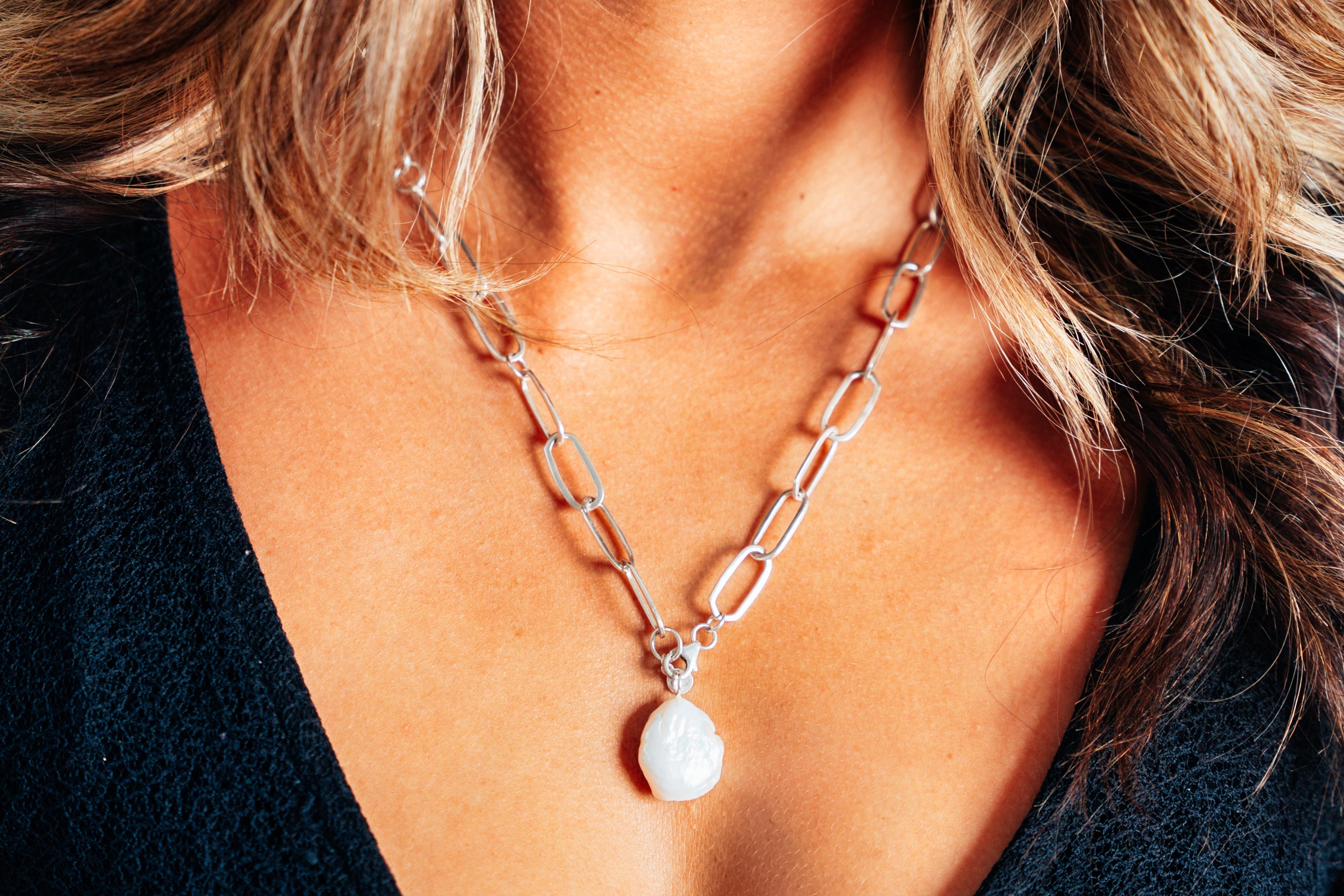
Our Silver Paperclip Chain Necklace works beautifully as a foundation piece, understated enough to pair with almost anything, yet distinctive enough to stand alone.

Best Necklace Lengths for Layering
Understanding necklace lengths is essential for a balanced layered look; each sits at a different point on your body, so measurements help you build intentional stacks rather than guessing.
Standard necklace lengths are measured from the clasp to the pendant or end of the chain:
- Choker (36-41 cm): Sits snug against your neck, perfect for delicate pieces
- Princess (41-46 cm): The most versatile length, rests just below your collarbone
- Matinée (51-61 cm): Falls to your mid-chest, great for longer layering
Worked length combinations
Rather than memorising the chart, copy one of these starting points and adjust. Each assumes a 5-8 cm gap between layers.
- Two-layer, everyday: 41 cm + 46 cm. The tightest useful stack, good under a crew neck or collared shirt where only the top of the chest is visible.
- Three-layer, classic: 41 cm + 46 cm + 51 cm. The most reliable three-piece combination and the one to try first if you're new to stacking.
- Three-layer, with a statement base: 36 cm + 46 cm + 61 cm. The wide jump to the longest layer gives a chunky or pendant-heavy bottom piece room to sit clear of the others.
- Four-layer, fuller neckline: 36 cm + 41 cm + 51 cm + 61 cm. Only attempt this with mixed link styles; four similar fine chains at these gaps will still tangle.
How to adjust the spacing
The gap between layers matters more than exact lengths. Three variables change how much space you need:
- Pendant size. A pendant adds its own drop below the chain. A 2.5 cm pendant effectively makes a 41 cm chain sit like a 43.5 cm one. If two of your layers both have pendants, add an extra few centimetres of chain length between them so the pendants don't collide.
- Neck length and build. A shorter neck compresses the visible distance between a choker and a princess length, so you may need to skip the choker entirely and start at 41 cm. A longer neck can carry wider gaps without the stack looking disconnected.
- Neckline. A V-neck exposes more vertical space, so you can spread layers further apart. A crew neck hides everything below the collarbone, so keep your layers within a 36-46 cm band and treat the stack as a single cluster rather than a spread.
A simple test: check in a mirror whether you can see a clear strip of skin or fabric between each chain. If two chains sit on top of each other, lengthen the lower one by 5 cm or remove a layer.
Adjustable chains with extender links are the easiest way to fine-tune spacing; a 41-46 cm chain with a 5 cm extender covers most combinations above.
Building Your Stack from Shortest to Longest
The golden rule for how to layer and stack silver necklaces: start short and work down, creating a waterfall effect that looks intentional and balanced.
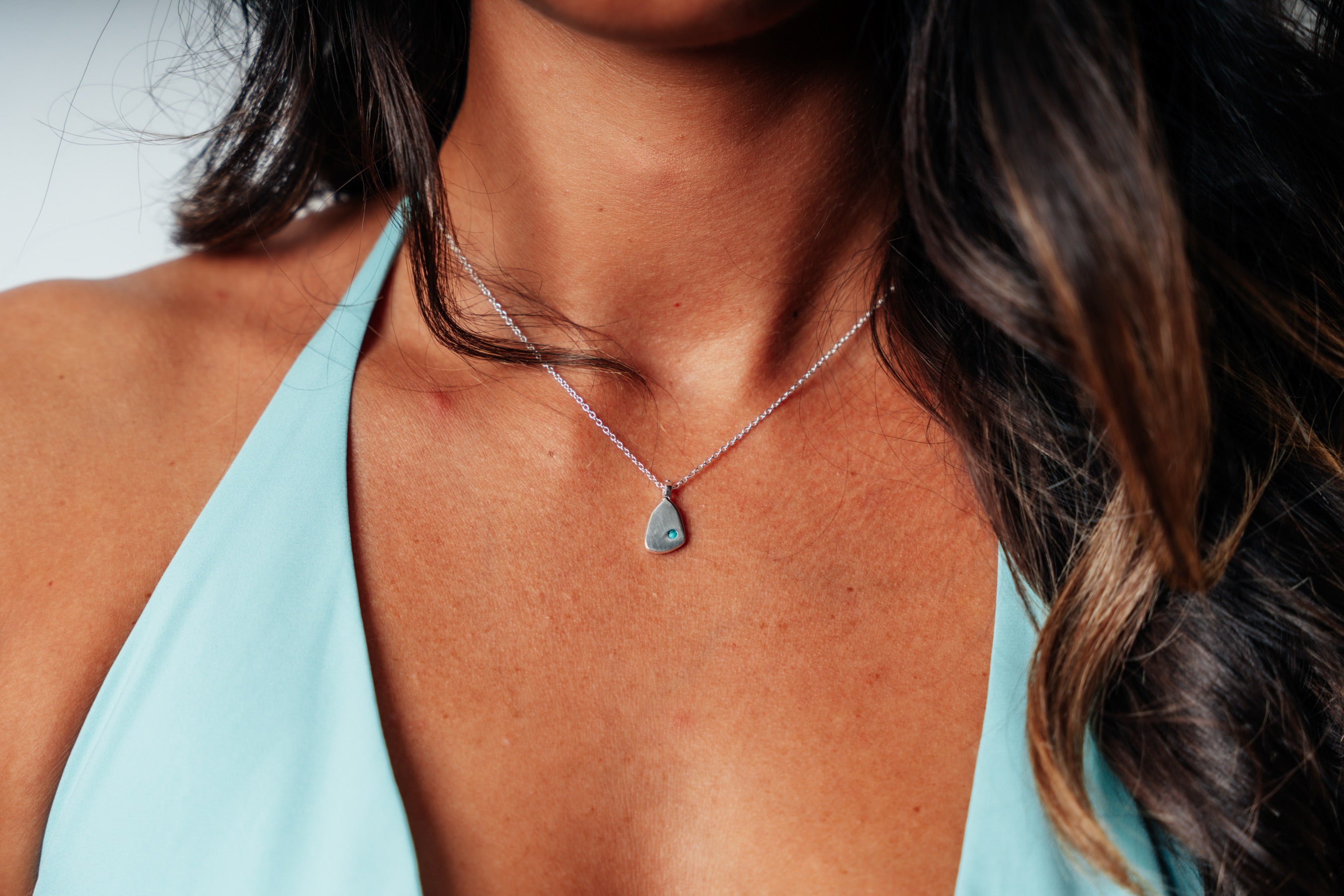
Step 1: Choose your shortest piece first. A choker or princess-length necklace sits high and draws attention upward. A delicate pendant works well here; our Silver Mini Hammered Disc Necklace adds visual interest without overwhelming your neckline.

Step 2: Add your middle-length necklace. This should be 5-10 cm longer than your base, sitting slightly lower to create the second visual line. Introduce a different texture, perhaps a chunky chain if your first layer was delicate.

Step 3: Finish with your longest piece. This extends further down your chest and anchors the stack. Our Silver Chunky Chain Necklace makes an excellent statement layer here, especially if your shorter pieces are delicate.
If pieces touch or overlap awkwardly, adjust the clasp length or choose different lengths.
How to Layer Necklaces Without Tangling
Tangling is the biggest frustration when learning how to layer and stack silver necklaces. Prevention is your best strategy:
Match chain weights thoughtfully. Heavy chains tangle less than delicate ones. Avoid pairing three fine chains together; mix a chunky piece with delicate ones instead.
Use different link types. A paperclip chain tangles less with a box chain than two box chains do.
Store them separately. Don't leave them layered. Remove necklaces one at a time and store them separately to prevent overnight tangling that's harder to undo than daytime knots.
If tangling happens anyway, use a drop of olive oil or jewellery cleaner to gently work the knot apart; patience beats force.
Silver Necklace Layering Ideas by Style
Your personal style should guide how you layer. There's no single "correct" way, only what works for you.
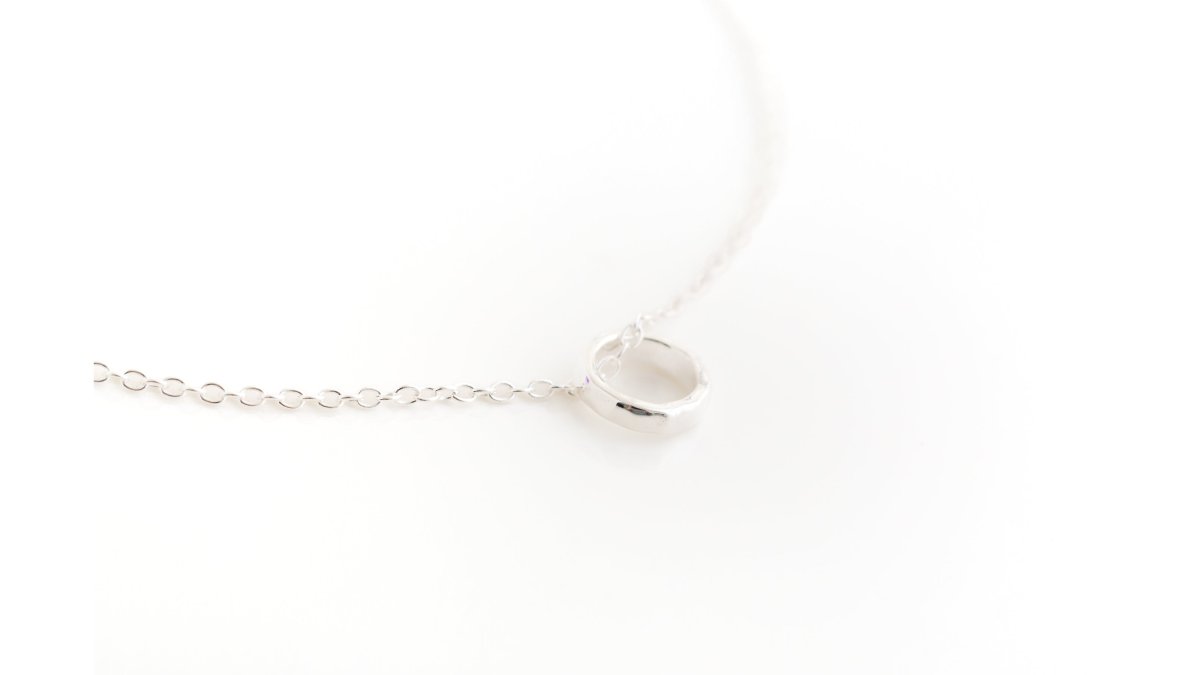
Minimalist layering keeps things simple: two delicate chains in the same metal finish, with no more than one small pendant. Our Silver Open Circle Necklace pairs beautifully with a plain chain for understated elegance.
Statement layering mixes textures and weights boldly; pair a chunky chain with delicate ones, add multiple pendants or mix styles.
Pendant-focused layering emphasises charms and decorative elements.
Silver Paperclip Chain Necklace →
Mixed-metal layering (if you're open to it) combines silver with gold or rose gold.
Most importantly, choose pieces you actually like; a combination forced just because it's "supposed to work" won't feel right.
Necklace Layering by Neckline
Your outfit's neckline determines how your layered necklaces sit and whether they complement or compete with your clothing.
V-necks naturally draw the eye downward, making your layered necklaces prominent.
Crew necks and high necklines limit layering; you'll only see the upper portion of your necklaces.
Turtlenecks are tricky: necklaces sit on the fabric, which can look bulky.
Strapless and off-shoulder styles put your collarbones and shoulders on display, prime real estate for layered necklaces.
Caring for Layered Silver Necklaces
A silver stack differs from a generic layered look: sterling silver and mixed-metal stacks each behave differently, and the care routine that keeps one bright can damage another.
Know what your silver actually is
Before building a care routine, check what you're layering. The three common categories behave very differently:
- Sterling silver is an alloy of 92.5% silver and 7.5% other metals (usually copper). It is durable, can be polished repeatedly, and is the safest choice for everyday layering. Look for a hallmark or a "925" stamp, which is the standard UK sterling silver mark.
If a piece is unmarked, a jeweller can usually test it; sterling silver needs specific cleaning methods.
Sensitive skin and metal compatibility
Reactions to layered necklaces are usually caused by nickel, a common allergen. Sterling silver contains no nickel, so it's generally better for sensitive skin.
A few practical points:
-
If you react to a piece, stop wearing it and clean the area. Persistent irritation is worth checking with a pharmacist or GP.
-
Sweat, perfume and sunscreen can all increase the chance of irritation. Rinse and dry your neck and the necklaces after a long, hot day.
When to remove a layered stack
Layered necklaces rub against each other more than single pieces, so removal timing matters more:
- Before exercise. Sweat accelerates tarnishing and the movement increases tangling and friction between chains.
- Before swimming. Chlorine and salt water both attack silver, and pool chemicals can strip plating quickly.
- Before showering or bathing. Soap residue dulls silver and builds up in the gaps between links.
- Before bed. Overnight movement is the single biggest cause of knots and stretched chains. Take the stack off one necklace at a time.
Cleaning a layered silver stack
Because layered pieces are handled more, they need cleaning more often than a single necklace:
- Wipe after each wear. A soft, dry silver polishing cloth removes skin oils and slows tarnish. Use a separate part of the cloth for each necklace so you don't transfer tarnish.
- Wash periodically. For light build-up, use warm water with a drop of mild washing-up liquid and a soft-bristled brush. Rinse thoroughly and pat dry with a soft cloth. Do not use this method on plated pieces if the plating is already worn.
- Use a silver dip sparingly. Silver dips are fast but can be harsh on antiqued finishes, oxidised details and plated pieces. Follow the product instructions and rinse well.
- Dry completely before storing. Trapped moisture is one of the main causes of tarnish and of the greenish marks some people notice on skin.
Storage that protects a stack
Storing layered necklaces together is the fastest way to end up with a knotted, scratched pile:
- Store each necklace separately. Individual pouches, small boxes or a compartmented jewellery roll all work. If you must store them together, fasten each clasp and lay them flat rather than coiling them around each other.
- Keep them dry and dark. Humidity and light both speed up tarnishing. A bedroom drawer is usually better than a bathroom shelf.
- Use anti-tarnish protection. Anti-tarnish strips, tabs or lined pouches reduce tarnish between wears. They are inexpensive and make a noticeable difference over a few months.
- Hang longer pieces. A hook or a padded hanger prevents kinks in opera-length and lariat chains.
Check the hardware, not just the silver
Layered stacks put more stress on clasps, jump rings and extender chains because you fasten and unfasten them daily. Check every few weeks:
- Clasps that feel loose, stiff or gritty
- Jump rings that have opened slightly
- Extender chains with worn or stretched links
- Any chain that has developed a kink or a stretched section
A jeweller can usually repair a worn clasp or replace a jump ring cheaply, and catching it early prevents losing a necklace mid-wear.
At SilverStory, all our pieces are handcrafted from sterling silver by skilled artisans, so they're built to last. Proper care, and knowing when to take your stack off, keeps your layered silver bright for years.
Frequently Asked Questions
How do you layer silver necklaces without them tangling?
Separate chains by clasp placement and use different chain weights to create natural spacing. Thinner chains sit closer to your neck, while chunky chains sit lower, reducing contact between them. When storing layered necklaces, unfasten the clasps and lay each chain flat on a soft cloth. Avoid twisting or coiling them together. A jewellery box with individual compartments helps keep each piece separate and prevents tangling overnight.
What are the best necklace lengths for layering?
Ideal layering combines different lengths to create visual interest and prevent chains from overlapping. For example, the Silver Paperclip Chain Necklace (41-46 cm adjustable) works well as a mid-layer, while the Silver Chunky Chain Necklace (51 cm and can be worn at 39 cm and 44 cm) serves as a versatile base. Vary lengths by at least 5 cm between each layer for clear definition.
Can you mix different silver chain styles when layering?
Yes, mixing chain styles adds texture and visual depth to your stack. Combine delicate chains with chunky links, or pair plain chains with pendant necklaces. The key is balance: if one piece is bold, keep the others simpler. For instance, layer the Silver Mini Hammered Disc Necklace with a plain chain to let the pendant shine. Ensure all pieces are sterling silver to maintain a cohesive look and prevent tarnishing differences.
How should you layer necklaces based on your neckline?
Scoop necks and boat necks suit three-layer stacks because they expose more of your chest. Crew necks work best with two shorter layers, as longer pieces may get hidden. V-necks can handle varied lengths, with longer necklaces drawing the eye downward. Turtlenecks pair beautifully with longer pendant necklaces worn outside the collar. The Silver Open Circle Necklace works well on crew necks, while longer styles suit lower necklines where they have room to shine.

