Handcrafted Jewelry That Does Not Tarnish: 2026 Guide
Table of Contents
- Why Handcrafted Jewelry That Does Not Tarnish Is Worth Seeking Out
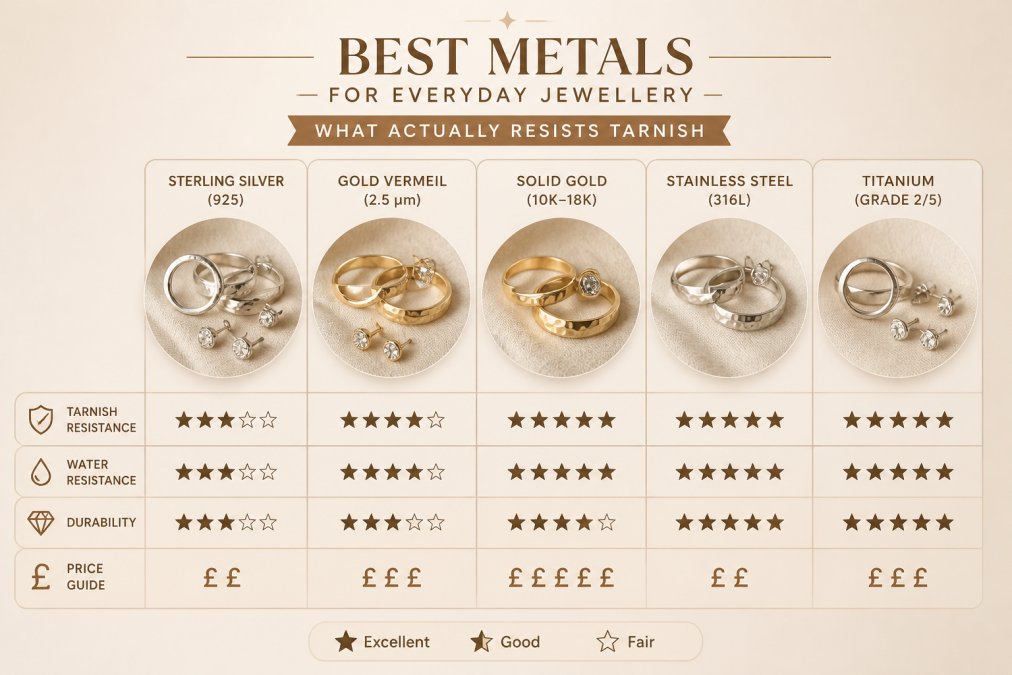
- Best Metals for Everyday Jewellery: What Actually Resists Tarnish
- How to Tell If Silver Is Real: Tests You Can Do at Home
- Skin Sensitivity, Metal Allergies, and Hypoallergenic Choices
- Waterproof vs. Tarnish-Resistant: What the Labels Actually Mean
- How to Clean Tarnished Silver Jewellery Without Damaging It
- Choosing Handcrafted Jewelry That Does Not Tarnish for Daily Wear
- Conclusion
Last Updated: August 17, 2026
Why Handcrafted Jewelry That Does Not Tarnish Is Worth Seeking Out
Most people have experienced it: a beautiful piece of jewellery, worn a handful of times, already looking dull and leaving a green ring on the skin. Handcrafted jewelry that does not tarnish is not a marketing myth. It exists, it's accessible at reasonable prices, and understanding why certain metals resist tarnishing will help you shop far more confidently. Tarnish is a chemical reaction between metal and oxygen, moisture, or sulphur compounds in the air. Metals that resist this reaction either form a stable oxide layer, contain no reactive base metals, or are coated in a way that physically blocks contact with those compounds.
Below, we'll walk through exactly which metals to look for, how to test quality at home, how to care for your pieces, and how to choose jewellery that genuinely holds up to daily life.
Best Metals for Everyday Jewellery: What Actually Resists Tarnish
The material is everything. If the metal reacts with moisture and air, the piece will tarnish.
Metal |
Tarnish Resistance |
Hypoallergenic |
Typical Use |
|---|---|---|---|
Sterling silver |
Moderate (with care) |
Often nickel-free |
Everyday rings, earrings |
Stainless steel with PVD |
High |
Yes |
Colour-coated pieces |
Solid 18k gold |
Very high |
Yes |
Heirloom jewellery |
Platinum |
Excellent |
Yes |
Luxury, long-term wear |
Gold-plated brass |
Low |
Variable |
Fashion pieces |
Gold-filled |
Moderate-high |
Usually yes |
Mid-range daily wear |
Close-up flat lay of several sterling silver rings and stud earrings arranged on a soft linen cloth, showing hammered textures and natural metallic shine in warm natural light
Base metals like brass and copper tarnish quickly because they oxidise readily. Precious metals and well-coated alloys resist that process far longer.
Sterling Silver: Tarnish-Resistant With the Right Care
Sterling silver is 92.5% pure silver and 7.5% other metals, typically copper. That copper content causes tarnishing: it reacts with sulphur in the air to form silver sulphide, the dark grey or black discolouration you'll recognise. This is a predictable chemical reaction, not a flaw in the silver itself.
Sterling silver is one of the most tarnish-resistant metals available at an accessible price point, provided it's stored correctly and cleaned regularly. Pieces worn frequently actually tarnish more slowly than those left in a drawer, because daily wear polishes the surface.
SilverStory's sterling silver collection, handcrafted by artisans in Rajasthan, uses .925 sterling throughout. The Wide Hammered Band Ring at £95 and the Silver Intricate Narrow Band Ring at £48 are both made from solid sterling silver, not plated, as is all our silver jewellery. That distinction matters enormously for longevity.


Stainless Steel and PVD Coating: The Science Behind Lasting Colour
Stainless steel is one of the most corrosion-resistant materials used in everyday jewellery. It contains chromium, which forms a passive oxide layer on the surface that physically prevents further oxidation. This is why stainless steel jewellery can handle sweat, water, and daily wear without discolouration.
PVD coating, which stands for Physical Vapor Deposition, takes this further. The process uses a vacuum chamber to deposit a thin layer of titanium nitride or similar compounds directly onto the metal surface at an atomic level. The result is a fade-resistant, scratch-resistant colour finish that bonds far more durably than traditional electroplating. Unlike gold-plated jewellery, which can be re-plated by a jeweller, PVD requires specialist equipment if damaged, but the coating is exceptionally durable for everyday wear.
Solid Gold and Platinum: Heirloom-Quality Options
Solid gold, particularly at 18k (75% pure gold), does not tarnish. Gold is a noble metal and does not react with oxygen or moisture under normal conditions. 18k gold pieces retain their appearance for generations.
Platinum is the most corrosion-resistant metal used in jewellery. It does not tarnish, does not oxidise, and maintains its appearance without any special care. It is also naturally hypoallergenic and nickel-free, making it the best choice for anyone with significant metal sensitivities.
The trade-off is cost. For many buyers, sterling silver with proper care offers comparable daily wear performance at a fraction of the cost.
How to Tell If Silver Is Real: Tests You Can Do at Home
Hallmarking is the most reliable method. In the UK, all silver articles over 7.78 grams sold commercially must carry a hallmark from an Assay Office, as governed by the Hallmarking Act 1973 guidance from the British Hallmarking Council. The mark for sterling silver is 925, indicating 92.5% silver purity.
Beyond hallmarking, a few home tests can help:
- The magnet test: Real silver is not magnetic. If a piece is strongly attracted to a magnet, it contains iron or steel and is almost certainly not silver.
- The ice test: Silver has unusually high thermal conductivity. Place an ice cube on a silver piece; it will melt noticeably faster than on most other metals.
- The polish test: Rub the piece with a white cloth. Genuine silver will leave a faint black mark as surface tarnish transfers.
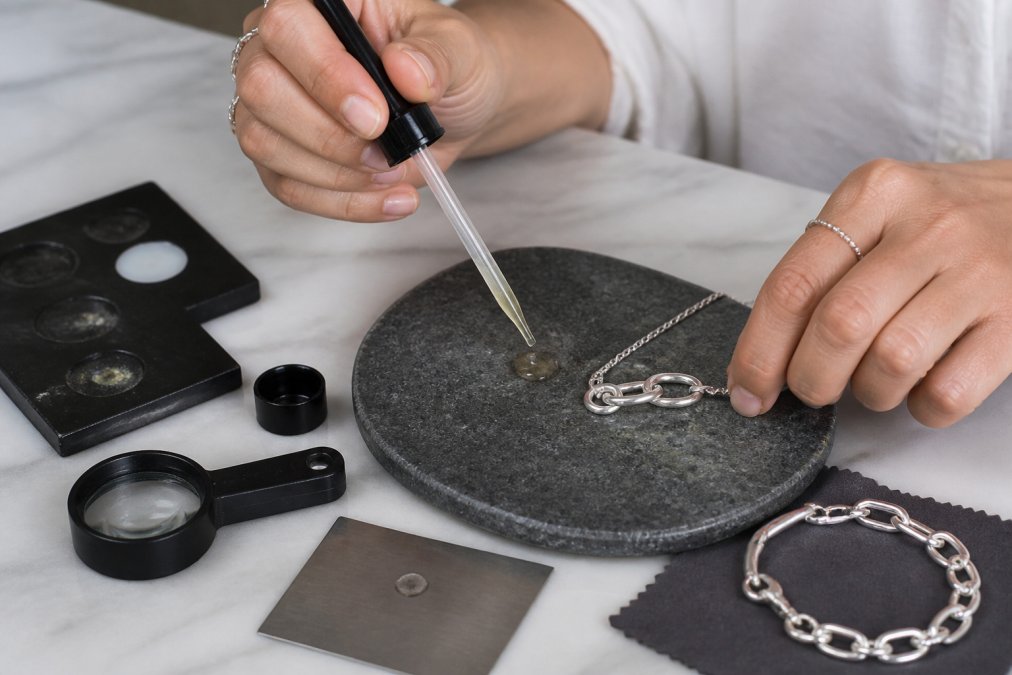
- The acid test: Silver testing kits apply a small drop of nitric acid to a scratch on the surface. This is the most definitive home test, though it causes minor surface damage.
Skin Sensitivity, Metal Allergies, and Hypoallergenic Choices
Metal allergies are more common than most people realise. According to contact dermatitis guidance from the British Association of Dermatologists, nickel is the most frequent cause of contact allergic dermatitis in the UK. Symptoms include redness, itching, and swelling at the point of contact with the metal.
The metals most likely to cause reactions are those that contain nickel or cobalt in their alloy composition. Low-grade brass, white gold alloys, and some stainless steel grades all have the potential to cause issues.
For anyone with skin sensitivity, the safest choices are:
- Platinum: Naturally hypoallergenic, contains no nickel
- Sterling silver from reputable sources: Often nickel-free, though check the alloy composition
- Solid 18k gold: Generally safe, though white gold alloys can contain nickel
- Surgical-grade stainless steel (316L): Nickel content is bound tightly in the alloy, making it far less reactive than cheaper steel grades
"Hypoallergenic" is not a regulated term. The more reliable indicator is a specific statement that the piece is nickel-free or that it meets the requirements of the UK's REACH regulation, which restricts nickel release from articles in prolonged contact with skin.
Waterproof vs. Tarnish-Resistant: What the Labels Actually Mean
These two terms are not interchangeable, and the distinction matters for daily wear.
Tarnish-resistant means the metal or coating resists the chemical reactions that cause discolouration. Sterling silver is tarnish-resistant with proper care. PVD-coated stainless steel is highly tarnish-resistant. Neither term says anything about what happens when the piece is submerged in water.
Waterproof or shower-safe jewellery refers to pieces that can handle prolonged water exposure without damage. Solid gold, platinum, and PVD-coated stainless steel are genuinely shower-safe. Sterling silver can handle occasional water exposure, but chlorine in swimming pools and salt water will accelerate tarnishing and should be avoided.
How to Clean Tarnished Silver Jewellery Without Damaging It
Knowing how to clean tarnished silver jewellery correctly is the difference between restoring a piece and inadvertently scratching or weakening it. Most tarnish on sterling silver can be removed at home with materials you already have.
Method 1: Bicarbonate of soda and warm water
Line a bowl with aluminium foil, shiny side up. Place the silver jewellery on the foil, add a tablespoon of bicarbonate of soda, then pour over hot (not boiling) water. The electrochemical reaction draws the tarnish off the silver and onto the foil. Leave for 5-10 minutes, rinse thoroughly, and dry with a soft cloth.
Method 2: Mild washing-up liquid and warm water
For lightly tarnished pieces or regular maintenance, a few drops of washing-up liquid in warm water, applied with a soft toothbrush, is sufficient. Rinse well and dry immediately; leaving silver wet accelerates tarnishing.
Method 3: Silver polishing cloth
A purpose-made silver polishing cloth contains gentle abrasives and anti-tarnish compounds. These are ideal for maintaining a shine between deeper cleans and for intricate hammered textures.
What to avoid: abrasive pastes, bleach, ultrasonic cleaners for pieces with stones, and paper towels. According to jewellery care guidance from the Goldsmiths' Company Assay Office, regular gentle cleaning is far preferable to infrequent aggressive polishing, which can gradually wear down fine surface details.
Method |
Best For |
Time Required |
Risk Level |
|---|---|---|---|
Bicarb and foil |
Heavy tarnish |
10-15 minutes |
Low |
Washing-up liquid |
Light tarnish, maintenance |
5 minutes |
Very low |
Polishing cloth |
Surface shine, detail work |
2-3 minutes |
Very low |
Commercial silver dip |
Stubborn tarnish |
1-2 minutes |
Moderate (avoid on stones) |
Choosing Handcrafted Jewelry That Does Not Tarnish for Daily Wear
The best handcrafted jewelry that does not tarnish for daily wear comes down to three factors: material, construction, and care habits. No piece is entirely maintenance-free, but the right material choice dramatically reduces how much attention your jewellery needs.
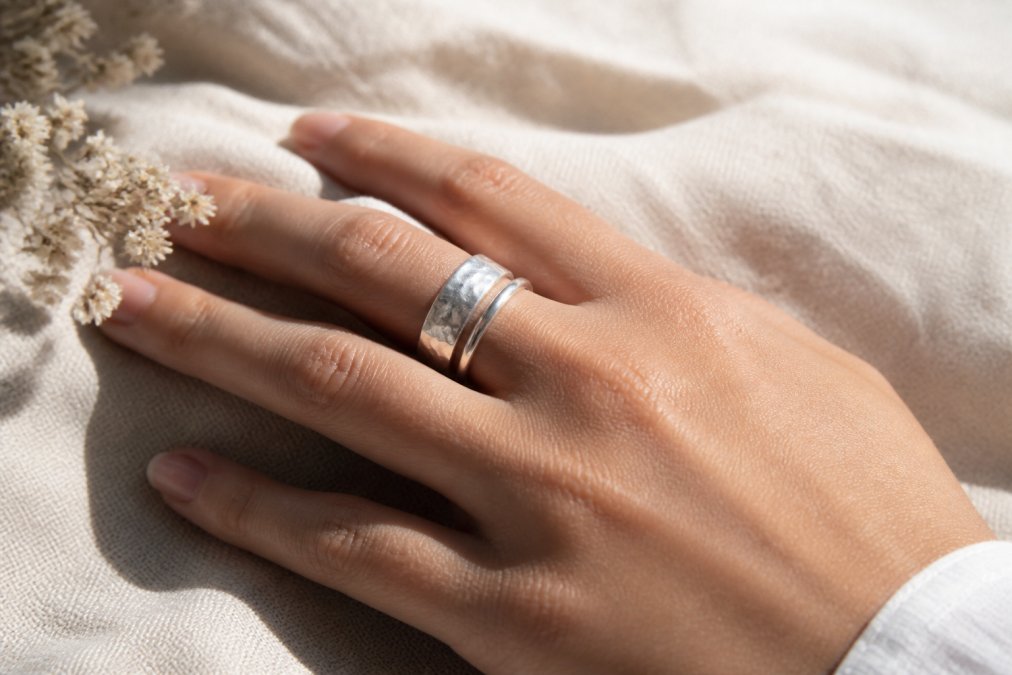
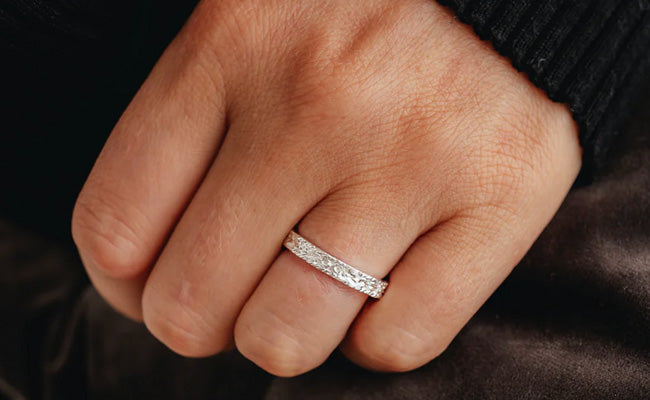
A woman's hand wearing a wide hammered sterling silver band ring and a narrow band ring stacked together, photographed against a neutral linen background with soft natural daylight coming from the side
For those who want handcrafted jewelry that does not tarnish and suits a minimalist aesthetic, sterling silver is the most versatile starting point. The Silver Open Circle Ring at £35 is a clean, simple piece that works across multiple styles and occasions. For those who want more presence, the Wide Hammered Band Ring at £95 is a statement piece that wears beautifully as a standalone.

Silver Open Circle Ring
Stacking is a practical approach for daily wear. A narrower band like the Silver Intricate Narrow Band Ring at £48 pairs naturally with a wider hammered band, creating a layered look. For earrings, the Silver Hammered Disc Stud Earrings at £25 are discreet enough for everyday wear and substantial enough to feel considered.
The handcrafted quality from SilverStory's artisans in Rajasthan means each piece has slight variations in texture and form that mass-produced jewellery cannot replicate. That individuality is part of the value, and it's what makes handcrafted jewelry that does not tarnish worth seeking out over generic fashion pieces.
A few practical rules for daily wear longevity:
- Remove jewellery before swimming, using cleaning products, or applying perfume and hand cream
- Store pieces individually in soft pouches to prevent scratching
- Clean sterling silver every few weeks with a polishing cloth
- Put jewellery on last when getting dressed, after applying any products to skin or hair
For anyone researching sustainable fashion choices, the ethical sourcing angle is worth noting. As guidance on ethical jewellery sourcing from the Responsible Jewellery Council outlines, supply chain transparency and fair working conditions are increasingly important considerations for conscious consumers. Handcrafted pieces made in established artisan workshops, with direct relationships between brand and maker, tend to offer more accountability than mass-produced alternatives.
Frequently Asked Questions
Does sterling silver tarnish over time?
Sterling silver can tarnish because it contains a small amount of copper, which reacts with oxygen and sulphur in the air to form a dark layer called silver sulphide. However, this process is slow and entirely reversible. Regular wear actually helps, because the natural oils on your skin keep the surface polished. Storing pieces in an airtight pouch and cleaning them occasionally with a soft cloth is usually enough to keep sterling silver looking bright for years.
What type of jewellery does not tarnish?
Solid gold (9ct and above), platinum, and titanium do not tarnish under normal wearing conditions because they do not react with oxygen or moisture at room temperature. Stainless steel with a PVD coating offers similar corrosion resistance at a lower price. Sterling silver is tarnish-resistant rather than tarnish-proof, but with basic care it stays bright for decades. Handcrafted jewelry made from these materials is your best option for long-term wear without discolouration.
Is gold-plated jewellery considered tarnish-free?
Standard gold-plated jewellery has a thin layer of gold over a base metal, usually brass or copper. Once that plating wears through, the base metal is exposed and can tarnish or cause skin reactions. Plating thickness matters enormously: pieces described as gold-filled or vermeil have a much thicker layer and last significantly longer. For genuinely fade-resistant colour, look for PVD-coated or solid gold pieces rather than thin electroplated options.
How can I keep my handcrafted jewellery looking new?
Remove pieces before swimming in chlorinated or salt water, and before applying perfume, sunscreen, or hairspray. Store each piece separately in a soft pouch or airtight box to prevent scratching and slow oxidation. For sterling silver, a quick buff with a dry microfibre cloth after wearing removes oils before they dull the surface. Avoid ultrasonic cleaners on pieces with stones or enamel. With these habits, well-made handcrafted jewelry that does not tarnish should retain its shine for many years.
This article was written using GrandRanker