Minimalist Gold vs Silver Jewellery: A Practical Guide
Last Updated: November 4, 2026
Quick Summary
For minimalist gold vs silver jewellery, choose silver for cool or neutral undertones and gold for warm or neutral undertones. Sterling silver is solid and tarnishes but polishes clean, while gold vermeil is a gold layer over silver that can wear at high-friction points.
- Test wrist veins in daylight: blue or purple suits silver, greenish suits gold.
- Mixing metals reads as intentional when each metal appears at least twice in an outfit.
- Build a six-piece core: two primary-metal chains, one secondary chain, two rings, one stud pair.
- SilverStory prices run £35-£85 for silver and £40-£115 for gold pieces.
- Every SilverStory piece is handcrafted by artisan craftsmen in Rajasthan.
Table of Contents
- Why the Gold vs Silver Question Matters More for Minimalist Jewellery
- How to Determine Skin Undertone for Jewellery
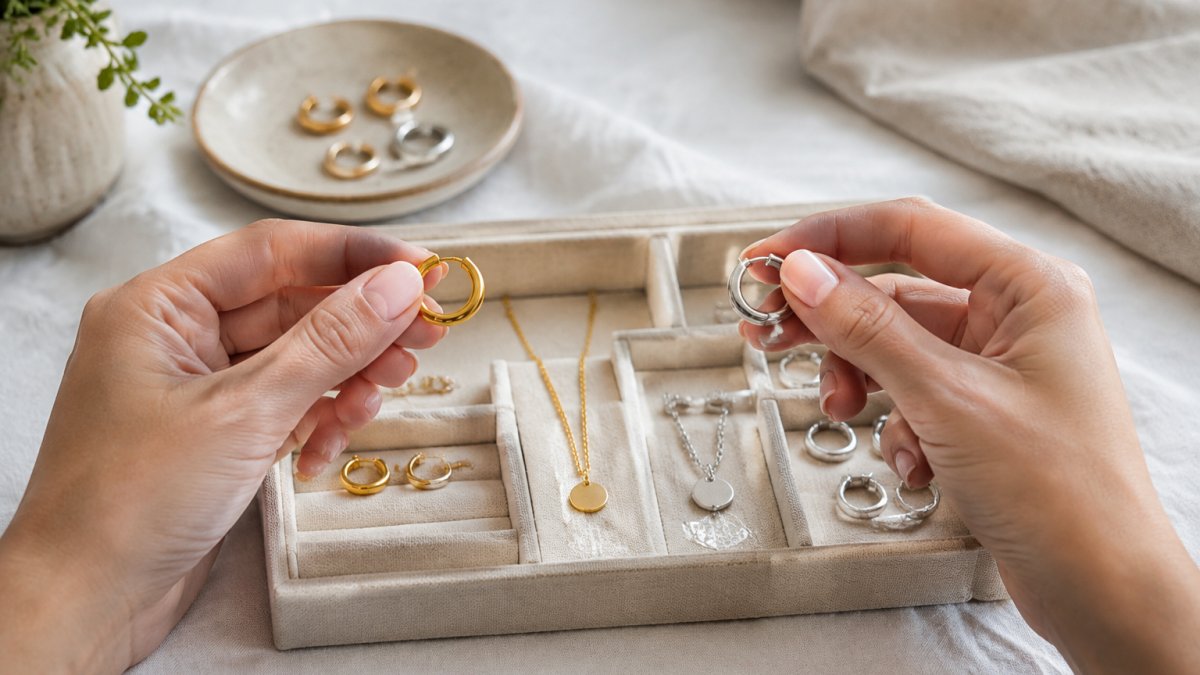
- Gold Vermeil vs Sterling Silver Durability: What Actually Lasts
- Mixing Gold and Silver Jewellery Tips for a Minimalist Look
- Skin Sensitivity and Hypoallergenic Metals
- Building a Minimalist Capsule Collection That Earns Its Cost per Wear
- Ethical Sourcing and Choosing Pieces You Can Verify
- Choosing Your First SilverStory Piece
- Frequently Asked Questions
Why the Gold vs Silver Question Matters More for Minimalist Jewellery
A minimalist gold vs silver jewellery guide usually starts with a colour wheel and ends with a shrug, which is exactly why this minimalist gold vs silver breakdown skips the wheel. That is a mistake. When you wear one thin chain and one plain band, the metal is the design. There is nothing else to distract the eye, so the tone of the metal, how it ages, and how it sits against your skin carry the whole look. At SilverStory, we make pieces in both sterling silver and 18 carat gold vermeil, and the question we hear most often is simply: which one?
Below, we break down undertones, mixing metals, and how to build a small collection that earns its keep. First, here is the short version.
| Question | Silver | Gold |
|---|---|---|
| Best for | Cool and neutral undertones, high-contrast looks | Warm and neutral undertones, softer contrast |
| Finish | Polished or hammered bright white metal | Warm yellow tone, polished or matt |
| Maintenance | Polish to remove tarnish | Wipe; replating may be needed over time |
| Typical SilverStory price | £35-£85 | £40-£115 |
How to Determine Skin Undertone for Jewellery
Skin undertone is the underlying hue beneath your surface colour, and it stays roughly constant whether you tan or not. Knowing it helps you pick a metal that flatters rather than fights your complexion. The three categories are cool, warm, and neutral.
The Vein Test in Natural Light
Stand near a window with daylight on the inside of your wrist. Look at the veins, not the skin around them.
- Blue or purple veins suggest cool undertones, which usually suit sterling silver and white gold.
- Greenish veins suggest warm undertones, which usually suit yellow gold and rose gold.
- A mix of blue and green, or veins that are hard to call, suggests neutral undertones.
Daylight matters. Bulbs and phone screens shift colour, so test in the morning if you can. If the result is ambiguous, you are probably neutral, and that is an advantage.
Why Neutral Undertones Get the Best of Both Metals
Neutral undertones can wear silver and gold with equal ease, which makes a mixed-metal look feel intentional rather than accidental. If you land in this group, stop treating the choice as permanent. Buy the metal you love and layer the other in.
Gold Vermeil vs Sterling Silver Durability: What Actually Lasts
Durability is where the gold versus silver decision stops being aesthetic and starts being practical. Sterling silver is a solid alloy, so it wears down gradually rather than wearing through. Gold vermeil is a sterling silver base with a gold layer over it, and the thickness of that layer is what separates vermeil from ordinary gold plating.
How Each Metal Ages
Sterling silver tarnishes. The copper in the alloy reacts with sulphur compounds in air, sweat, and household products to form a dark surface layer. This is cosmetic, not structural: a silver cloth or a dip will remove it, and the metal beneath is unchanged. A silver chain worn daily against skin actually tarnishes more slowly than one left in a drawer, because the gentle friction of wear keeps the surface clear.
Gold vermeil does not tarnish in the same way, but its gold layer abrades. High-friction points, the underside of a ring, the clasp of a necklace, the edge of a bangle, will show the silver base first.
Maintenance Routines That Actually Work
- Sterling silver: wipe with a soft polishing cloth after each wear to remove oils and sweat, store in an airtight bag with a tarnish-inhibiting strip, and deep-clean with a silver dip no more than every few months. Avoid chlorine and hot tubs.
- Gold vermeil: wipe with a dry microfibre cloth, keep away from perfume, hairspray, and sunscreen (apply those first and let them dry), and remove before swimming or showering. Do not use abrasive polishes, which strip microns of gold.
- Both: store pieces separately so chains do not scratch each other, and fasten clasps before storing to prevent tangling.
Repairs and Replating
If you want the full comparison of how gold-toned finishes differ, our guide to gold filled vs gold plated jewelry durability explains the layers and lifespan in detail.
Mixing Gold and Silver Jewellery Tips for a Minimalist Look
Most guides treat mixing metals as a styling trick. For a minimalist wardrobe, it is better understood as a capsule strategy: the goal is not to wear gold and silver together on a whim, but to build a small set of pieces that work in any combination so you stop thinking about it in the morning. That is the angle competitors miss, they show you how to layer, but not how to buy.
The Repetition Rule and Why It Works
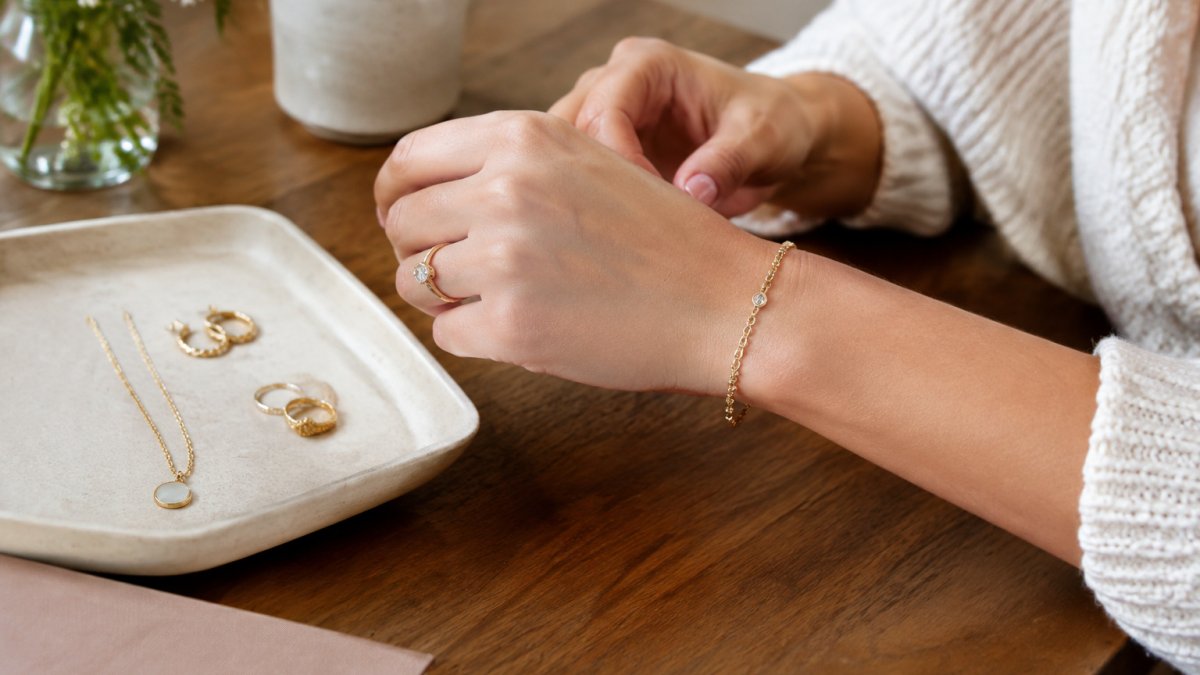
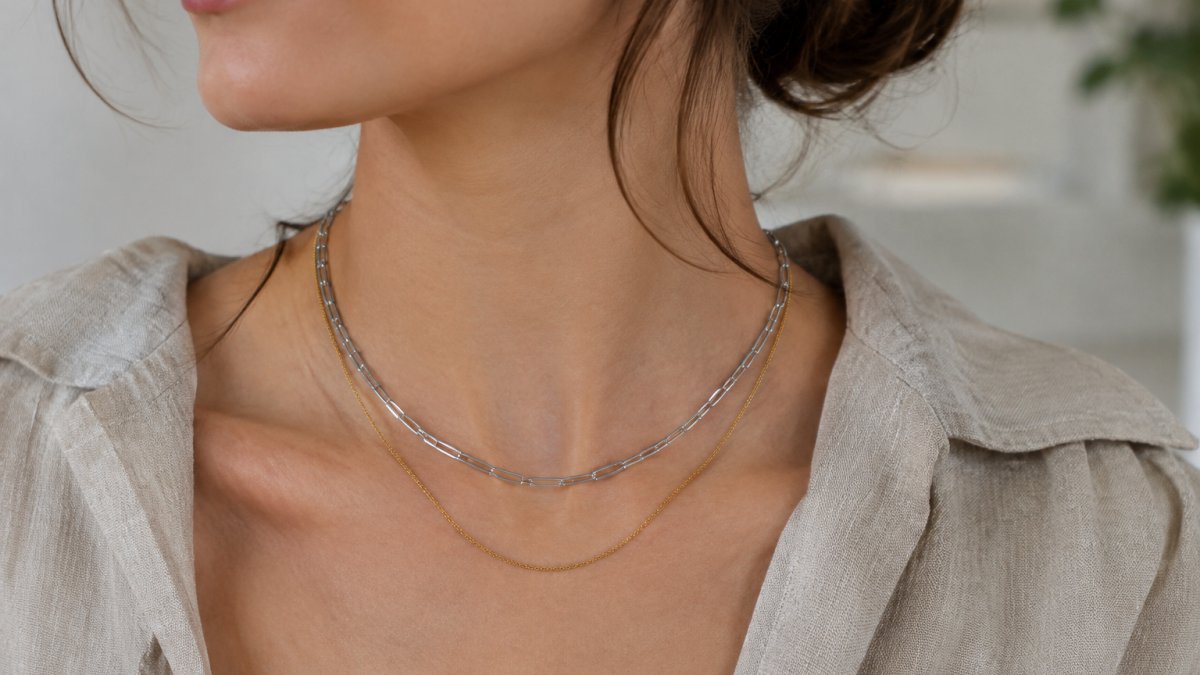
Mixing metals reads as intentional when each metal appears at least twice in an outfit. A single gold chain against a single silver chain can look like a mistake; two of each reads as a decision. The mechanism is visual rhythm: the eye needs a pattern to recognise, and two instances establish one. Keep scale similar, a fine paperclip chain beside another fine chain, not beside a heavy pendant, so the repetition is in the metal, not the weight.
A Capsule Framework for Mixed Metals
Instead of buying pieces piecemeal, build a six-piece core that covers every combination:
- Two chains in your primary metal, one at 40cm, one at 45cm, both fine gauge.
- One chain in your secondary metal, 45cm, fine gauge, to layer between the two.
- One ring in each metal, plain bands or open circles, similar width.
- One pair of studs in your primary metal, small enough to wear daily.
That is six pieces, and it produces dozens of combinations. Add a seventh only when you have identified a genuine gap, for example, a second ring in the secondary metal if you wear rings on both hands.
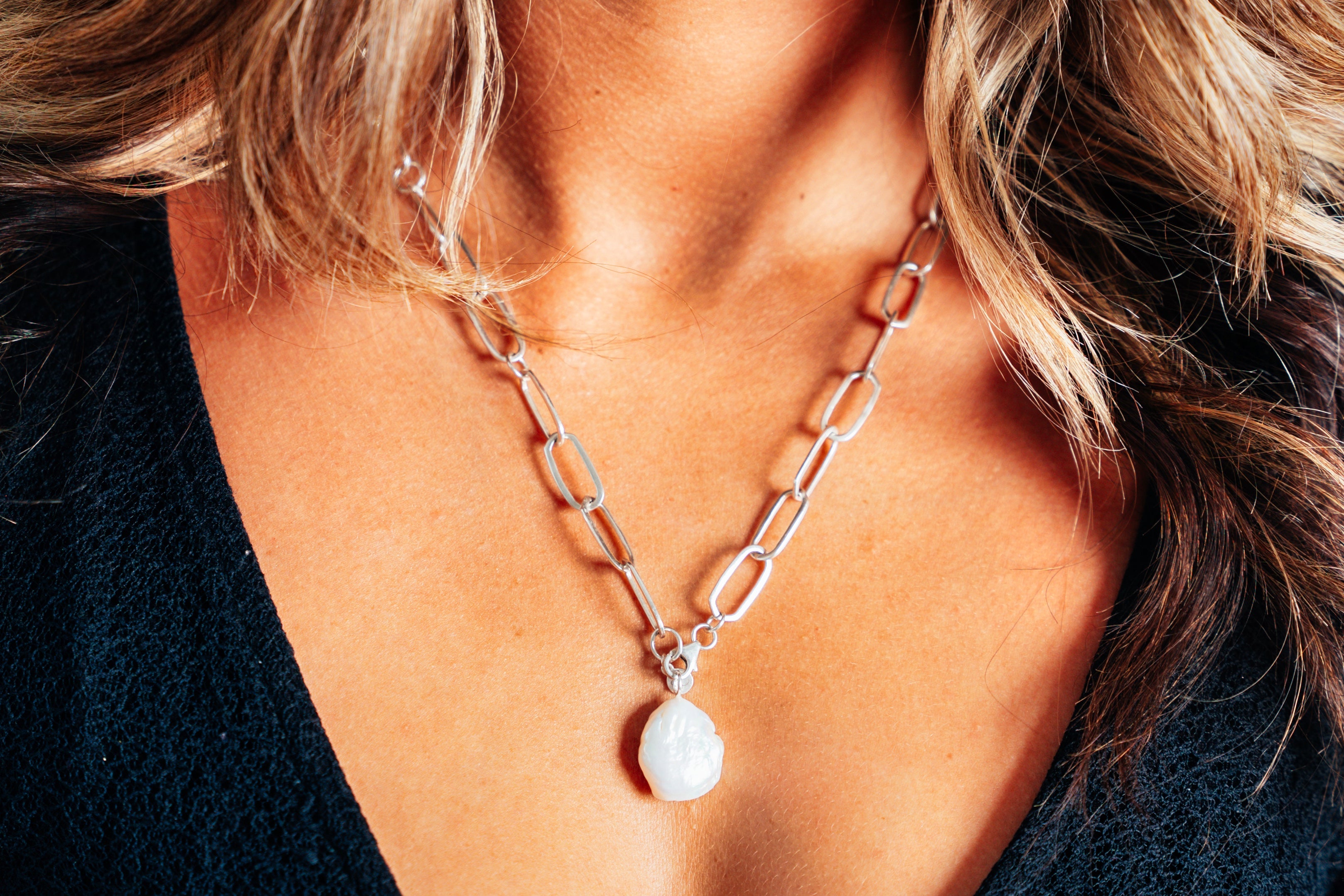
Silver Paperclip Chain Necklace →
Proportion and Placement
- Anchor the longest chain in one metal, then layer shorter pieces in the other.
- Repeat the metal in a second place, a ring or earring, to tie the look together.
- Keep finishes consistent: polished with polished, hammered with hammered. A matt gold next to a high-polish silver reads as an accident, not a choice.
- Minimalist styling is about restraint, and a fourth layer usually signals uncertainty rather than confidence.
Does Skin Tone Limit Mixing?
No, but it changes which metal should dominate. Cool undertones tend to find silver recedes into the skin and gold pops, so silver works well as the anchor and gold as the accent. Warm undertones find the reverse. Neutral undertones can swap the roles freely. The practical takeaway is to let your dominant metal be the one that sits closest to your face, and use the secondary metal lower down or on the hands.
What to Avoid
Watch out: mixing metals across very different karat colours, for example, a rose gold chain beside a bright yellow gold chain beside silver, fragments the look. Keep to two metals, and if you want warmth, choose either yellow or rose, not both.
For a deeper look at how to sequence purchases so each piece earns its place, our step-by-step guide to building a sustainable jewellery collection walks through the order to buy in.
Skin Sensitivity and Hypoallergenic Metals
The usual culprit behind irritation is nickel, which is restricted in jewellery sold in the UK under the REACH nickel release regulations. If you react easily, choose polished finishes, keep pieces dry, and remove rings before swimming.
For a deeper look at which metals suit reactive skin, read our guide on how to choose silver jewellery for sensitive skin.
Building a Minimalist Capsule Collection That Earns Its Cost per Wear
Cost per wear is the only price that matters. A £115 chain worn four days a week for two years costs pennies per wear; a £20 trend piece worn twice costs more. Build slowly, and buy pieces that work with everything you already own.
Start with one chain, one ring, and one pair of studs in your primary metal. Add the second metal only when you have a gap. Our step-by-step guide to building a sustainable jewellery collection walks through the order to buy in.
Ethical Sourcing and Choosing Pieces You Can Verify
Ask where a piece was made, by whom, and under what conditions. Vague claims about "artisanal" work are easy to make and hard to check.
Every SilverStory piece is handcrafted by artisan craftsmen in Rajasthan.
Choosing Your First SilverStory Piece
Start with the piece you will wear most. The Gold Paperclip Chain Necklace at £115 is a solid first gold buy: 18 carat gold vermeil over sterling silver, 45cm, and simple enough to layer or wear alone. In silver, the matching chain is £85. If rings suit you better, the Silver Open Circle Ring is £35 and the gold version £40.

Best for: first-time buyers who want one versatile piece. Skip if: you already own a plain chain and need contrast instead.
Frequently Asked Questions
How do I know if gold or silver jewellery suits me better?
Check your veins in natural daylight: blue or purple veins usually point to cool undertones, which tend to flatter silver, while greenish veins suggest warm undertones that suit gold. Neither is a rule you must obey. If you prefer the look of one metal, wear it. Many people with neutral undertones can wear both, and a minimalist wardrobe often works best with one dominant metal plus one accent piece.
Can you mix gold and silver minimalist jewellery?
Yes, and it is easier than most guides suggest. Keep the shapes simple so the metals do not compete, repeat each metal at least twice across your outfit, and use one metal as the dominant tone with the other as an accent. Layering a fine silver chain with a gold pendant, or stacking a silver band ring beside a gold one, reads as deliberate rather than mismatched. SilverStory's open circle necklaces are designed to be layered, and additional hoops can be added to mix metals within a single piece.
Does gold vermeil last as long as sterling silver?
They wear differently rather than one simply outlasting the other. Sterling silver is the same metal all the way through, so scratches and small marks can be polished out, though it tarnishes over time and needs occasional cleaning. Gold vermeil is a thick gold layer over sterling silver, so it keeps its colour with less polishing but the gold can thin at high-friction points over years of daily wear.
Are there ethical considerations when buying gold or silver jewellery?
Ask where the metal comes from and who made the piece. Reputable sellers should be able to name the workshop and describe the working conditions, and handcrafted pieces from small ethical workshops are easier to trace than mass-produced ranges. SilverStory's pieces are handmade by artisan craftsmen at an ethical workshop in Rajasthan,
The hardest part is not choosing a metal. It is buying one piece instead of five. Start with a single chain or ring you will wear daily, then let the collection grow around it. SilverStory handcrafts every piece in sterling silver and 18 carat gold vermeil at an ethical workshop in Rajasthan, with adjustable lengths, matching sets, and prices that make a second piece easy to justify. Get started with SilverStory and build a small collection you will actually wear.