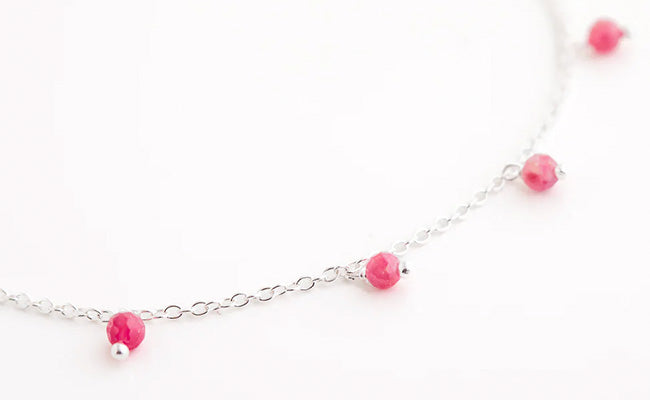
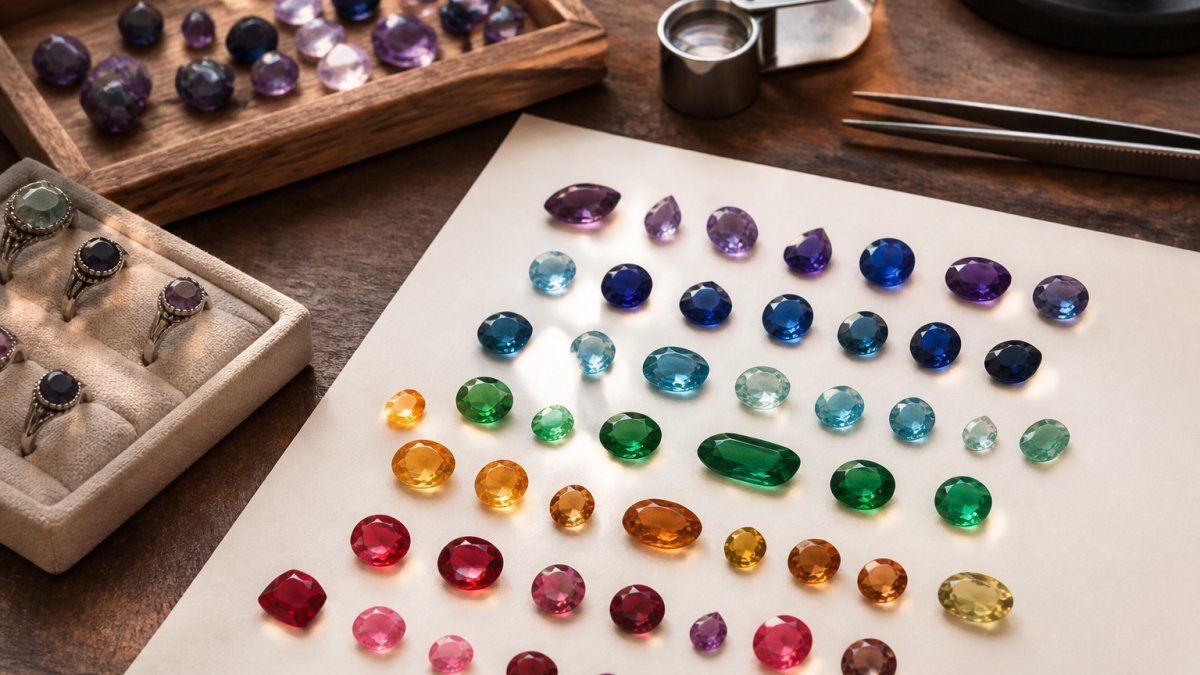
Meaning of Different Gemstone Colors in Jewelry
Table of Contents
- Why Gemstone Colors Carry Meaning in Jewelry
- Red Gemstone Meaning: Passion, Energy and Strength
- Blue Gemstone Meaning: Calm, Clarity and Fidelity
- Green Gemstone Meaning: Growth, Hope and Renewal
- Yellow, Orange and Purple Gemstones: Joy, Warmth and Spirituality
- Pink, White and Black Gemstones: Love, Clarity and Protection
- Birthstone Meanings and Colours: A Month-by-Month Guide
- Choosing Gemstone Colors: Quality, Durability and Everyday Wear
- Frequently Asked Questions
Last Updated: October 21, 2026
Why Gemstone Colors Carry Meaning in Jewelry
Gemstone colour symbolism is the practice of linking a stone's hue to an emotion, virtue or life event, and it runs through almost every jewellery tradition. At SilverStory, we work with handcrafted stones from Rajasthan, and the first question customers ask is nearly always about colour: what does it mean, and will it suit me?
That question has two answers. One is cultural, built from centuries of folklore, birthstone lists and royal courts. The other is gemological, and it concerns hardness, treatment and how a stone survives daily wear. Most guides give you only the first.
Here is the honest framing: colour symbolism is real as a cultural tradition, not as a scientific property. No gemstone has been shown to change your mood or fortune. What colour does do is communicate intent, mark an occasion and make a piece feel personal. That is plenty.
Below, we break down the meaning of different gemstone colors in jewelry, colour by colour, then cover birthstones, quality and wearability so you can choose with confidence rather than guesswork.
Red Gemstone Meaning: Passion, Energy and Strength
Red is the most assertive colour in the spectrum, and the red gemstone meaning follows suit: passion, vitality, courage and physical strength. Ruby is the classic example, long associated with royalty and protection in battle, while garnet carries a warmer, earthier reading tied to endurance and loyalty.
In practice, red stones read as confident and warm on most skin tones, which is why they work well as a single focal point rather than part of a busy stack. A common mistake is buying a large red stone in a soft setting; red draws the eye instantly, so the metalwork needs to hold its own.
For everyday wear, check hardness before you fall in love. Ruby and sapphire are corundum and among the toughest stones used in jewellery. Garnet is softer and better suited to earrings or occasional rings than to a ring you never remove.
Blue Gemstone Meaning: Calm, Clarity and Fidelity
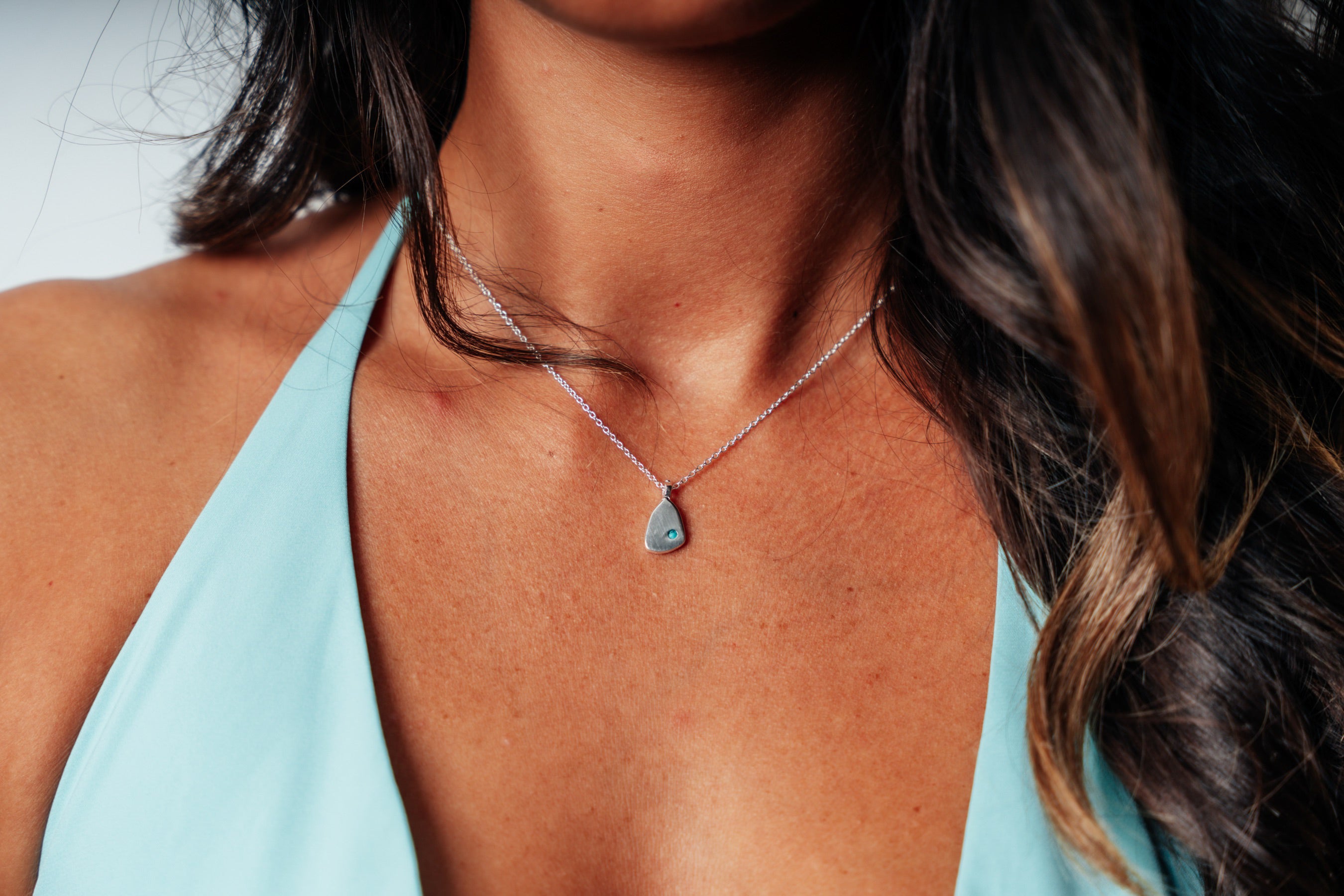
The blue gemstone meaning centres on calm, clear thought and faithfulness, which is why blue stones appear so often in engagement and anniversary pieces. Sapphire is the anchor of the category, and its long association with trust and constancy has kept it a favourite for commitment jewellery for centuries.
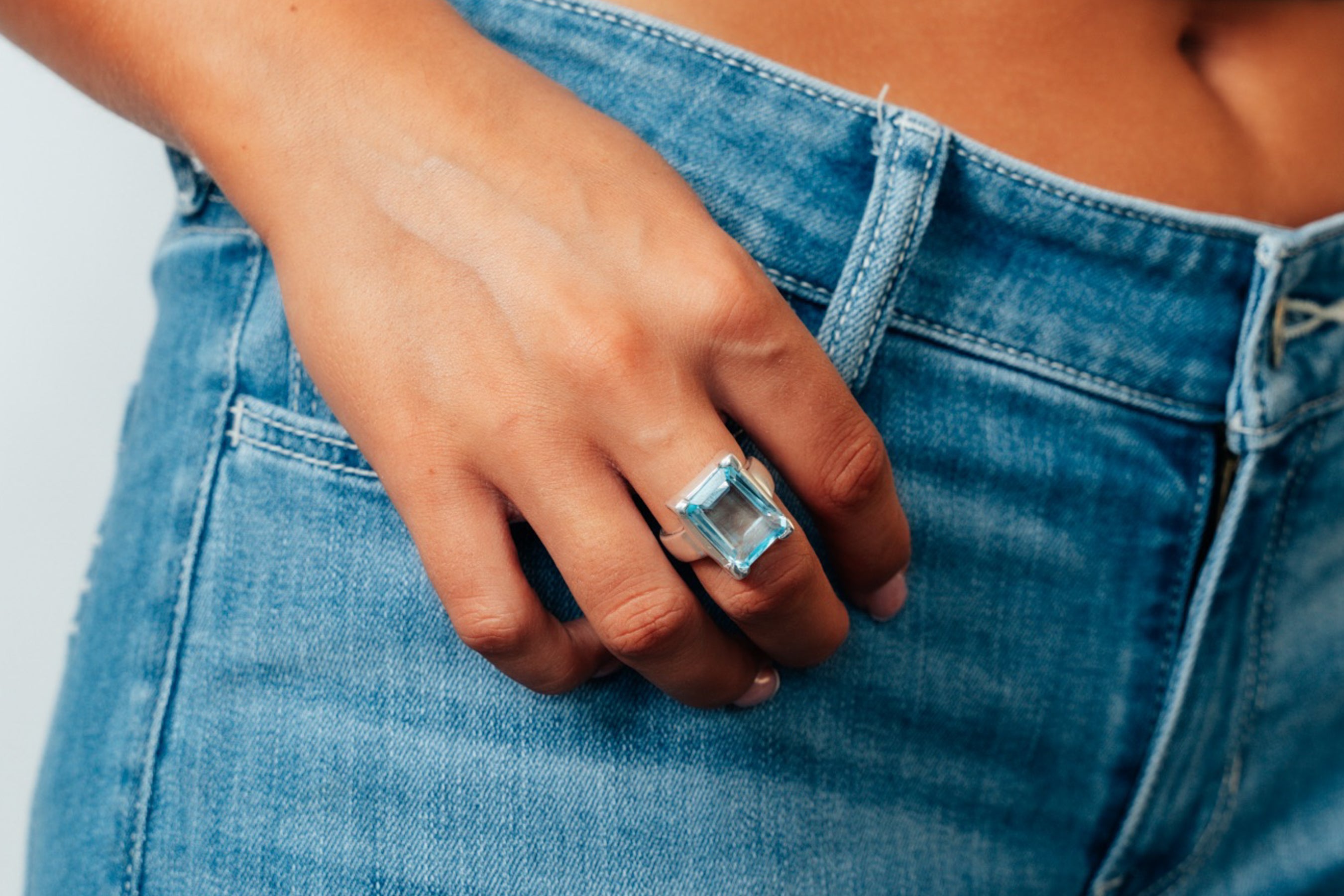
Blue also has the widest range of any gemstone colour. Aquamarine sits at the pale, cool end and reads as serenity and honesty. Blue topaz is brighter and more affordable. Fancy sapphires cover everything from near-colourless ice to deep teal.
If you want one piece that works with everything, blue is our pick. It flatters warm and cool skin tones alike and pairs with denim, navy and grey without effort.
Green Gemstone Meaning: Growth, Hope and Renewal
Green gemstone meaning is rooted in new beginnings, hope and renewal, which makes emerald the natural gift for a milestone: a graduation, a new job, a fresh start. Emerald's rich hue has symbolised rebirth since antiquity, and peridot carries a lighter, spring-like reading of optimism.
Green is also the most wearable colour nobody thinks to buy. It suits almost every complexion, sits comfortably beside silver, and looks considered rather than obvious. If you are building a first gemstone collection, a green piece earns its place faster than a red one.
Durability is the catch. Emerald is typically treated and is more brittle than its reputation suggests, so it belongs in pendants and earrings more than in a ring worn through heavy work. Peridot is softer again. Treat both with a little care and they will last decades.
Yellow, Orange and Purple Gemstones: Joy, Warmth and Spirituality
Yellow and orange stones carry joy, warmth and optimism, with citrine the most familiar example and the traditional gift for a November birthday.
But here is the nuance most guides skip: these associations are not universal. In parts of South Asia, yellow is the colour of auspiciousness and is worn at weddings and religious ceremonies, while in parts of Europe it has historically carried associations with caution or even deceit.
Yellow and orange stones. Citrine is the practical workhorse of this group: hard enough for regular wear, available in pale lemon through to deep amber, and priced gently enough that it works in everyday pieces.
Purple stones. Amethyst is the quiet workhorse here too. It is hard enough for regular wear, available in everything from pale lilac to deep violet, and priced gently enough that you can own it in several forms.
Practical wearability. Yellow and orange stones flatter warm skin tones particularly well, while purple works across the spectrum and pairs comfortably with both silver and gold. For everyday rings, citrine and amethyst are the sensible choices; carnelian is softer and better suited to earrings or occasional wear.
Pink, White and Black Gemstones: Love, Clarity and Protection
Pink stones mean love, compassion and romance, and rose quartz is the most recognised example, widely given as a token of affection. White and clear stones read as purity and clarity; black stones, historically, as protection and grounding.
Multi Gemstone Neckace with Detachable Pendant →
Here is where we part company with most guides. Black gemstones are usually described as protective, but in gemological terms the useful distinction is transparency. Clear stones show every inclusion and scratch, so they demand better cutting and more careful setting. Opaque black stones hide flaws but show dust and fingerprints relentlessly. Neither is better; they fail differently.
For gifts, pink is the safest emotional choice and the easiest to size, since pendants and earrings carry no fit risk. White stones suit minimalist wardrobes. Black works best in modern, architectural settings.
Birthstone Meanings and Colours: A Month-by-Month Guide
Birthstone meanings and colours give you a ready-made reason to choose a stone, which is why they remain the most common brief we receive for gifts. But the first thing to understand is that there is no single, universal birthstone list.
The table below follows the widely used modern convention, with the most common alternatives noted. Check before you buy for a specific date, and if the recipient has a strong preference, ask.
| Month | Birthstone | Colour | Primary Association | Common Alternatives |
|---|---|---|---|---|
| January | Garnet | Deep red | Loyalty, endurance | , |
| February | Amethyst | Purple | Wisdom, calm | , |
| March | Aquamarine | Pale blue | Serenity, clarity | Bloodstone |
| April | Clear quartz | Colourless | Clarity, balance | Diamond, white sapphire |
| May | Emerald | Green | Renewal, growth | Chrysoprase |
| June | Pearl or moonstone | White | Purity, intuition | Alexandrite |
| July | Ruby | Red | Passion, strength | Carnelian |
| August | Peridot | Yellow-green | Optimism, joy | Spinel, sardonyx |
| September | Sapphire | Blue | Fidelity, trust | Lapis lazuli |
| October | Tourmaline or opal | Multicolour | Balance, creativity | , |
| November | Citrine or topaz | Yellow | Warmth, abundance | , |
| December | Turquoise or tanzanite | Blue-green to violet | Protection, transformation | Lapis lazuli, zircon |
How to choose when a month has alternatives. For June, pearl is the traditional choice and moonstone the more durable option for everyday wear; alexandrite is the luxury alternative and changes colour in different light, which is a genuine conversation piece.
Cultural context. Birthstone lists are a cultural tradition, not a gemological classification. Different cultures have their own auspicious stones tied to days, planets or zodiac signs, and those systems do not always map onto the Western birthstone list.
Practical buying note. Birthstone jewellery is often bought in a hurry, which is when mistakes happen. Check the stone's hardness before choosing a ring: emerald, opal, pearl and tanzanite are all better suited to pendants and earrings than to a ring worn daily.
If you want a piece that carries several of these at once, a multi-stone design does the work for you. Our Multi Gemstone Necklace with Detachable Pendant at £79 brings amazonite, tourmaline and silver beads together, and the star pendant detaches so it wears two ways.

Choosing Gemstone Colors: Quality, Durability and Everyday Wear
Colour, quality and value are the same conversation, and separating them is where buyers get caught out. Two stones of identical hue can differ enormously in price because of clarity, cut, carat and, most of all, treatment.
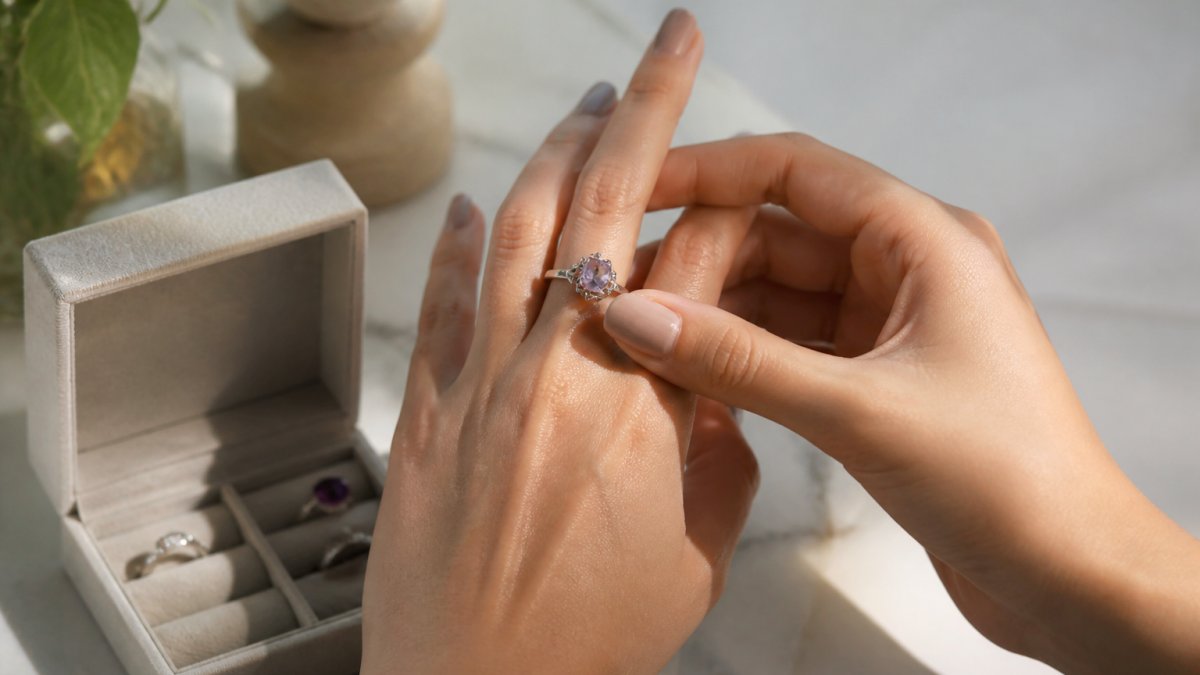
Three practical rules we would give anyone:
- Match hardness to the setting. Rings take the most punishment. Reserve softer stones for earrings and pendants.
- Ask what the stone has been treated with. Oil, heat and fracture-filling are standard in the trade, but you are entitled to know.
- Buy the colour you actually wear. A stone that clashes with your wardrobe stays in the box, whatever it symbolises.
A useful starting point is the Mohs hardness scale, the standard measure of scratch resistance, and the Gemological Institute of America's treatment disclosure guidance explains what sellers should tell you.
On durability and care, the British Jewellers' Association publishes consumer guidance on buying and maintaining jewellery, and the Chartered Trading Standards Institute sets out your rights if a piece is not as described.
Our Cluster Gemstone Ring at £80 sets amethyst, rose quartz and ruby together in sterling silver, while the Triple Gemstone Ring at £50 pairs pink and aqua chalcedony on a twisted band. Both are handcrafted for us by ethical makers in Rajasthan, and the Multi Gemstone and Silver Pendant Necklace at £48 sets garnet, blue topaz, peridot and pink tourmaline in one rectangular pendant.


One caveat worth stating plainly: we do not claim these stones will change your fortune. What we can say is that colour is the fastest way to make a piece feel like yours, and that buying from makers who disclose what they use is the difference between a keepsake and a regret.
Frequently Asked Questions
What do different gemstone colours mean?
Gemstone colours are linked to long-standing traditions rather than fixed rules. Red stones such as ruby and garnet are associated with passion and strength, blue stones like sapphire and aquamarine with calm and clarity, green stones such as emerald and peridot with growth and renewal, and pink stones like rose quartz with love. Yellow and orange gemstones suggest joy and warmth, purple ones spirituality and wisdom, and white or clear stones purity. Treat these as cultural shorthand when choosing jewelry, not as scientific claims.
What does a blue gemstone symbolise?
The blue gemstone meaning centres on calm, clarity and fidelity. Sapphire is the best-known example, long linked to loyalty and truth, while aquamarine carries associations with tranquillity and safe travel. In practice, blue stones suit people who prefer understated, cool-toned jewelry and work well as gifts for someone starting a new job, moving home or marking a long partnership. A blue gemstone pendant or ring is easy to wear daily because the colour pairs with most wardrobes.
Are gemstone meanings based on fact or tradition?
They are tradition, not gemology. No stone has been shown to change mood, health or luck, and gemologists assess stones by colour, clarity, cut and carat weight instead. What the symbolism does offer is a shared language for gifting: a red garnet says something different from a green peridot, even though both are simply minerals. Buy for the colour you love and the quality you can see, and let the meaning add sentiment rather than drive the decision.
Which gemstone colour is associated with love?
Pink and red carry the strongest love associations. Rose quartz is the classic pink stone for compassion and romance, while ruby and garnet represent passionate, enduring love. Pink tourmaline is another popular choice and appears in mixed-stone pieces such as the Multi Gemstone and Silver Pendant Necklace at £48, which sets garnet, blue topaz, peridot and light pink tourmaline in sterling silver. For anniversaries, a pink or red stone is the simplest way to signal romance without relying on a diamond.
Choosing a gemstone colour is easy. Choosing one that still looks right in five years takes a little more thought, which is why we build every SilverStory piece around ethically sourced stones and handcrafted settings from our artisan workshop in Rajasthan. Browse our rings, necklaces and earrings to find a colour that means something to you, and add to cart with the confidence that the craftsmanship matches the symbolism.