
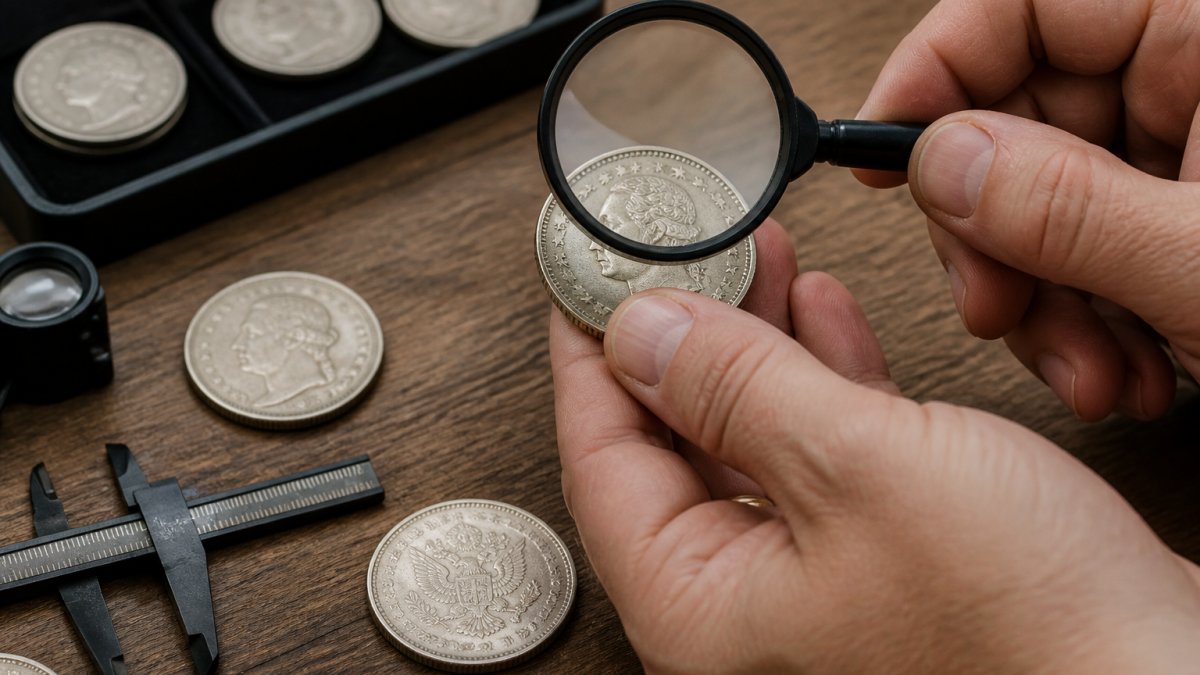
How to tell if silver coins are authentic?
Last Updated: October 24, 2026
Quick Summary
How to tell if silver coins are authentic involves comparing your coin's weight and dimensions against official specifications using a digital scale and callipers, running a magnet test to check for ferrous metals, listening for a clear ringing tone when struck gently, and inspecting design details under magnification for sharpness and precision.
- Use a digital scale accurate to 0.01 g and callipers to measure diameter and thickness against published specifications for your exact coin's year and mint.
- A genuine silver coin will not be attracted to a magnet, as silver is not ferromagnetic.
- Genuine silver coins produce a clear, ringing tone when struck gently, while counterfeits often produce a dull thud that dies quickly.
- Examine design elements, lettering, edge reeding and surface finish under a magnifying glass for sharp, precise details.
- Compare your coin directly against a known genuine reference coin of the same type and year to spot subtle differences.
Table of Contents
- Why authenticating silver coins matters
- Checking silver coin weight and dimensions
- Using a magnet test for authentic silver coins
- Performing the ping test and listening for a distinctive sound
- How to test silver coins at home with visual inspection
- How to spot fake silver coins by comparing with a reference coin
- When to seek professional verification for your silver coin
- Frequently Asked Questions
Why authenticating silver coins matters
Spotting a fake silver coin matters more than you might think. Counterfeit coins cost buyers real money and damage trust in the silver market. Whether you're collecting, investing, or simply curious about a coin you own, learning how to tell if silver coins are authentic protects you from costly mistakes.
At SilverStory, we understand the value of authenticity, it's the same principle that guides our commitment to ethically sourced, handcrafted jewellery.
The good news: you don't need expensive equipment or expert training. A few simple checks reveal whether a coin is genuine. This guide walks you through each method step by step, so you can test silver coins at home with confidence.
Checking silver coin weight and dimensions
The most reliable first test is comparing your coin's weight and dimensions against the correct official specifications, not generic figures. Counterfeit coins often fail here because replicating exact weight, diameter, thickness and alloy is harder than copying appearance.
What you'll need:
- A digital scale accurate to 0.01 g (0.1 g is workable but leaves less margin)
- Digital callipers (preferred) or a steel ruler
- The correct specification for your exact coin: denomination, year, and mint
Where to find the right specification. Generic web results are the main reason this test fails people. Use a source that ties specifications to the specific issue:
- The Royal Mint's own coin specifications pages for current and recent UK coinage
- Recognised numismatic catalogues (for example, standard catalogues of British coins) for historical and variant issues
- The coin's own diameter, thickness and mass as published for that year and mint, specifications can change between years, and proof, bullion and circulating versions of the same denomination often differ
Record the specification before you measure. If you cannot find a specification for the exact year and mint, stop, a comparison against the wrong reference proves nothing.
Weighing and measuring. Weigh the coin and record the mass to two decimal places. Measure diameter across the widest point and thickness at the rim, taking three readings and using the average. Compare against the specification, allowing for the tolerance published for that issue. Where no tolerance is published, a working rule among collectors is that a genuine coin should sit close to the stated mass, with small deviations explained by wear or striking variation, not by several tenths of a gram.
| Test | What to check | Genuine result | Red flag |
|---|---|---|---|
| Mass | Digital scale, 0.01 g | Close to published mass within tolerance | Several tenths of a gram out; or exactly matching a base-metal coin of the same size |
| Diameter | Callipers, widest point | Matches published diameter | Noticeably undersized or oversized |
| Thickness | Callipers at the rim | Matches published thickness | Noticeably thinner (plated) or thicker |
| Alloy behaviour | Cross-check with other tests | Consistent with silver | Passes dimensions but fails density or sound |
Why counterfeits fail here. Common patterns include underweight fakes made from cheaper metals or lower silver content, overweight fakes using denser base alloys, and plated coins that match size but not density. If the mass is right but the coin feels or sounds wrong, move to a density check or professional verification rather than assuming it is genuine.
Using a magnet test for authentic silver coins
Silver is not ferromagnetic, so a genuine silver coin will not be attracted to a magnet. That makes the magnet test one of the quickest ways to eliminate obvious fakes, but it is also one of the most misunderstood.
What the test actually shows. A magnet test detects ferromagnetic metals such as iron, steel and nickel. It does not detect silver content.
How to run it properly. Use a strong neodymium magnet. Bring it slowly towards the coin on a non-metallic surface and watch for any pull.
The eddy-current effect. On a genuine silver coin, a strong magnet moving across the surface produces a subtle braking or drag sensation caused by eddy currents in the conductive metal. This is not attraction, the coin is not pulled towards the magnet.
Alloy nuance. Sterling silver (92.5% silver) and other silver-copper alloys remain non-magnetic, so genuine sterling and most silver bullion coins pass.
Limitations and false results. A non-magnetic counterfeit passes. A plated steel fake fails, which is useful, but a plated copper or zinc fake passes. A genuine coin in a magnetic holder, or one tested near other metal objects, can give misleading results. For these reasons the magnet test should never be your only check, pair it with a density or specific-gravity check, which is far harder for counterfeiters to defeat.
Performing the ping test and listening for a distinctive sound
Genuine silver coins produce a distinctive sound when struck gently. This ping test is one way how to tell if silver coins are authentic, relying on the acoustic properties of solid silver metal.
Hold your coin lightly between your thumb and forefinger. Tap it gently with another coin or a small metal object. Listen carefully to the sound.
Counterfeit coins often produce a dull thud or a flat sound that dies quickly. Coins made from cheaper metals or plated coins lack the acoustic resonance of solid silver. The difference becomes obvious once you've heard both.
For best results, compare your coin's sound directly against a known genuine reference coin. You can examine authentic silver products to use as reference pieces for comparison testing.
Be aware that this test has false positives. A damaged or worn genuine coin might sound duller than expected. A counterfeit made from certain metal combinations might produce a surprisingly clear tone.
How to test silver coins at home with visual inspection
Visual inspection reveals details that counterfeits struggle to replicate accurately. Look closely at the coin's design, imagery, edge details, and surface finish.
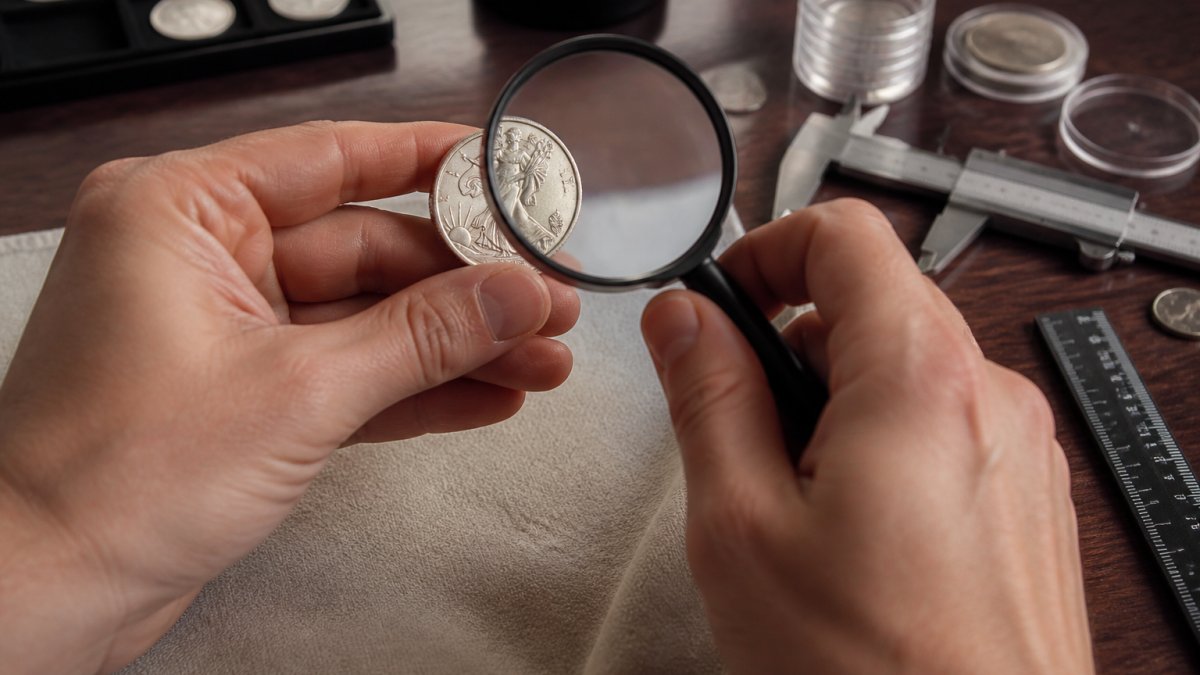
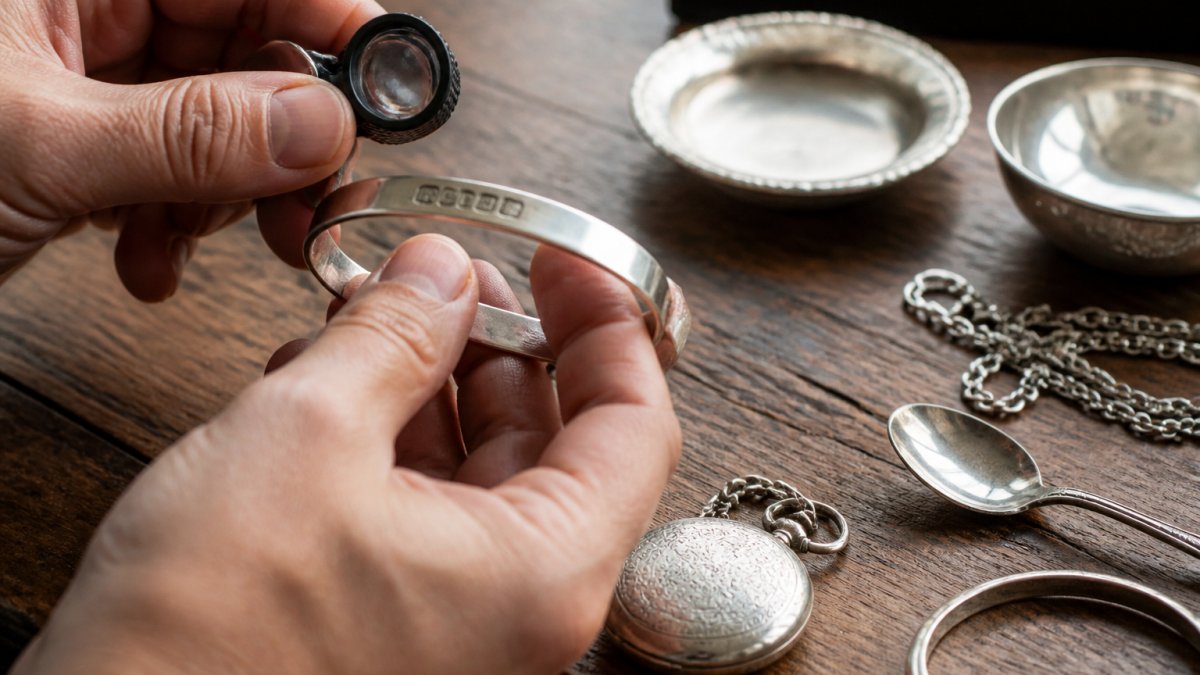
Start with a magnifying glass or jeweller's loupe. Examine the coin's design elements carefully. Genuine coins feature sharp, precise imagery. Counterfeits often show blurred details, uneven lettering, or sloppy engraving.
Check the edge details next. Genuine coins have consistent edge reeding or design. Counterfeit edges often appear rough, uneven, or poorly defined. Run your finger gently along the edge, genuine coins feel smooth and uniform.
Inspect the surface finish. Genuine silver coins show appropriate wear patterns for their age and circulation history. Counterfeits sometimes have inconsistent patina or artificial aging that looks unnatural.
Pay attention to the coin's colour and lustre. Genuine silver has a specific brightness and reflectivity. Some counterfeits appear too dull or too shiny. The colour should match known examples of that coin type.
Visual inspection checklist:
- Design elements are sharp and precise
- Lettering and inscriptions are crisp and correctly positioned
- Edge reeding or design is consistent and uniform
- Surface finish matches known genuine examples
- Wear patterns look natural for the coin's age
- No signs of plating wear or discolouration
How to spot fake silver coins by comparing with a reference coin
The most practical verification method is direct comparison with a known genuine reference coin. Side-by-side comparison reveals differences that single tests might miss.
If you own or can access a genuine coin of the same type and year, use it as your reference. Hold both coins under the same lighting. Compare their weight, dimensions, colour, and surface finish.
Counterfeits often fail in subtle ways that become obvious during comparison. The fake might be slightly lighter, have softer design details, or produce a different sound. The edge might feel different.
You can also compare against high-quality photographs of known genuine coins. Official mint websites and reputable numismatic resources provide detailed images. Study these images carefully, then examine your coin under magnification. Look for any deviation from the reference images.
When comparing, check these specific details:
- Weight and dimensions
- Design sharpness and clarity
- Edge quality and consistency
- Surface colour and lustre
- Mint mark positioning and clarity
- Overall symmetry and balance
Building a small collection of reference coins makes future verification easier. View authentic silver bracelets as examples of genuine silver pieces for visual inspection and weight comparison.
When to seek professional verification for your silver coin
Some coins warrant professional verification. If you own a rare, valuable, or historically significant coin, professional authentication provides certainty that at-home testing cannot guarantee.
Professional numismatists use advanced equipment including electronic testers, X-ray fluorescence (XRF) analysis, and specific gravity measurement. Learn how verification practices work to understand the standards applied in authentication. These methods detect counterfeits that pass all home tests.
You should seek professional verification if:
- Your coin is rare or historically significant
- You're considering a major purchase or sale
- The coin failed multiple home tests but you're uncertain
- You need an official grade for insurance purposes
- The coin's authenticity affects its monetary value significantly
Professional services cost money, but for valuable coins, the investment protects you. A guide to verifying fair trade practices explains how verification works in other contexts, similar principles apply to coin authentication.
Look for established numismatic grading services with solid reputations. These organisations maintain rigorous standards and provide certificates documenting their findings. Their assessments carry weight in the collector and investment markets.
For everyday coins or low-value pieces, home testing combined with careful comparison usually suffices. Reserve professional verification for coins where authenticity significantly impacts value or importance.
Frequently Asked Questions
Can a magnet test tell me whether a silver coin is genuine?
A magnet test is a useful first step because authentic silver is non-magnetic. If a coin is strongly attracted to a magnet, it's likely counterfeit or plated. However, this test alone isn't conclusive, some counterfeits use non-magnetic metals, and the test won't detect silver-plated fakes. Combine the magnet test with weight, dimension, and visual checks for a more reliable assessment.
How do I check silver purity at home?
Home testing methods can suggest purity but rarely prove it definitively. Weight and dimension checks against official specifications indicate whether a coin has the correct metal composition. The ping test, tapping the coin and listening for a clear, bell-like tone, can hint at genuine silver content. For accurate purity verification, professional testing using XRF (X-ray fluorescence) or acid testing is more reliable and non-destructive.
What is the safest way to test a silver coin?
Start with non-destructive tests: weight, dimensions, magnet response, and visual inspection. These reveal most counterfeits without damaging the coin. The ping test is safe if done gently. Avoid acid tests on valuable or collectible coins, they can damage the surface. If a coin fails multiple tests or you suspect it's valuable, consult a professional numismatist or coin grading service for definitive authentication.
When should I ask a professional to authenticate a silver coin?
Seek professional help if the coin appears valuable, is part of a collection, or fails multiple home tests but you're unsure why. Professionals use advanced methods like XRF testing and have reference databases for rare dates and mint marks. Professional authentication is essential before selling or trading a coin, and worthwhile for any piece you plan to keep as an investment.
Learning how to tell if silver coins are authentic puts you in control of your collection. Start with weight and dimension checks, move through the magnet and ping tests, examine the coin visually, and compare against known genuine examples. Most counterfeits fail at least one of these tests. For valuable coins, professional verification provides the final assurance you need. When you understand these verification methods, you collect with confidence, knowing exactly what you own.